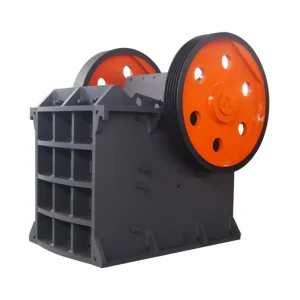
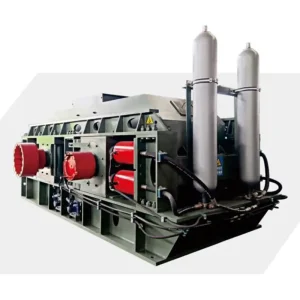
Explore our top-performing primary crushers and heavy casting components engineered for maximum throughput and reliability in harsh operations.
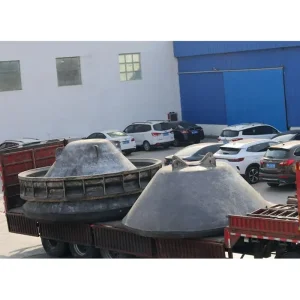
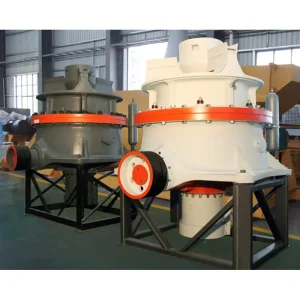
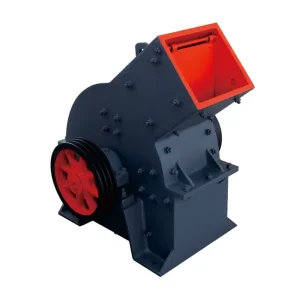
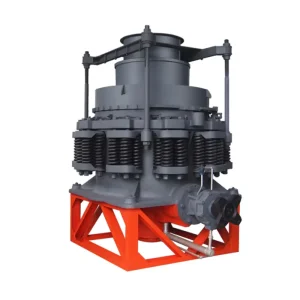
In modern heavy industries, size reduction processes are the foundational bedrock of mining, metallurgy, cement production, and recycling infrastructure. The global hammer mill rock crusher market has experienced a significant paradigm shift, transitioning from simple impact crushing mechanisms to highly engineered, smart-controlled, single-stage crushing systems. High-capacity hammer mills are uniquely favored across various mining operations due to their high reduction ratios, simplified process flows, and ability to handle medium-hard to soft materials with high moisture levels.
Historically, multi-stage crushing plants consisting of large jaw crushers, secondary cone crushers, and tertiary screens were necessary to achieve target product shapes. Today, state-of-the-art hammer mill rock crushers can reduce run-of-mine (ROM) materials from feed sizes of up to 1,000mm down to sub-25mm aggregates in a single pass. This dramatic reduction in system complexity reduces capital investment (CAPEX), lowers energy consumption, and cuts maintenance costs (OPEX) across the board.
Whether processing limestone for desulfurization in thermal power plants, crushing aggregate for regional infrastructure projects, or handling industrial minerals in South America and Africa, the demand for wear-resistant components and high-integrity castings has reached unprecedented heights.
Industrial procurement departments face major challenges: balancing the initial equipment investment with the operational cost of wear parts. The hammers, grates, rotor discs, and liners inside a rock crusher are subject to intense, continuous abrasive wear and impact fatigue. Consequently, global buyers are no longer just seeking equipment sellers; they demand comprehensive metallurgy partners. Reliable casting partners must possess the technical capability to customize alloy compositions—such as modifying manganese, chromium, and molybdenum levels—to align perfectly with the specific geological profile of the material being processed.
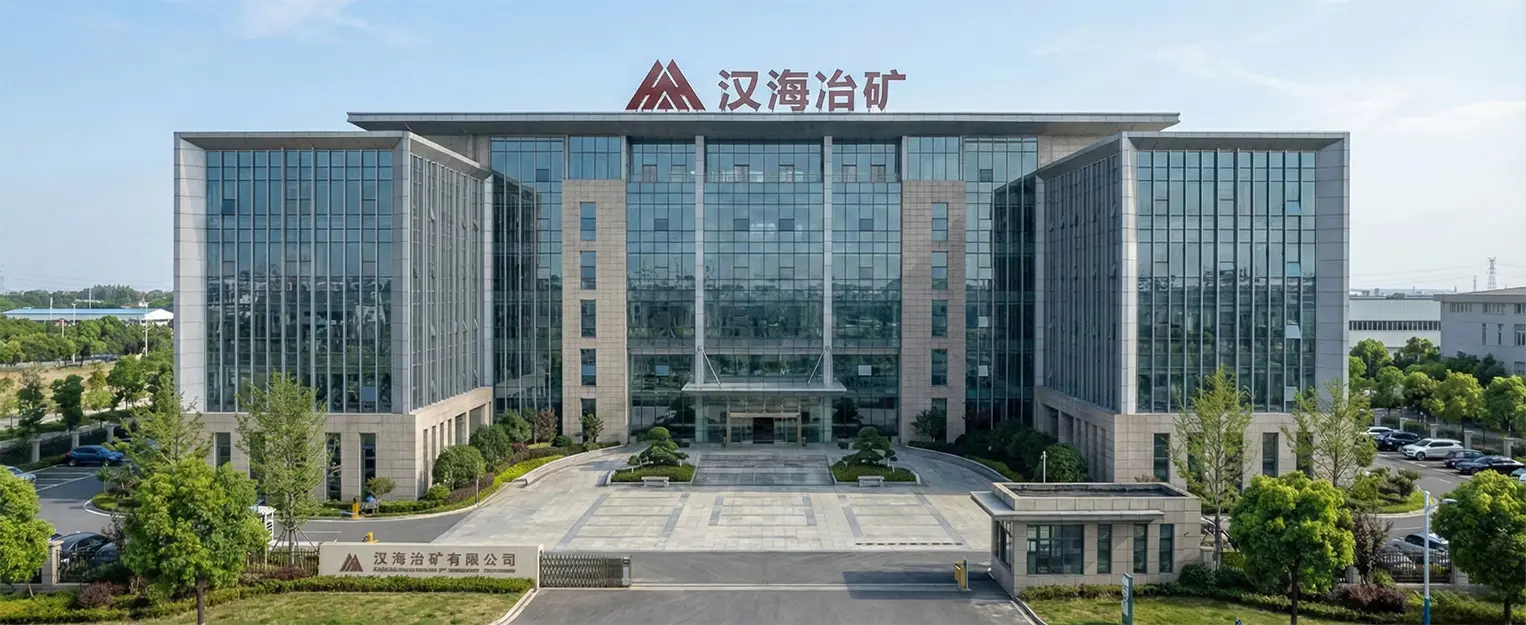
Henan Hanhai Metallurgy Mining International Trade Co., LTD stands at the forefront of this industrial revolution. Operating from Henan, China—the heartland of the nation's heavy engineering sector—Hanhai Casting has integrated the entire workflow of product design, foundry operation, precision machining, and non-destructive testing (NDT) under a single management framework.
We deploy high-grade alloy formulations including Mn13Cr2, Mn18Cr2, and Mn22Cr2. Our micro-alloying processes introduce trace quantities of vanadium and titanium to refine grain structures and maximize wear resistance.
By employing large-scale vertical CNC lathes and gantry boring machines, we guarantee that critical structural dimensions conform to tight tolerances (+/-0.1mm), ensuring perfect fitment and minimizing assembly downtime.
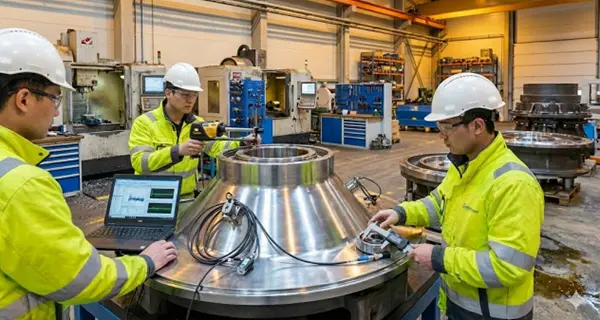
Quality assurance is backed by certified testing methods, including Ultrasonic Testing (UT), Magnetic Particle Testing (MT), dye penetrant inspections, and complete mechanical properties evaluation.
Our E-E-A-T (Experience, Expertise, Authoritativeness, Trustworthiness) value is deeply rooted in our corporate history. Established in 1997, Hanhai Casting has spent more than two decades refining casting practices and studying wear patterns. This long-standing experience allows us to provide "Information Gain" to our global procurement partners—not just quoting prices, but advising on dynamic force distributions, structural reinforcement of stress points on press arches, and minimizing crack propagation in rotating mill components.
A history of engineering excellence, scaling output to meet global industrial demand.
The global mining equipment market is highly competitive. To maintain an edge, global mining operations and OEMs look to China's advanced manufacturing clusters. The primary advantage of sourcing heavy-duty hammer mill components from a specialized foundry like Hanhai Casting is the optimization of the value chain.
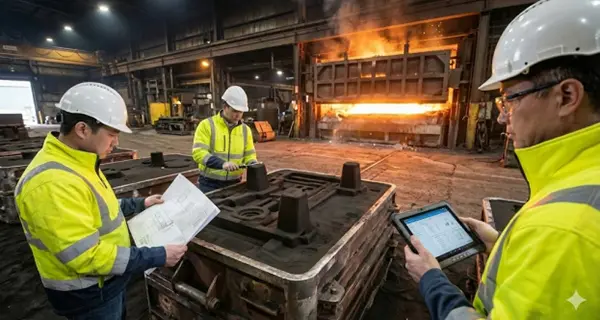
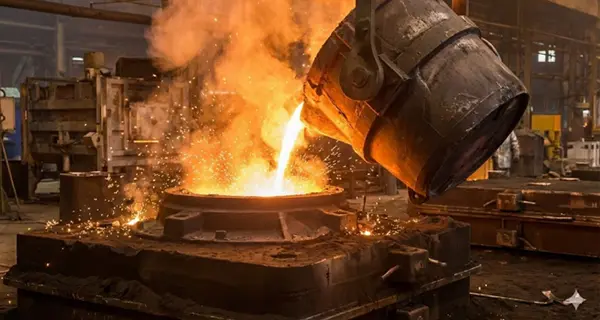
China's casting efficiency is built on three pillars: advanced technological integration, vertical supply chains, and highly skilled metallurgical engineers. At Hanhai, we utilize intelligent electric induction furnaces to precisely monitor batch chemistry in real-time, eliminating casting defects and impurities that lead to catastrophic failures in the field.
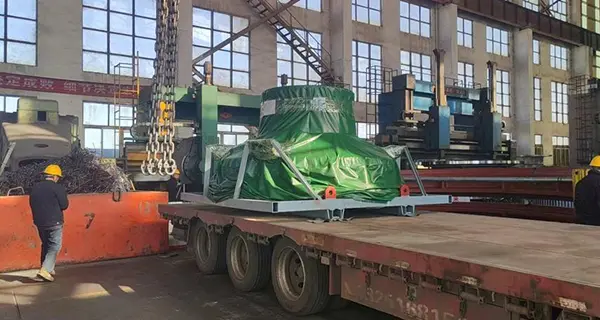
Furthermore, our proximity to raw material resources and specialized logistics hubs allows us to ship large casting products (such as 25-ton turbine cylinders or large support rollers) efficiently, ensuring that spare parts reach mine sites without delay.
Our systematic engineering and logistics process ensures risk control, cost reduction, and continuous product quality check from initial design down to delivery.

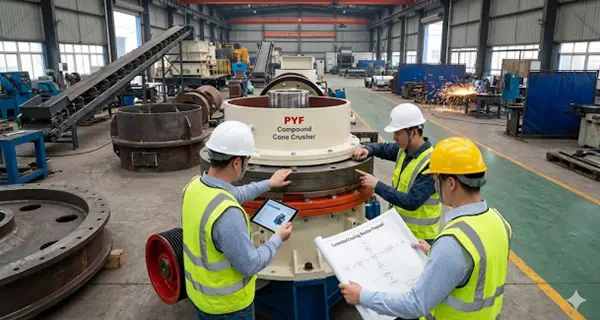

Heavy-duty crusher setups require configuration adjustments based on their operational geography. In hot, arid areas like Western Australia or the Middle East, dust sealing systems and high-temperature bearings are critical to avoiding premature component failure. Conversely, operations in high-altitude South American mines demand casting alloys with excellent low-temperature impact toughness to prevent cracking under thermal stress.
In the aggregates sector, the rapid growth of urban renewal has fueled demand for concrete recycling systems. Hammer mills are ideal for processing asphalt and reinforced concrete demolition waste. High-inertia rotors allow the hammer crushers to break down composite waste, separating steel bars from clean aggregate in one step.
Get professional insights into heavy casting selection, quality management, and procurement optimization.
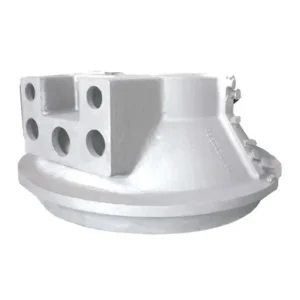
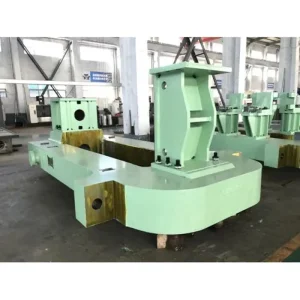
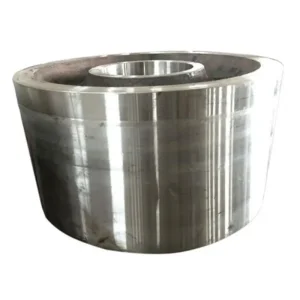
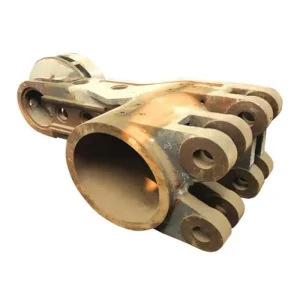
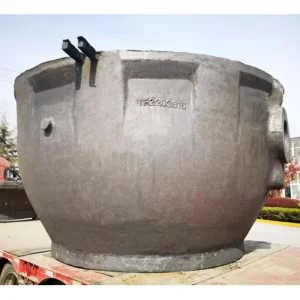
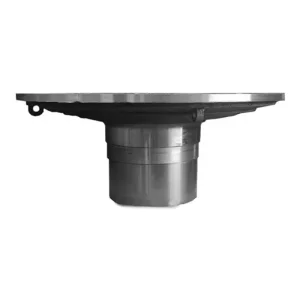
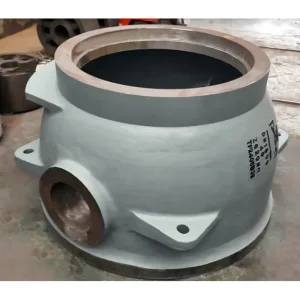
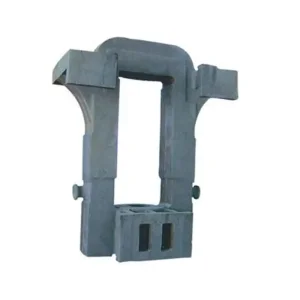
Examine our precision-machined heavy wear components, engineered using premium alloy steel for high-impact applications.
 Hanhai