Premium OEM assemblies, structural valve bodies, crushing frames, and high-performance casting components direct from China's leading foundry network.
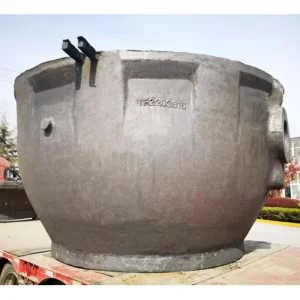
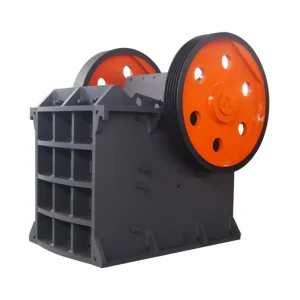
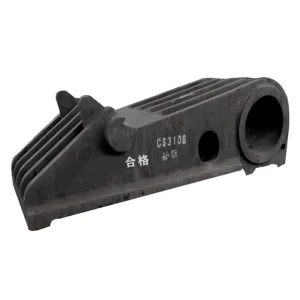
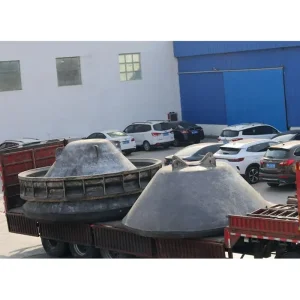
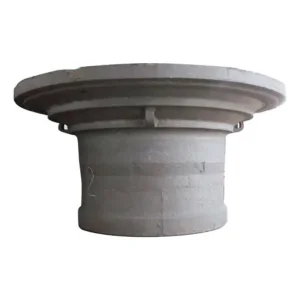
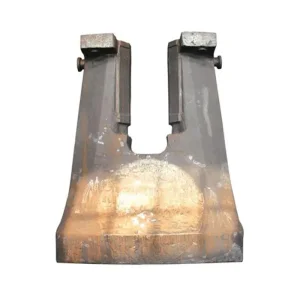
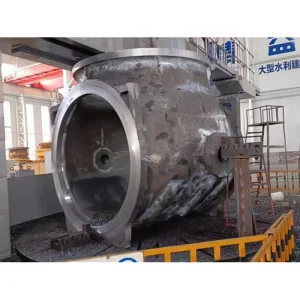
Henan Hanhai Metallurgy Mining International Trade Co., LTD is a leading foundry manufacturer in China, specializing in cast steel and cast iron parts. With advanced production lines and strict quality control, we supply durable castings for mining, metallurgy, power generation, and construction industries worldwide. By integrating engineering research, structural analysis, and precision fabrication, we ensure that every casting and heavy equipment assembly meets international certification protocols.

Providing significant Information Gain on double shaft kinetics, material processing physics, and next-generation metallurgy.
In modern mining, chemical processing, and quarry operations, the requirement for high-throughput crushing systems with minimal energy consumption has driven significant innovations in hammer mill designs. The **Double Shaft Hammer Crusher** (also known as a dual-rotor hammer mill) represents a critical leap in processing efficiency compared to conventional single-rotor systems. By aligning two parallel rotors rotating in opposite or synchronized directions, the equipment doubles the impact kinetic energy transfer zone, maximizing primary and secondary reduction inside a single pass.
Each rotor is powered by its own independent drive system, equipped with high-inertia flywheels and hydraulic couplings. This dual-drive design ensures that the startup torque is distributed, preventing structural stress on the drive train. The rotors are balanced to Class G2.5 dynamic specifications under ISO 1940. This precise balancing prevents high-frequency vibrations from transmitting to the casting frame, ensuring long bearing life (exceeding 80,000 operational hours) even under continuous peak loads.
The core limiting factor in crusher longevity has historically been the degradation rate of the hammers. Hanhai Metallurgy Mining addresses this by utilizing composite casting technologies. Our hammers are fabricated using high-chromium cast alloys (e.g., Cr26, Cr28) reinforced with titanium-carbide (TiC) inserts in the critical wear zones. This combination offers a dual benefit: a tough manganese steel or low-alloy steel shank that absorbs structural impact without fracturing, combined with a highly hard chromium matrix on the working face that resists severe abrasive wear.
In alignment with Industry 4.0 paradigms, Hanhai’s custom double shaft hammer crushers are configured with real-time vibration and temperature monitors built directly into the bearing housings. These thermal and seismic sensors communicate through standard industrial protocols (Modbus, Profinet) to feed telemetry data back to centralized SCADA systems. This setup permits predictive maintenance scheduling, mitigating catastrophic downtime and ensuring that global processing facilities maintain uninterrupted operational continuity.
Dual rotor impact generates cubical aggregates with fewer micro-cracks, highly preferred in premium concrete and industrial road applications.
The elimination of grate bars at the discharge zone prevents clogging, allowing the processing of materials with moisture content up to 15%.
Precision velocity control of rotors allows operators to tune the product sizing envelope, minimizing the generation of unwanted superfines.
Strategic advancements in material sciences, hydraulic designs, and electrification to drive future mining efficiency.
As the environmental footprint and operational cost considerations of mining become increasingly scrutinized, our engineers are actively mapping the technical roadmap for double shaft hammer crushers. The focus spans three key engineering vectors: material optimization, adaptive hydraulic systems, and variable frequency drive integration.
Transitioning from traditional constant-speed line drives to intelligent variable frequency drives (VFD) allows operators to adapt rotor speed dynamically based on feed size and mineral hardness. This integration decreases energy consumption by up to 22% during low-capacity or softer material phases and minimizes electrical demand peaks during start cycles.
Future hammer profiles are shifting away from monolithic steel castings. We are deploying metal matrix composites that embed industrial ceramic particles within high-strength steel. This matrix displays unparalleled resistance to gouging and scratching wear, showing performance increases of 3x to 5x over standardized high-manganese alternatives.
Maintenance safety is a core concern for plant operators. Our future design iterations feature fully automated hydraulic split-housing designs. By utilizing a touch-screen panel, operators can hydraulically pivot the casing upper frame segments in under 15 minutes, allowing unrestricted access to the rotor chambers for inspection and hammer replacement, eliminating hazardous manual crane rigging tasks.
Mitigating noise and vibration on-site is crucial for modern regulatory compliance. We are developing proprietary vibration isolation pads and high-density acoustic barriers integrated into the external casing of our double shaft hammer systems, maintaining sound pressure levels below 85dB(A) at a distance of 1 meter.
Deploying heavy duty dual rotor technology to solve crushing challenges in mining, energy production, metallurgy, and construction.
For processing non-abrasive or medium-hard run-of-mine ores (such as limestone, gypsum, coal, and soft copper ores), the dual shaft layout maximizes sizing throughput. By integrating primary impact and secondary crushing into a single system, mines eliminate the need for secondary cone or roller crushers, yielding immediate capital expense savings.
Cement clinker production requires high-throughput limestone processing. Double shaft crushing systems handle damp limestone without clogging, ensuring high material flow even in rainy regions. The cubical shape of output aggregates optimizes the raw grinding mill feed, leading to reduced power draw down-line.
Steelmaking slag presents dynamic crushing challenges due to its hard, abrasive properties and the presence of residual metals. The double shaft system’s high-mass rotors generate the mechanical energy needed to fracture the tough slag matrix, separating the metallic components for recycling while reducing slag down to sand-grade products.
Waste-to-energy projects require consistent sizing of complex waste materials. The high tip speed of the dual rotor assemblies shears fibrous materials, wood aggregates, glass, and soft metal containers, processing heterogeneous waste streams into fuel-ready fractions.
Leveraging Henan Hanhai’s advanced casting ecosystem to supply reliable and high-strength industrial structures globally.
China's manufacturing sector has evolved beyond simple assembly. Today, facilities like Henan Hanhai Metallurgy Mining represent the intersection of heavy metallurgy and digital manufacturing. By integrating casting, simulation-guided heat treatment, and precision CNC machining, we offer global procurement teams a resilient, vertically integrated supply chain.
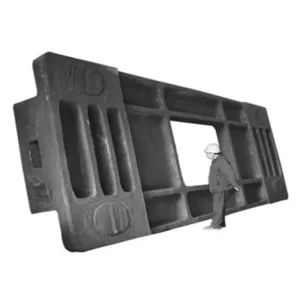
Before pouring liquid steel, our engineers use solidification software (such as MAGMAsoft) to model the casting process. This step identifies thermal hotspots, shrinkage zones, and structural risks, allowing us to adjust gating designs to ensure clean internal structures. This modeling is critical for components like the crusher frame, hollow shafts, and end caps, which must withstand cyclic high-impact fatigue.
Quality is verified through standard testing procedures. Every casting batch undergoes Non-Destructive Testing (NDT), including Ultrasonic Testing (UT), Magnetic Particle Testing (MT), and Liquid Penetrant Testing (PT), ensuring zero internal defects. We also provide full chemical analysis certificates using spark spectrometer measurements and mechanical properties certification (yield strength, tensile strength, Charpy V-notch impact toughness).
Precision is essential for bearing seats and shaft assemblies. Our machining floor features large double-housing planning and milling machines, vertical lathes, and boring systems. We maintain machining tolerances to IT6-IT7 standards, ensuring that shaft-bearing assemblies slide together with precise interference fits, reducing operational heat and bearing stress.
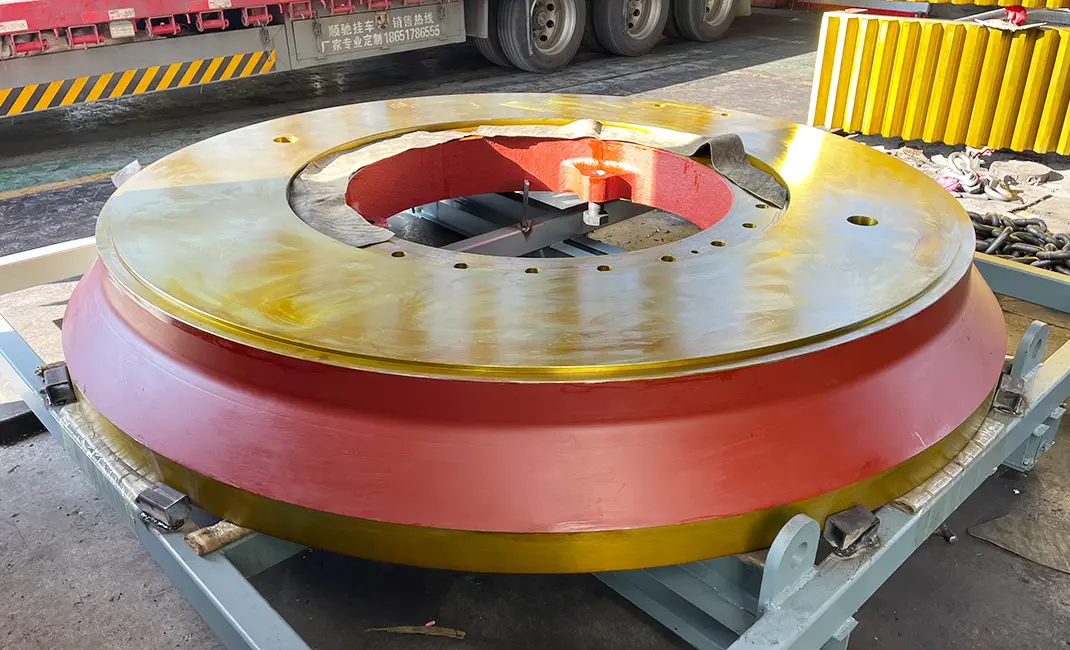
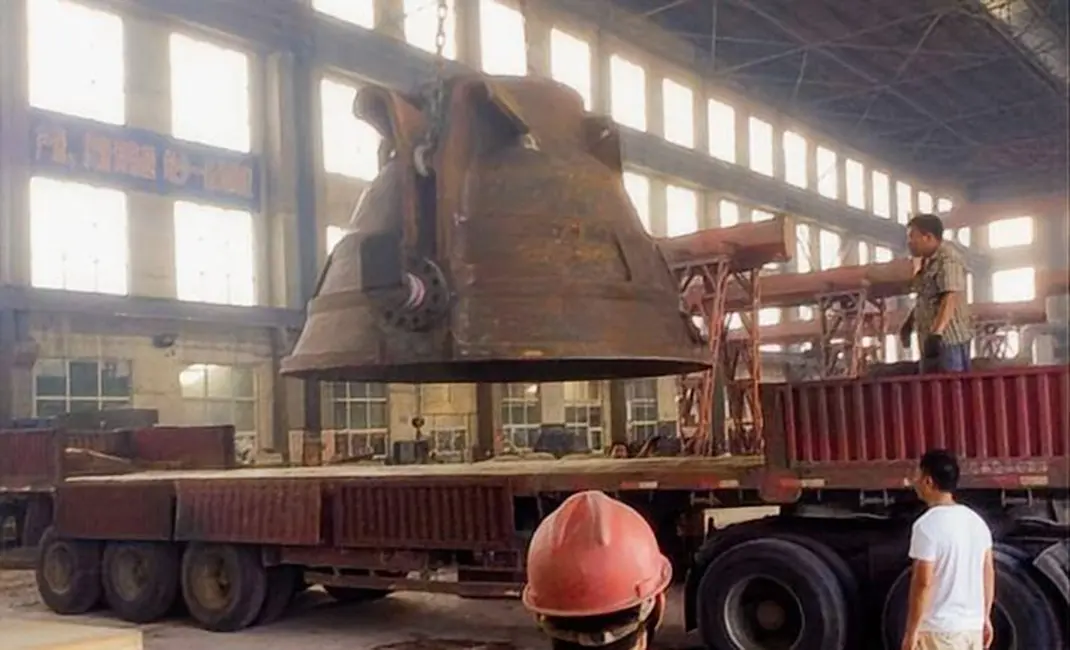
Our plant operates multiple medium-frequency induction furnaces, heat treatment kilns, and automatic sand preparation lines. This scale allows us to fabricate individual casting components up to 120 tons in weight, providing the capacity needed to handle large-scale global equipment orders without production delays.
For more than two decades, Hanhai Casting has been dedicated to the research, production, and export of high-quality steel and iron castings.
Hanhai Casting was established with a focus on heavy steel and iron castings, laying a solid technical and production foundation.
Introduced advanced melting and molding technology, expanded production capacity, and served key mining and metallurgy sectors.
Achieved ISO9001 certification, upgraded testing systems, and began exporting high-performance castings to Asia and the Middle East.
Integrated intelligent foundry systems and digital management, driving sustainable manufacturing and global customer partnerships.
Assisting international engineering, procurement, and construction (EPC) firms in optimizing their total cost of ownership.
Purchasing industrial sizing machinery like a custom double shaft hammer crusher requires looking beyond the initial capital expenditure. Procurement teams must calculate the Total Cost of Ownership (TCO), which includes installation, energy usage, spare parts wear rates, and maintenance-related downtime.
Every processing plant has unique footprint constraints and material feeds. Hanhai adapts the mounting geometry, feed hopper configurations, and motor installation angles of our crushers to integrate directly into existing aggregate lines, avoiding the need for costly plant modifications.
By designing the crusher to maximize material-on-material crushing, we reduce the wear rate on the outer wall castings. Combined with high-chromium, titanium-carbide reinforced hammers, our systems lower wear-parts cost per ton by up to 30% compared to standard castings.
Our service process ensures clear communication and technical alignment from the initial inquiry. Experienced engineers and project managers coordinate each step—from design and casting to machining and factory testing—to minimize risks and ensure projects are executed on schedule.
Ensuring compliance with international engineering codes, quality certifications, and site safety standards.
Operating across global regions means complying with localized safety and engineering standards. Henan Hanhai designs, manufactures, and tests its systems to match the destination country's regulations.
For operations in the European Economic Area, our machinery meets the Machinery Directive 2006/42/EC, Low Voltage Directive 2014/35/EU, and Electromagnetic Compatibility (EMC) Directive 2014/30/EU, with CE marks and declarations of conformity provided with all documentation.
Our foundry designs cast steel and cast iron elements to match ASTM standards (such as ASTM A148 for structural cast steel and ASTM A532 for abrasion-resistant cast irons), ensuring material compatibility during field repairs or structural integrations.
We support installation and startup through remote video engineering services or by deploying field technicians to the job site. This assistance covers mechanical alignment, dynamic balancing verification, lubricant flushing, and training for local plant operators.
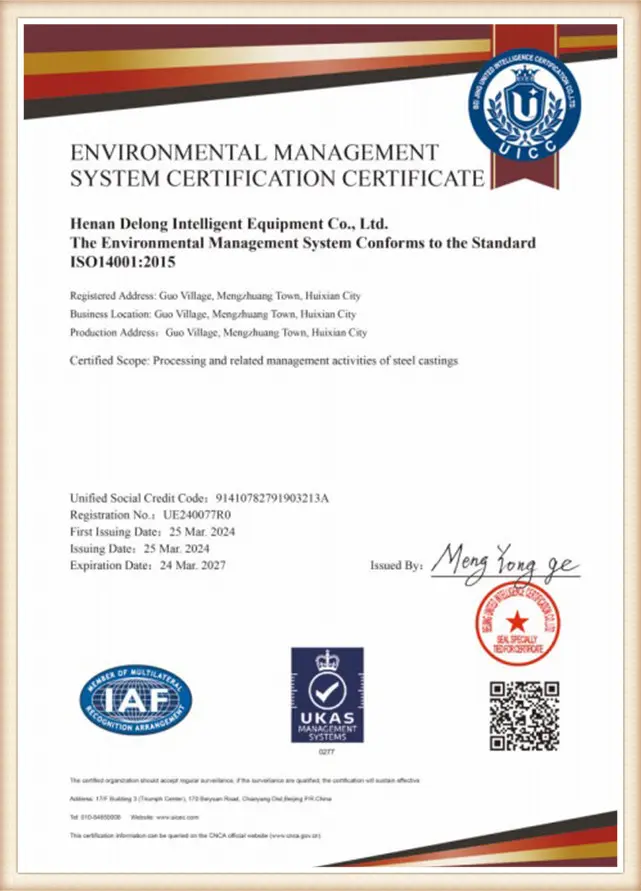
Our quality management system is audited and certified to ISO 9001:2015. Every manufacturing stage, from raw scrap steel sorting to the final coat of rust-inhibiting primer, follows documented procedures to guarantee consistent output quality.
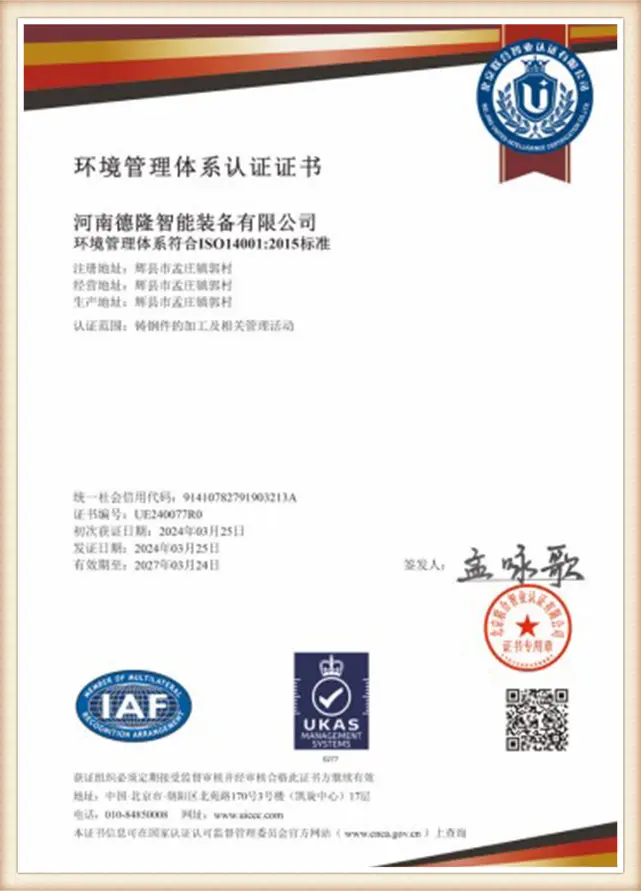
Trusted by global mining, metallurgy, and heavy construction equipment companies.

A history of delivering engineered castings and heavy industrial crushing systems globally.
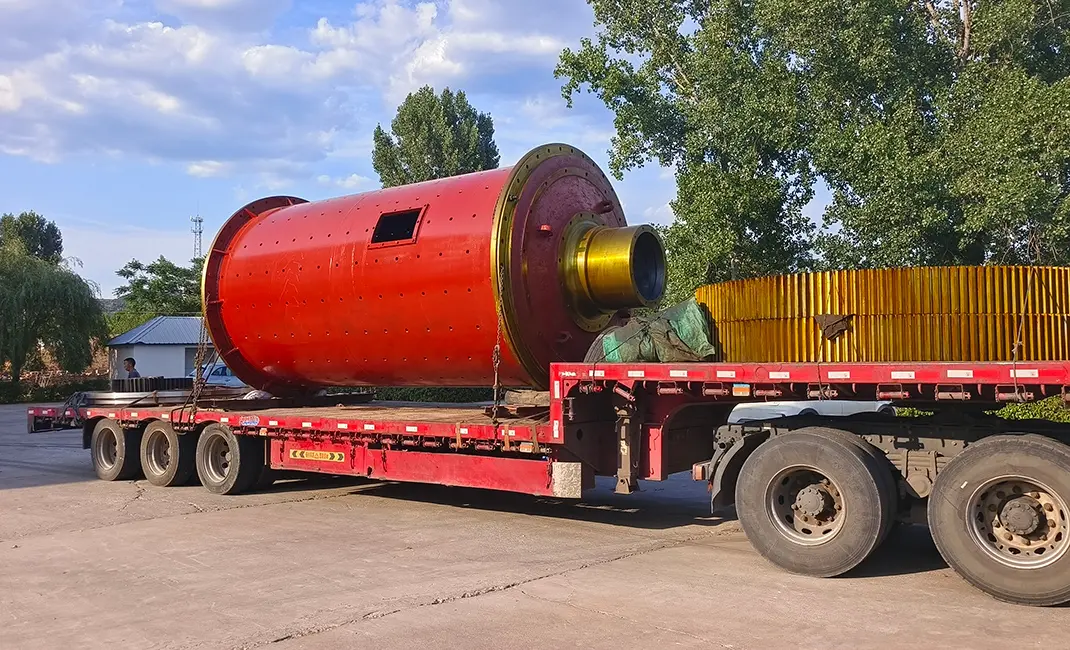
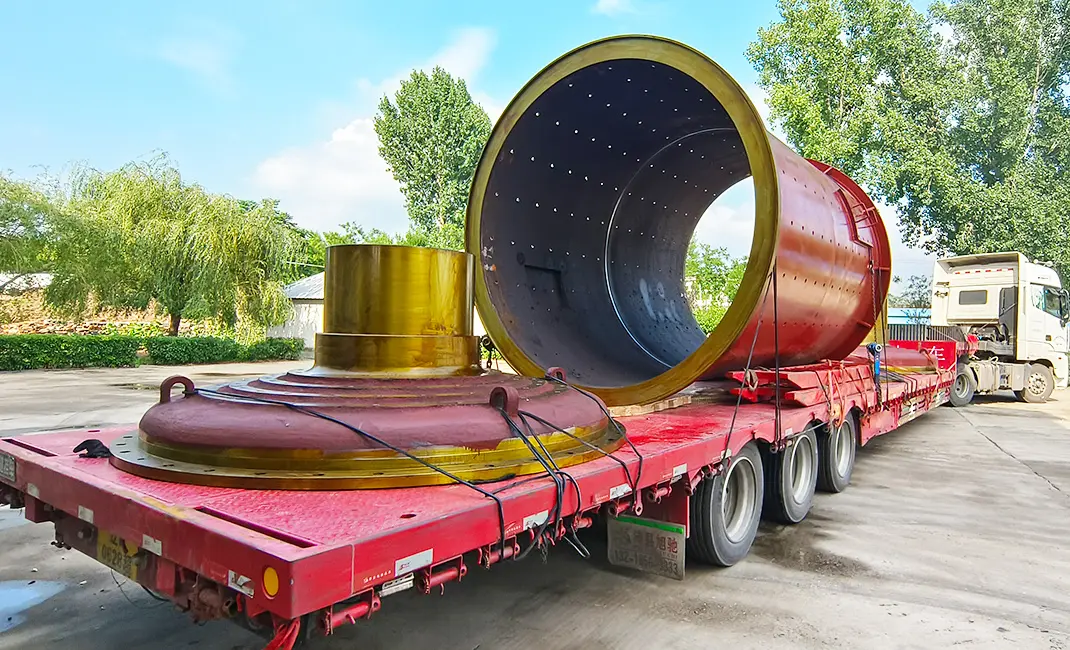
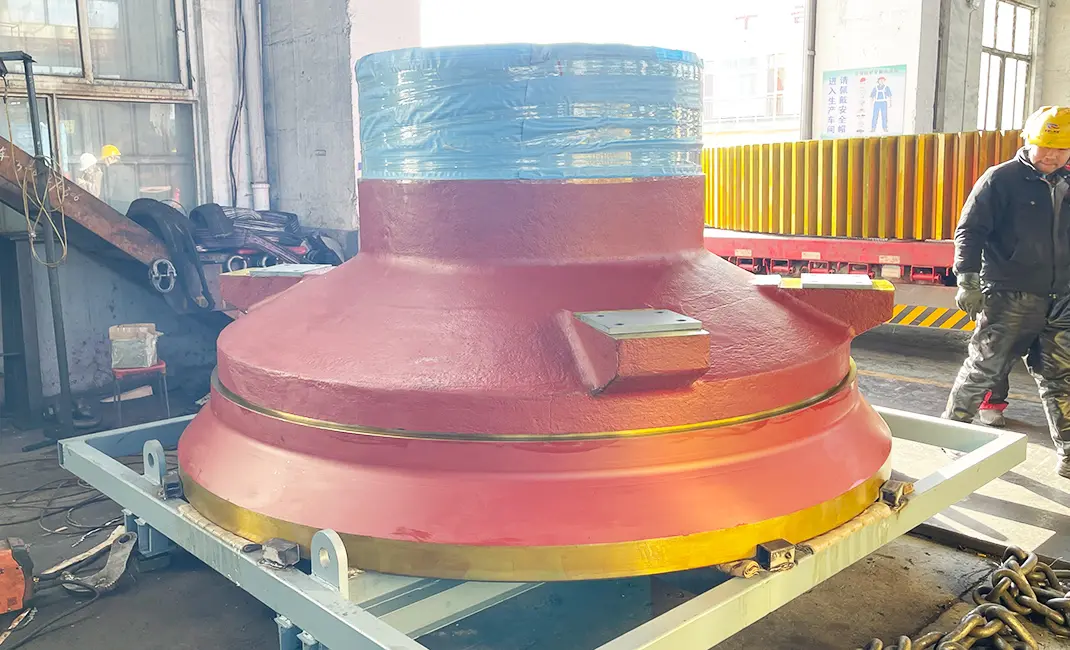
Answering high-intent questions from mining engineers and procurement teams on dual-rotor systems.
A: The double shaft design places two rotors in close parallel orbits, doubling the impact zone and allowing material-on-material collisions. This setup achieves a higher reduction ratio in a single pass, processes damp materials (up to 15% moisture) without clogging the grates, and reduces wear rates on structural liners.
A: We utilize composite castings, integrating a high-strength steel shank (which absorbs mechanical impact without breaking) with a chromium alloy wear face (Cr26-Cr28) reinforced with titanium-carbide (TiC) inserts. This structure provides high wear resistance while maintaining structural integrity.
A: Sizing depends on feed material hardness and rotor speed. Typically, feed sizes up to 150mm-200mm can be reduced to 0-3mm, 0-5mm, or 0-10mm aggregates. Operators can adjust the output range by changing rotor speeds and adjusting breaker plate gaps.
A: Yes, all casting components undergo ultrasonic (UT) and magnetic particle (MT) testing to verify internal integrity. We provide certifications for chemical analysis, heat treatment history, and mechanical properties (tensile strength, yield strength, impact toughness) to match ASTM, EN, and ISO standards.
A: We offer remote video support for alignment and startup, and can also send field engineers to the job site. This support includes mechanical installation supervision, bearing balance checks, lubricant system checks, and training for local maintenance crews.
A: Depending on the size of the machine and custom requirements, lead times range from 60 to 90 days. This includes design, finite element modeling, pattern design, casting, machining, factory assembly, and testing.
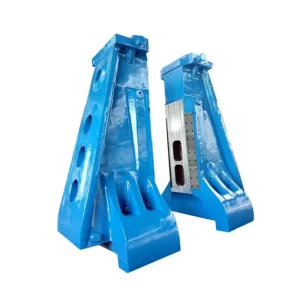
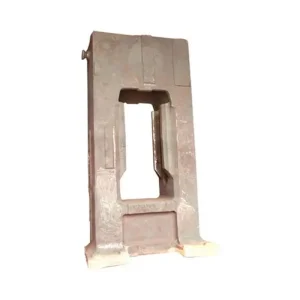
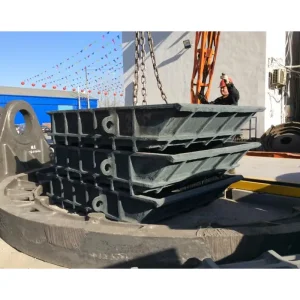
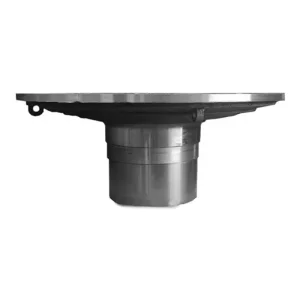
Premium replacement parts, frames, slag pots, and process components direct from our ISO 9001 certified foundry.
 Hanhai