Explore our premium machinery components designed for extreme environments, ranging from metallurgy to massive scale mining operations.
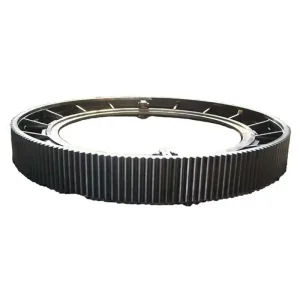
A comprehensive analysis of design, metallurgy, international standards, and China's advanced manufacturing paradigms in heavy rotary machinery components.
For heavy industrial sectors operating kiln drives, ball mills, and crushing systems, the structural integrity of Large Girth Gears and critical castings is non-negotiable. CE Certification is not merely a regional regulatory requirement for entering the European Economic Area; it represents a comprehensive commitment to safety, material consistency, and structural load reliability under the most punishing stress conditions. When driving machinery with throughput metrics measured in thousands of tons per hour, components must withstand enormous torsional loads, thermal stresses, and fatigue cycles.
This industry whitepaper explores the critical engineering demands, manufacturing capabilities, and global procurement paradigms associated with large-diameter castings, gear assemblies, and metallurgical solutions. Understanding the underlying metallurgy, from heat treatment dynamics of ZG42CrMo and ZG35SiMn alloys to precise gear hobbing tolerances, is vital for procurement officers and engineering directors globally.
Integrating state-of-the-art melt shops, advanced molding systems, and high-precision finishing facilities to deliver robust global industrial solutions.
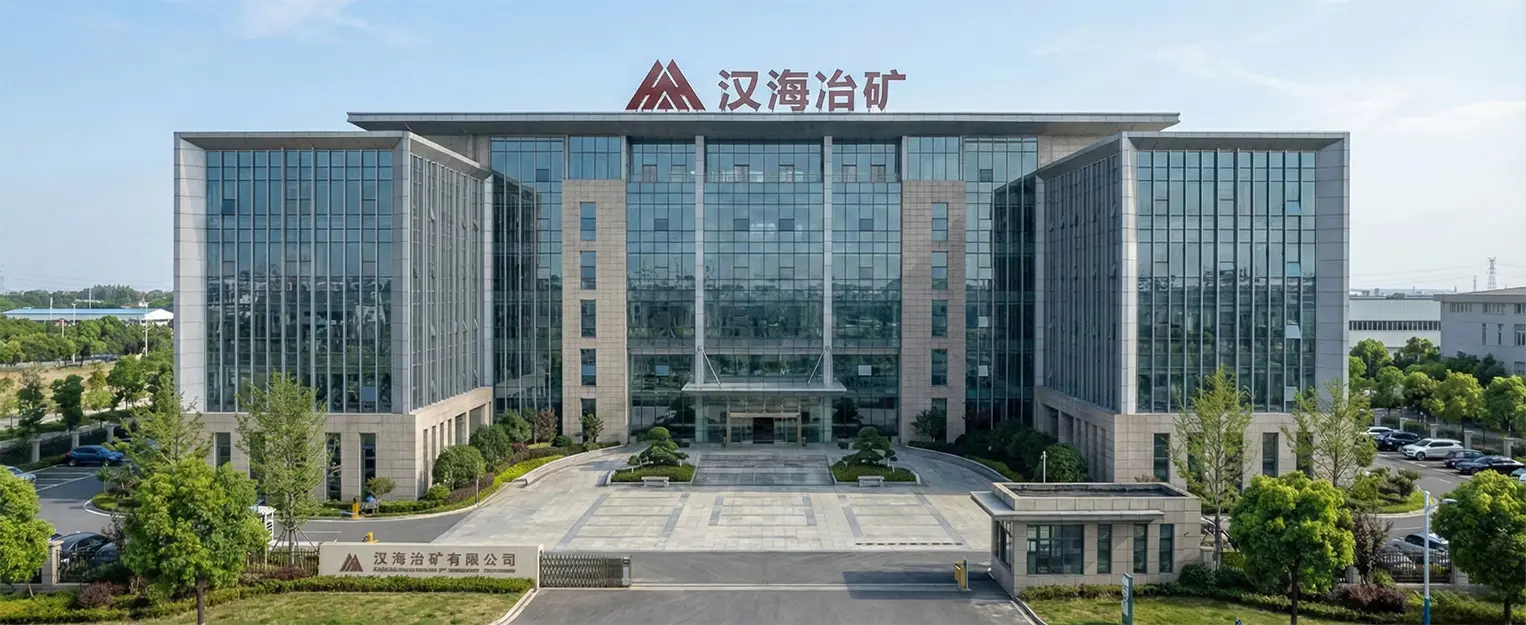
Henan Hanhai Metallurgy Mining International Trade Co., LTD is structured on a singular mission: To empower heavy global industries with precision-engineered casting and sustainable manufacturing excellence. Our vision focuses on establishing ourselves as a premier global foundry partner, offering high-strength carbon steel and complex cast-iron components designed for longevity in grinding mills, rotary kilns, and hydraulic structures.
Through our integration of CAD/CAE modeling, solidification simulation, and advanced CNC machining, we eliminate structural defects early, securing a high degree of dependability.
Our heavy manufacturing campus features automated sand conditioning plants, large-scale induction melting equipment, and vertical machining facilities capable of handling castings up to 120 tons per piece. By combining design, metallurgy, and final gear profile grinding under one roof, we guarantee optimal structural alignment and quality control. Every batch of liquid steel undergoes argon purging and vacuum degasification (VD/VOD) processing to ensure low hydrogen and sulfur content, preventing micro-voids.
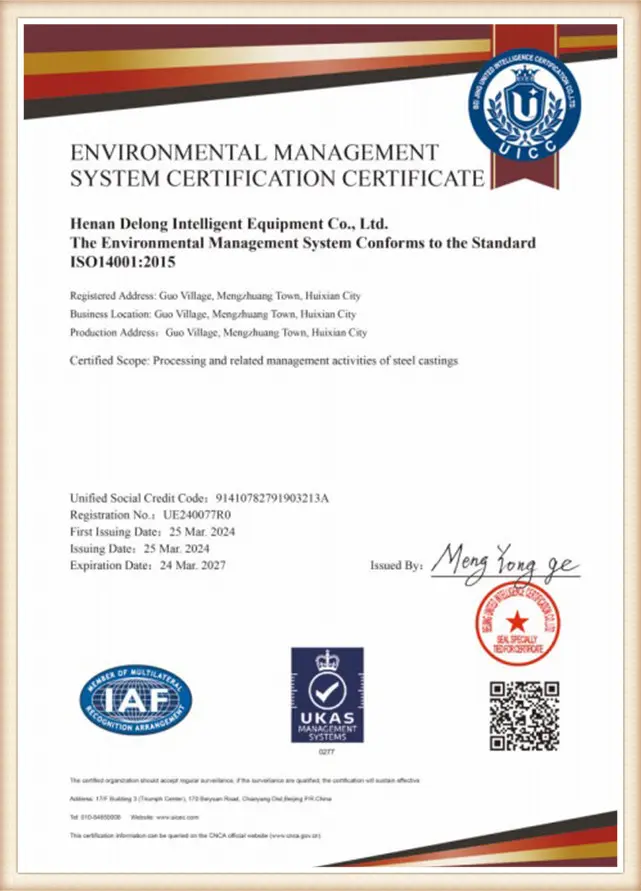
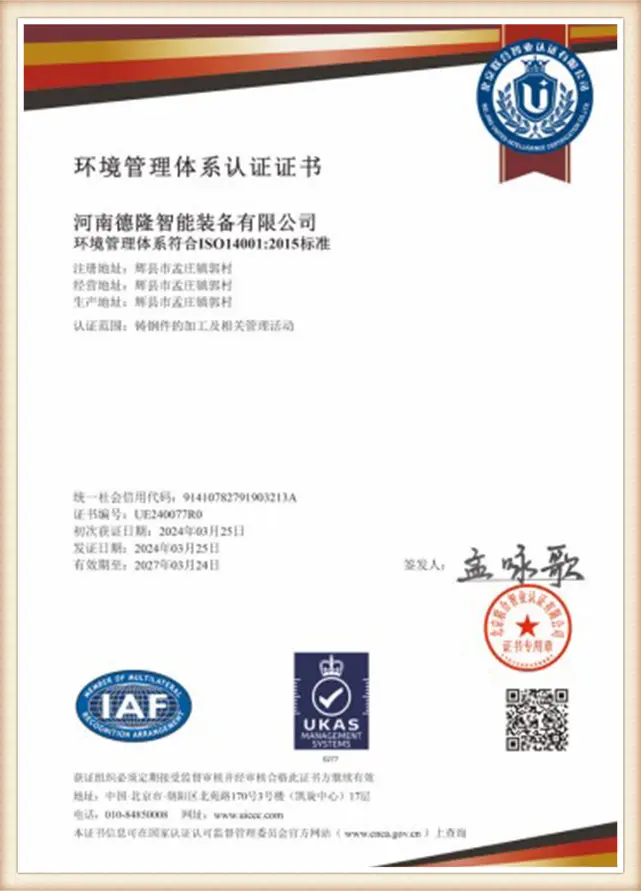
Our quality management workflow conforms strictly to ISO 9001:2015 and CE Machinery Directives. The manufacturing process relies on Non-Destructive Testing (NDT), including Ultrasonic Testing (UT) to ASTM standards, Magnetic Particle Inspection (MPI), and Radiographic validation. We maintain partnerships with external inspectors such as SGS, TÜV, and Bureau Veritas (BV) to assure risk-free deployments on international jobsites.
Establishment of primary casting and molding plants. Developing core capabilities in heavy-duty carbon steel and gray iron components for provincial metallurgical operations.
Introduction of advanced melting techniques, including large electric arc furnaces (EAF) and LF refining stations. Expansion of product range to serve cement rotary kilns and large gear assemblies.
Implementation of rigorous international standardizations (ISO9001 & CE). Expanding export reach across South America, Central Europe, the Middle East, and Asia, proving high fatigue-resistance in deep mining applications.
Integration of intelligent automation in sand reclamation systems and 3D simulation molding processes. Digitalized quality tracking profiles for each batch of high-strength alloy castings.
Unlocking cost efficiency, process velocity, and comprehensive metallurgical capabilities through integrated industrial supply chains.
Unlike regional foundries that outsource heat treatment or machining, leading Chinese manufacturers, such as Hanhai, consolidate the entire process. From mechanical design simulation (MAGMAsoft solidification software) and pattern design to pouring, heat treatment, hobbing, and grinding, we execute all stages within a unified framework. This integration minimizes transport delays, reduces quality hand-off risks, and maintains full process traceability.
With an annual output of 80,000 tons, Henan Hanhai leverages massive infrastructure to accommodate projects that smaller regional foundries cannot handle. Our capabilities include casting single-piece structures weighing up to 100 tons. This capacity allows us to manufacture split girth gears (up to 10 meters in diameter), thick-section riding rings, and high-tonnage hydraulic press wall panels without structural constraints.
China's casting cluster combines structural cost-efficiency in raw materials (pig iron, ferroalloys) and skilled labor with modern, automated equipment. This enables us to invest in high-end testing instruments, such as direct-reading spectrometers, ultrasonic scanners, and micro-focus X-rays, providing international standard quality at competitive prices.
Identifying emerging technological transformations in raw materials, digital tracking, and manufacturing paradigms.
Modern casting technology is transitioning away from empirical trial-and-error design. The integration of finite element analysis (FEA) and computerized solidification software simulates temperature fields and phase transformations during the pouring process. This forecasting identifies hot spots, contraction cavities, and shrinkage risks before machining, allowing engineers to optimize riser locations and chilling systems. The result is a substantial reduction in internal micro-defects, ensuring structural integrity in high-vibration applications.
Sustainable manufacturing is a core focus for modern foundries. Through sand reclamation systems, over 95% of molding sand is recycled and reused, reducing waste footprint. Our induction melting processes replace fossil-fuel energy with electricity, reducing direct carbon dioxide and particulate emissions. These sustainable practices ensure compliance with global environmental regulations, creating resilient supply chains for eco-conscious buyers.
Reviewing targeted applications of Hanhai products across cement, mining, and structural steel manufacturing sectors.
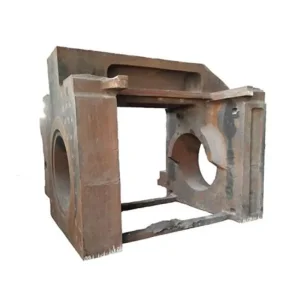
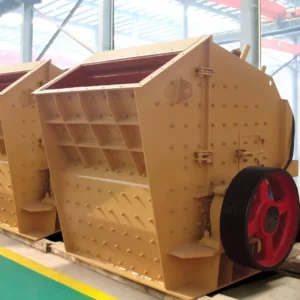
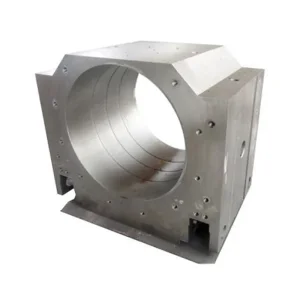
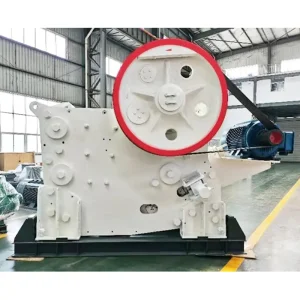
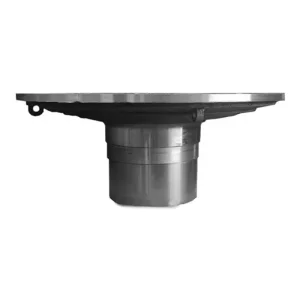
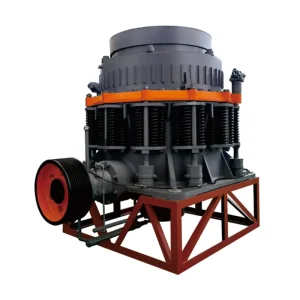
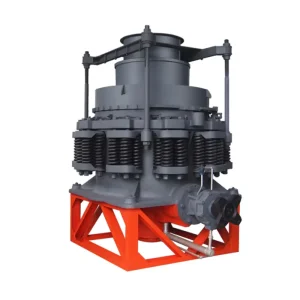
In high-capacity mineral processing plants, crushers and mills must handle hard, abrasive ores. Our PE Jaw Crushers, CZC Jaw Crushers, and PY/PYF Cone Crushers use heavy cast steel frames, high-strength alloy support sleeves, and robust bearing housings to manage crushing forces. These thick-walled castings prevent structural deflection and alignment errors during continuous loading.
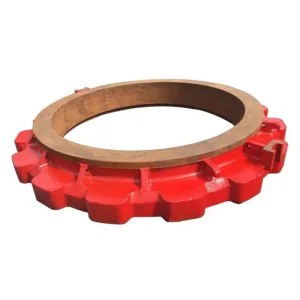
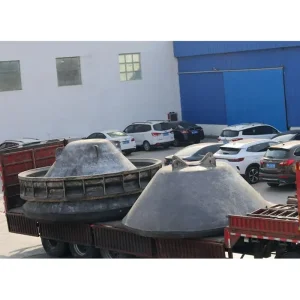
Rotary kilns operate under continuous rotation, high temperatures, and bending loads. The kiln ring (or riding ring) and girth gear must distribute weight without cracking. Hanhai's Custom Cast Iron Riding Rings and girth gears are heat-treated to ensure deep hardness profiles, reducing wear and expanding maintenance cycles for cement plants.
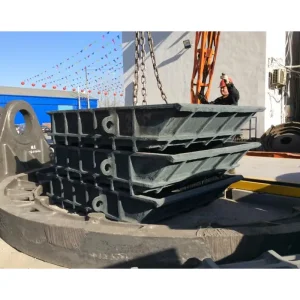
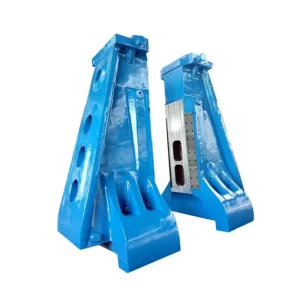
In forging and steel mills, components must withstand extreme thermal and load cycles. We manufacture High-Performance Casting Slag Pots designed to withstand molten slag thermal shock, alongside heavy Hydraulic Press Wall Panels that handle press stresses without structural fatigue.
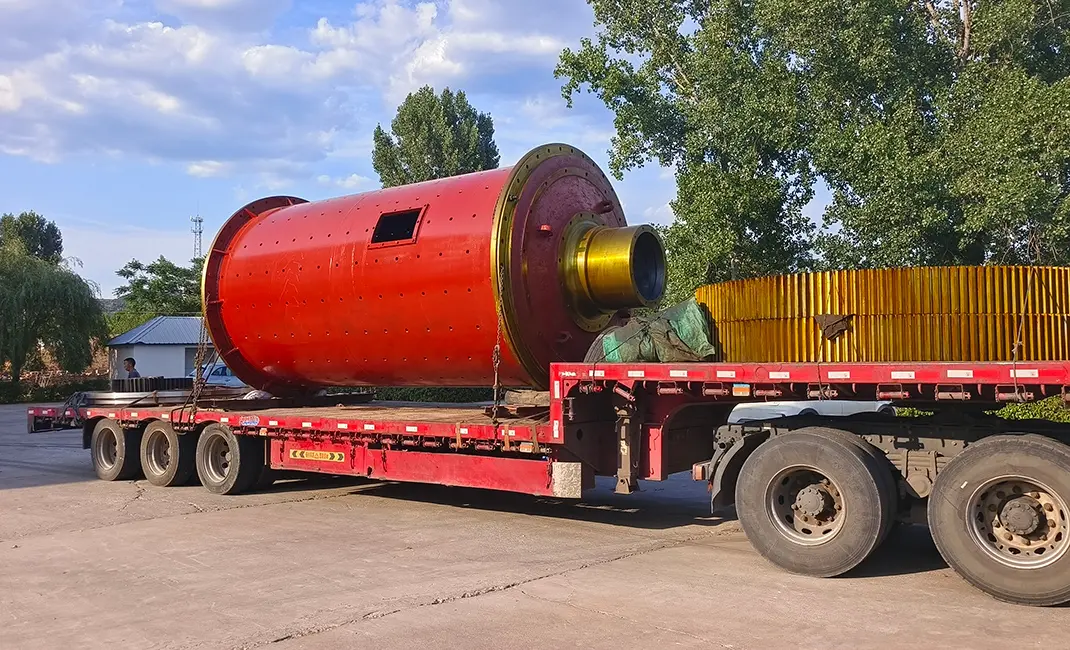
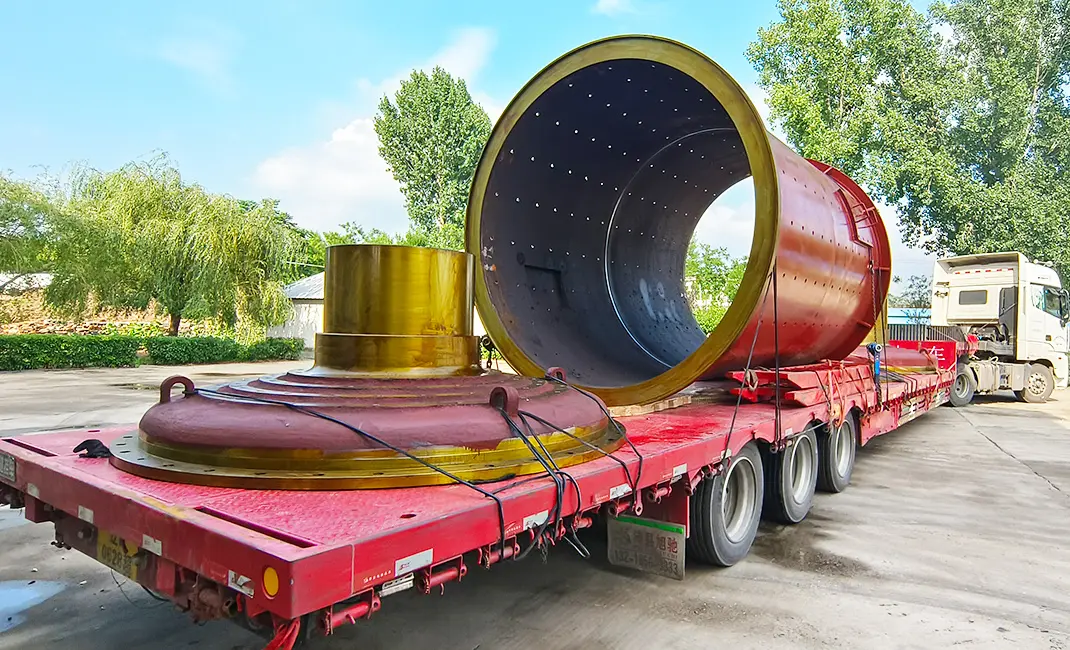
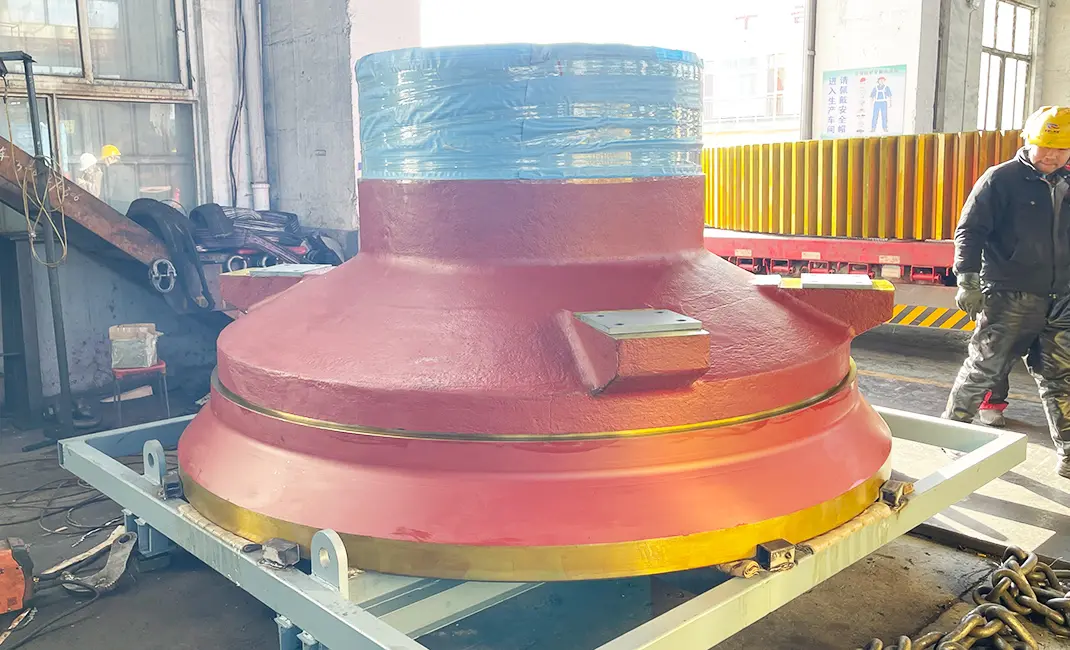
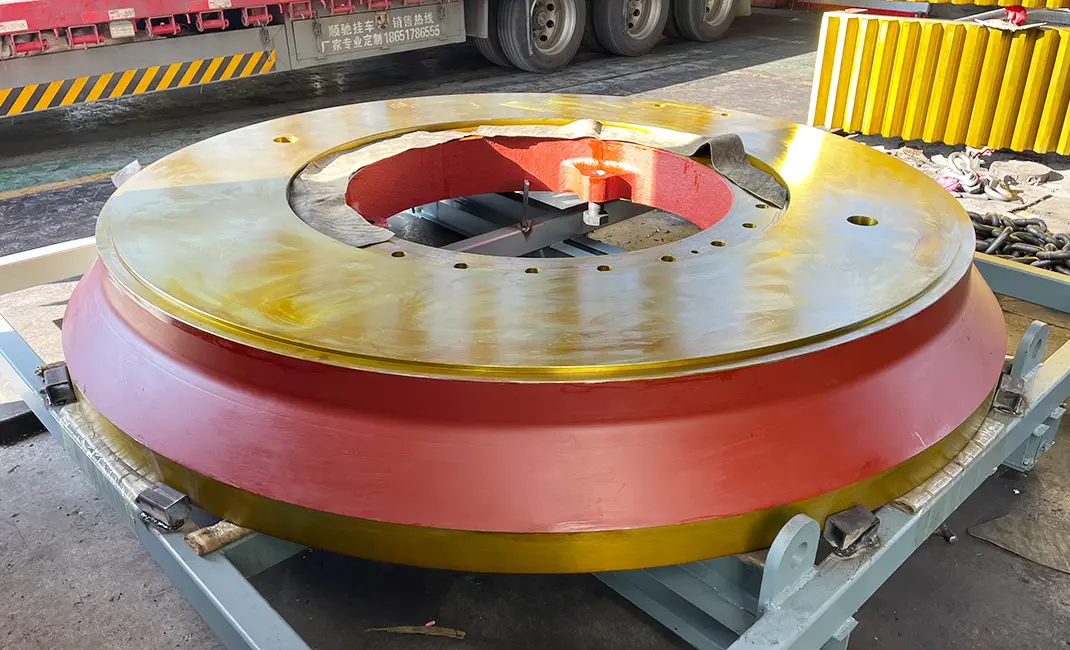
Standardizing acceptance testing and metallurgical metrics to ensure alignment with international heavy industry requirements.
To meet safety standards under cyclical loading, buyers require comprehensive documentation. Chemical analyses are verified using optical emission spectrometers to check element ratios (e.g., Chromium, Molybdenum, and Manganese) in alloys like ZG42CrMo. Mechanical property reports must confirm tensile strength, yield points, elongation, and impact energy down to -20°C for cold-weather operations. These reports provide material traceability from raw steel to final casting.
Ultrasonic Testing (UT) to standards like EN 10228-3 or ASTM A388 identifies potential internal shrinkage, porosity, and micro-fissures in high-stress zones. Magnetic Particle Testing (MT) is used to detect surface micro-cracks along gear tooth root profiles. Final quality reports include three-dimensional coordinate measurements to verify finished dimensions and machining tolerances against design specifications.
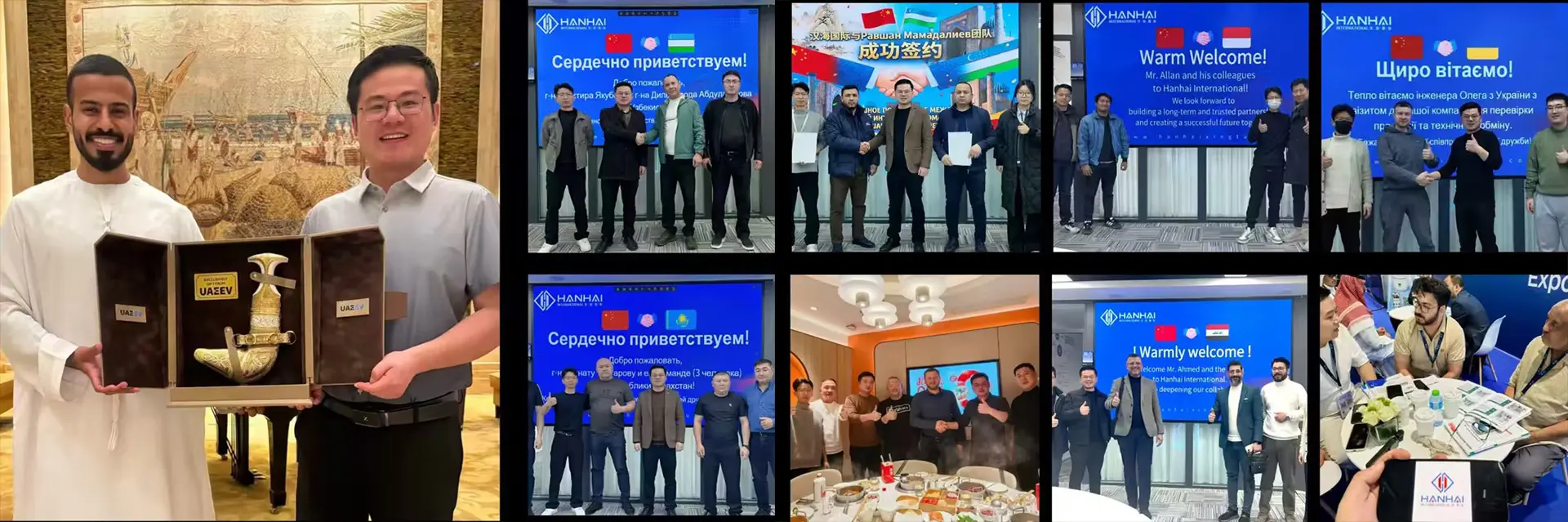
Trusted by Global Cooperative Partners:
An integrated, nine-step engineering pipeline designed to minimize project risk, control manufacturing costs, and ensure delivery schedules.
Initial design evaluation and gathering of operational profiles, load conditions, gear geometry requirements, and material grade specifications from the customer.
Using finite element design validation and MAGMA simulation software to analyze material flow, predict thermal cycles, and optimize structural thickness before pattern design.
Finalization of QA/QC testing criteria, international material certification requirements, and scheduling agreements prior to production initialization.
Developing precision wood or metal patterns and preparing sand molds using high-stability silicate or resin-bonded sand systems for smooth casting finishes.
Double-furnace melting using electric arc and ladle refining furnaces with slag removal. Continuous ladle temperature monitoring is maintained during the pouring stage.
Performing annealing, normalizing, or tempering cycles in computer-controlled heat treatment furnaces to relieve casting stresses and achieve hardness profiles.
CNC machining and hobbing of gear profiles, followed by tooth root grinding to meet AGMA or ISO geometric and tolerance standards.
Execution of Ultrasonic (UT), Magnetic Particle (MT), and Dye Penetrant (PT) tests. Verifying geometry against drawings with calibrated coordinate measuring machines.
Applying anti-rust surface treatments and loading assemblies into reinforced wooden crates with dry desiccant packs for overseas sea freight transport.
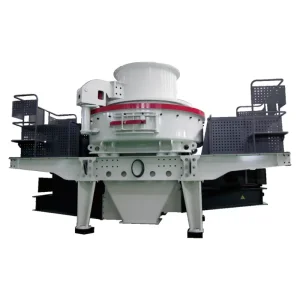
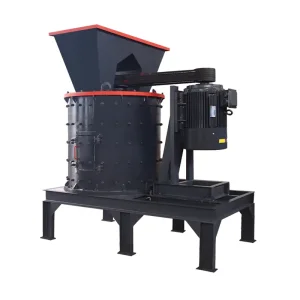
Browse our selection of wear-resistant aggregate systems and mining crushers engineered for hard rock processing.
Detailed engineering answers to standard procurement questions concerning design specifications, heat treatments, and test certifications.
 Hanhai