Engineered to deliver exceptional resistance to wear, impact, and thermal fatigue in heavy industrial applications.
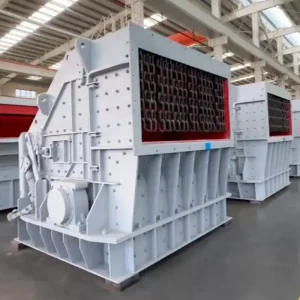
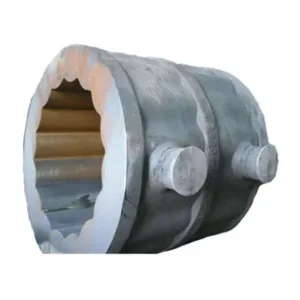
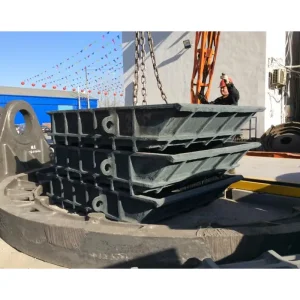
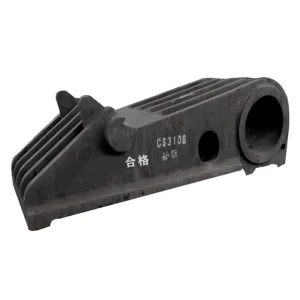
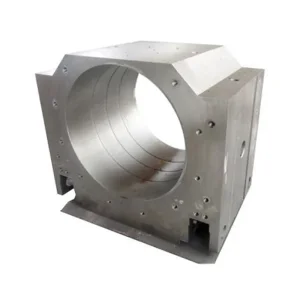
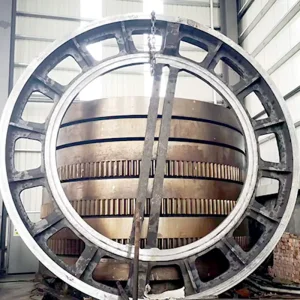
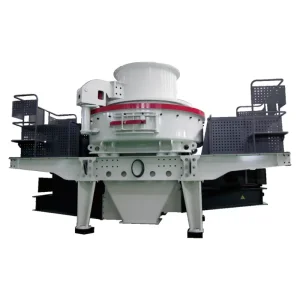
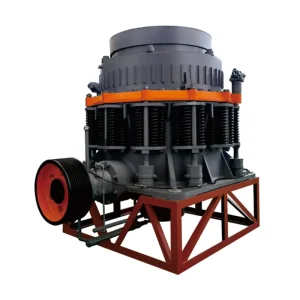
As a global leader in high-performance metallurgy manufacturing, Henan Hanhai Metallurgy Mining International Trade Co., LTD is an established foundry pioneer specializing in heavy-duty cast steel and cast iron components. Backed by advanced casting technology, digital metallurgy simulation, and state-of-the-art CNC machining centers, we serve structural engineering demands across heavy mining, metallurgical, power generation, and infrastructural construction industries globally.
By integrating layout design, finite element analysis (FEA), multi-process casting methodologies, and rigorous non-destructive testing (NDT), Hanhai ensures that every casting delivered features optimized grain structure, enhanced tensile strength, and superior longevity in aggressive wear environments.

Uncompromising criteria for sourcing structural and high-wear components in critical applications.
For high-load machinery components like bearing housings and crusher shafts, internal gas porosity, shrinkage cavities, or inclusions can trigger catastrophic fatigue failures. Modern procurement demands 100% UT (Ultrasonic Testing) and RT (Radiographic Testing) to ensure absolute internal soundness.
Heavy duty components require strict adherence to international material grades such as ASTM A27, ASTM A148, DIN EN 10293, and JIS G5101. Real-time spectrometer analysis at the pouring stage ensures the precise balancing of Carbon, Manganese, Chromium, and Molybdenum ratios.
In B2B industrial projects, a two-week delay in receiving a critical component can cause millions of dollars in downstream downtime. Sourcing managers prioritize foundries with vertically integrated casting, heat treatment, machining, and logistics systems to control lead times.
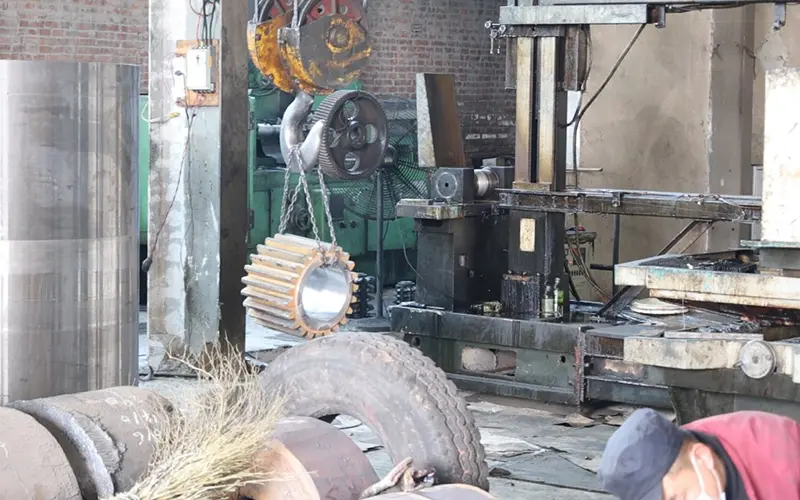
The modernization of China's heavy foundries has moved beyond basic high-volume production. Henan Hanhai integrates Foundry 4.0 systems, combining computer-aided design, advanced simulation software, automated molding lines, and green foundry technologies.
Our digital production eco-system utilizes localized raw materials, reducing raw input logistics costs, while our advanced gas-fired heat treatment furnaces ensure uniform stress-relieving and normalizing procedures. This integration results in a 25% to 35% cost optimization compared to European and North American casting providers, without sacrificing metallurgical quality.
Our strategic location in Henan, the industrial heartland of China, provides direct access to domestic raw steel refinement, an extensive supply chain of alloying agents, and highly skilled metallurgical engineers, backed by multimodal shipping links to major deepwater ports.
Engineered for high performance, structural safety, and wear longevity in harsh environments.
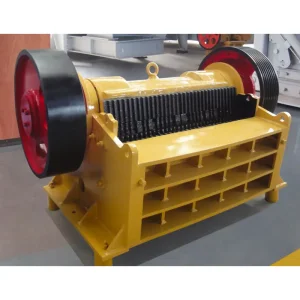
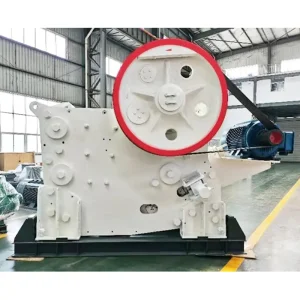
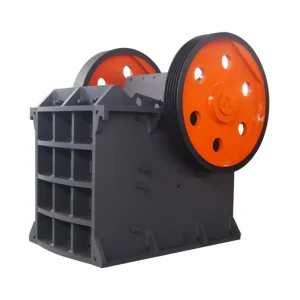
High manganese steel mantles, bowl liners, jaw crusher plates, and crushing rollers engineered to withstand intense compressive forces and continuous abrasive wear under mineral crushing operations.
Our heavy cast steel slag pots, slag ladles, ingot molds, and charge buckets are engineered with specialized alloy chemistry to endure thermal shocks up to 1600°C without crack propagation.
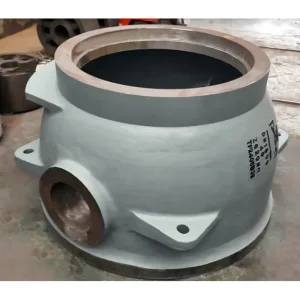
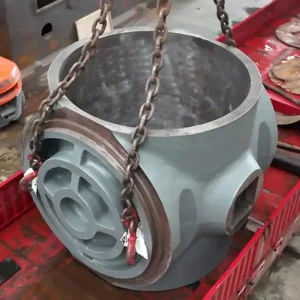
Precision-engineered cast iron valve bodies, high-pressure industrial manifolds, turbine cylinder housings, and fluid control system housings certified for high pressure ratings and leak-free performance.
The casting industry is moving fast towards digitalization, sustainability, and hybrid manufacturing. At Hanhai, we are investing in key research sectors to define the future of heavy industrial casting production:
We use Magmasoft Solidification Modeling and Finite Element Method (FEM) analysis to analyze metal flow behavior, thermal transfers, and stress fields before pattern construction. This prevents gas pockets, micro-porosity, and hot tearing during casting.
Ensuring compliance with local environmental codes, international transport protocols, and design requirements.
Every casting undergoes non-destructive evaluation (NDE), including MPI (Magnetic Particle Inspection) for micro-cracks, UT for internal cavities, and dimensional checks using high-precision portable coordinate measuring machines (CMM).
Products are engineered to conform to strict regulatory quality frameworks, including EN 10204 3.1 & 3.2 material certificates, ASTM standards, ISO 9001 quality guidelines, and the European Union’s CE certifications.
Our localized networks provide customs support, duty calculations, and DDP (Delivered Duty Paid) shipping options, backed by experienced application engineers to ensure onsite fitment, commissioning, and warranty support.
Our structured engineering process ensures quality assurance from design to global delivery.
Sourcing engineers submit technical specifications, material performance requirements, and 2D/3D component drawings. Our engineering team evaluates casting geometries, drafts drafts angles, and selects optimal alloys.
Using simulation tools, we run virtual casting processes to optimize runner paths, riser locations, and cooling rates. This step prevents shrinkage and gas inclusion risks before mold manufacturing begins.
Pattern-making options include high-durability wood, metal, or resin tooling, depending on volume. Advanced automated lines produce sand molds (no-bake furan resin or green sand) for precise casting replication.
Melting in electric arc or induction furnaces, with chemical validation via optical emission spectrometers prior to pouring to ensure strict adherence to metallurgy targets.
Normalization, tempering, and stress-relieving procedures optimize toughness and microstructural hardness. NDT verification includes ultrasonic, magnetic particle, dye-penetrant, and dimensional inspections.
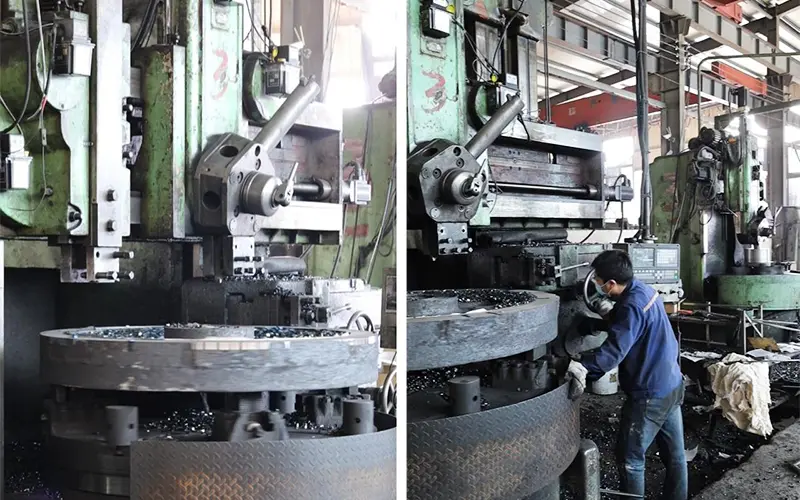
Precision CNC machining achieves target dimensional tolerances (+/-0.05mm). Components are packed with anti-corrosion treatments in steel frame crates, ready for land, rail, or ocean logistics.
Answering key technical and logistical questions for global procurement managers.
Engineered to withstand heavy duty operations, wear, and severe structural loads.
 Hanhai