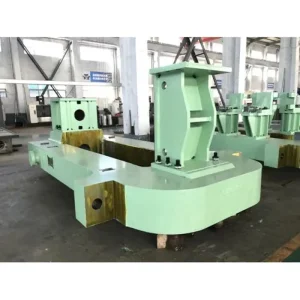
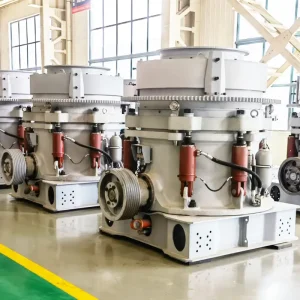
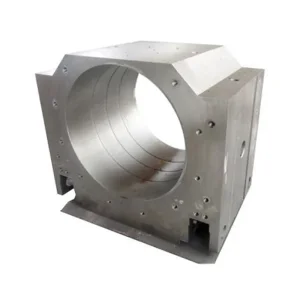
The global mining and construction landscape is undergoing a paradigm shift. With raw material prices fluctuating and environmental regulations tightening, the demand for high-efficiency, low-maintenance crushing equipment has never been higher. Single Roll Crushers (SRC) have emerged as a critical asset in this ecosystem, particularly for handling materials with high moisture content—such as coal, limestone, and chemical gypsum—that would typically clog conventional jaw or cone crushers.
Modern enterprises are moving away from "lowest price" procurement strategies toward "Total Cost of Ownership" (TCO) models. This shift highlights the need for manufacturers who don't just sell metal, but provide engineered solutions that improve production line uptime. As an expert in this field, we observe that the successful adoption of SRC technology is less about the machine itself and more about the metallurgical integrity and design precision of the wear parts, a domain where Chinese manufacturing has achieved a competitive edge through decades of vertical integration.
The "China Advantage" in the foundry and crusher manufacturing sector has evolved from simple labor cost arbitrage to technological synthesis. Leading manufacturers now leverage:
Single Roll Crushers are not a "one size fits all" commodity. They are highly specialized tools. Our engineering team designs based on the specific industrial application:
Mining & Metallurgy: For breaking down run-of-mine ore, our designs emphasize impact resistance and massive throughput. We utilize reinforced roll shells to handle abrasive loads that would destroy inferior components.
Chemical & Fertilizer Industry: The key challenge here is corrosion resistance. Our specialized casting techniques involve stainless steel linings and specialized coatings to prevent chemical reaction-induced wear on the crushing teeth.
Recycling & Waste Management: Modern circular economy initiatives require crushers to handle heterogeneous materials. Our SRC solutions feature modular tooth designs, allowing for rapid replacement of worn-out segments without downtime.
For international procurement managers, navigating the global market requires verifying more than just a quotation. Compliance with ISO9001 and CE certification is the baseline, not the benchmark. A true partner must provide:
A: A Single Roll Crusher provides a lower reduction ratio but superior handling of sticky or wet materials. Because the material is crushed against a breaker plate (often spring-loaded), it is less susceptible to "packing" or clogging, which is a common failure point for jaw crushers in wet conditions.
A: We utilize advanced sand-casting and investment casting methods, followed by rigorous heat treatment cycles. We also perform ultrasound testing (UT) and magnetic particle inspection (MT) to ensure no subsurface cracks exist in the critical load-bearing areas of the rolls.
A: Absolutely. Our metallurgical laboratory analyzes the Mohs hardness of the customer's material. We then adjust the alloy composition (e.g., higher chromium content for impact, higher manganese for pressure) to optimize the longevity of the crusher rolls.
 Hanhai