Choosing an Impact Crusher is not as simple as comparing horsepower or feed opening. The right machine depends on material, feed size, moisture, abrasiveness, and the required product shape. A quarry producing clean, cubical aggregates may need a different solution from a contractor recycling reinforced concrete on a crowded jobsite.
The main categories include horizontal shaft impact crushers, vertical shaft impact crushers, and specialized primary, secondary, and tertiary impact units. Horizontal shaft models often handle larger feed and strong reduction ratios. Vertical shaft machines are widely considered when improved particle shape or manufactured sand is important. These descriptions help, but they are not complete. Actual performance changes with rotor speed, blow-bar design, chamber geometry, and operating discipline.
Gerald Hanisch, founder of RUBBLE MASTER, has emphasized a practical rule: “The machine must fit the application, not the other way around.” That idea deserves attention. A compact mobile Impact Crusher may save transport time, yet it can struggle with consistently abrasive rock. A powerful stationary unit may deliver excellent output, but installation and maintenance can demand more planning.
This guide examines the top types of impact crushers and their practical strengths. It also considers limitations, operating costs, and material behavior. Numbers alone can mislead. A crusher that looks efficient in a brochure may perform differently beside a dusty stockpile, under uneven feeding, or during a wet shift. The better decision comes from matching technology with real site conditions.
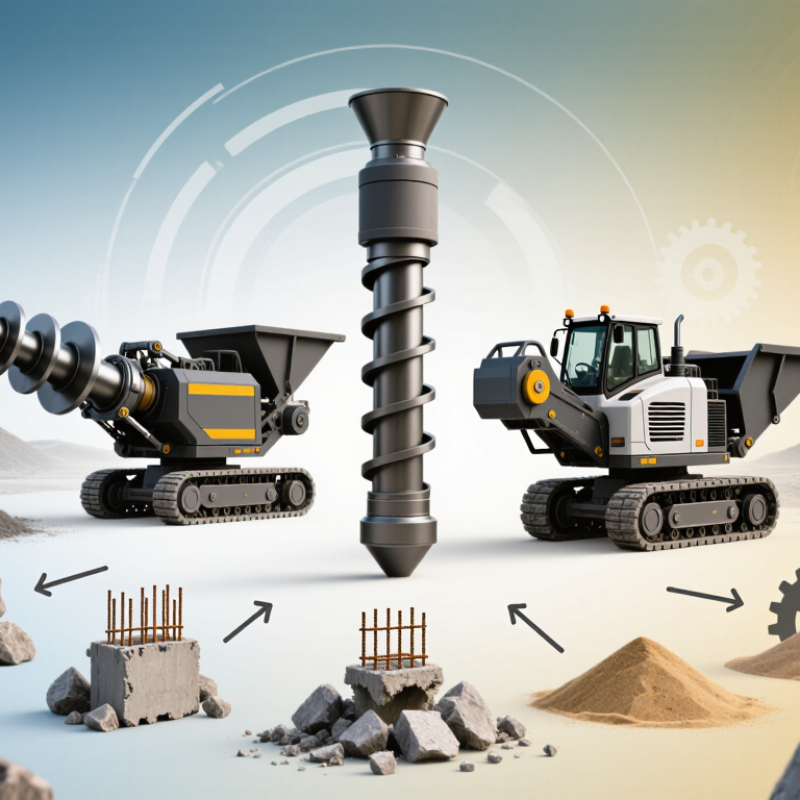
Horizontal shaft impact crushers are often chosen when a process needs strong reduction and a well-shaped product. Their typical reduction ratio ranges from 4:1 to 8:1. This means a 400-millimeter feed may leave the chamber near 50 to 100 millimeters, depending on operating conditions. The ratio is not a promise carved in steel.
Material hardness, moisture, feed size, and rotor speed all affect the result. A dry limestone feed may fracture cleanly and produce useful cubical particles. Wet, sticky material can build up inside the chamber and reduce throughput. The discharge gap also matters. A tighter gap usually increases reduction, but it can raise wear and power demand. Small adjustments can change the product noticeably.
From practical plant observations, operators often watch the discharge conveyor more closely than the control panel. Excessive dust may suggest aggressive impact or brittle feed. Oversized particles can indicate an open gap, uneven feeding, or worn blow bars. Regular inspection is essential. Still, reduction ratio alone can mislead. A crusher producing an impressive ratio may create too many fines for the next screening stage. The best setting balances particle shape, capacity, wear life, and energy use. That balance takes testing, and sometimes a second look at the original assumptions.
Vertical shaft impact (VSI) crushers use a high-speed rotor to throw stone against anvils or other stone. Many operate within roughly 1,000–3,000 rpm, but this is a broad range, not a universal setting. Rotor diameter matters: the same rpm can produce different tip speeds and impact energy on different machines.
That energy helps reshape angular particles into more cubical pieces. This can be useful when a consistent shape matters in aggregate production. Not magic. A faster rotor may improve shaping, yet it can also increase wear, power use, and unwanted fines. Feed size, rock hardness, moisture, and the crusher’s internal configuration all affect the result.
In practice, operators make measured adjustments and inspect the product gradation and particle shape. A small speed change can shift the balance between cubical output and excess fines. It is tempting to focus on the rpm display alone; that can be misleading. Testing representative feed and checking wear parts gives a more dependable basis for choosing a setting, though conditions may change as the quarry face changes.
What Are the Top Types of Impact Crushers?
Primary impact crushers are built for demanding quarrying duties, where blasted rock may reach 1,200 mm in feed size. Their large inlet reduces the need for intensive pre-screening. However, a 1,200 mm rating is not universal. It depends on the machine design, material density, and operating conditions.
Inside the crusher, a high-speed rotor throws rock against adjustable impact aprons. This action creates strong compression and tension fractures, often producing a cubical product. Limestone and other moderately abrasive materials usually respond well. Extremely hard, highly abrasive rock can increase blow bar wear and maintenance costs. I have found that controlled feed matters as much as crusher size. A steady stream improves impact efficiency and reduces sudden overloads.
Watch the details.
Operators should check the largest actual feed, not only the average size. Oversized chunks can damage internal components or interrupt production. Moisture and clay also deserve attention because sticky material may clog transfer points. Rotor speed, apron settings, and discharge screening should be adjusted together. A setting that works in dry limestone may perform poorly after rain. Regular inspections of blow bars, liners, bearings, and safety systems provide useful evidence before failures occur. The inconvenient truth is that higher throughput does not always mean better output. Product shape, energy use, wear rate, and downtime must be judged as one operating picture.
The headline reference of 1,200 mm equals 1.2 m, or approximately 47.2 inches. Actual accepted feed size varies by crusher model and material; check the equipment specifications for a specific application.
Secondary and tertiary impact crushers refine material after primary reduction. Secondary units handle pre-sized stone and create a more consistent feed for screening. Their adjustable rotor speed and impact aprons help control product size and shape. A tighter apron setting usually produces finer particles, but it can increase wear and power demand. Field experience shows that ideal settings depend on rock hardness, feed moisture, and circuit capacity. No setting works forever.
Tertiary impact crushers take this control further. They are designed for finer output, improved particle shape, and better gradation control. In a closed circuit, the crusher works with a vibrating screen. Oversized material returns for another pass, while correctly sized particles leave the circuit. This arrangement can produce well-graded aggregate for concrete, asphalt, and drainage layers. The difference is visible in the screen deck.
Reliable performance requires regular sampling. Operators should check several discharge samples, not only one bucket. Comparing the results with the target gradation reveals gradual changes. Worn blow bars, uneven feed, or rising moisture can shift the product quickly. Small errors matter. I have seen crews reduce the gap to solve oversize problems, then create excessive fines. That approach sometimes works, but it may hide a worn component or unstable feed. A measured adjustment is safer than a dramatic one.
| Crusher Type | Typical Stage | How It Reduces Material | Typical Feed Characteristics | Output and Gradation Control | Common Applications | Key Considerations |
|---|---|---|---|---|---|---|
| Horizontal Shaft Impact (HSI) Crusher | Secondary; some designs can be used in tertiary duties | A horizontal rotor accelerates material into impact plates or breaker bars. | Often handles material from a primary crusher; suitable feed size depends on the crusher design and feed arrangement. | Adjustable breaker settings and rotor speed can influence product size and shape. A screen is commonly used when a controlled finished gradation is required. | Crushed stone, recycled concrete and asphalt, and other suitable materials. | Impact wear parts can wear faster when processing highly abrasive material. Feed consistency and moisture can affect performance. |
| Secondary Impact Crusher | Secondary | Uses impact rather than compression as the main size-reduction mechanism, typically after primary crushing. | Receives pre-crushed rock or recycled material; acceptable feed size and hardness vary by machine and application. | Designed to reduce feed to a smaller, more uniform product. Rotor speed, impact settings, and screening help manage the product-size distribution. | Quarry aggregates, concrete recycling, and production of smaller stone fractions. | Best suited to materials and operating conditions within the equipment’s design limits; inspect wear parts regularly. |
| Tertiary Impact Crusher | Tertiary | Further reduces material that has already passed through primary and secondary crushing. | Generally takes smaller, more consistently sized feed than a secondary crusher; actual limits are model-specific. | Helps produce finer fractions. Closed-circuit operation with a screen can return oversize material for additional reduction. | Final aggregate sizing, manufactured sand feed preparation, and other fine-crushing duties. | Feed grading, moisture, rotor configuration, and wear condition influence capacity and product consistency. |
| Vertical Shaft Impact (VSI) Crusher | Usually tertiary or quaternary | A vertical rotor accelerates particles, which break through rock-on-rock or rock-on-anvil impact. | Typically used with pre-crushed feed; feed size and suitability depend on the rotor and chamber configuration. | Often selected when particle shape and finer product control are important. Rotor speed and crushing configuration affect the result. | Manufactured sand, aggregate shaping, and fine crushing of suitable rock. | Rock-on-rock operation can reduce metal-to-rock contact in suitable applications, but abrasive feed may still cause wear. |
Output size, capacity, and gradation depend on the specific crusher, feed material, settings, wear condition, and screening circuit. Consult equipment specifications and conduct material testing for project requirements.
Choosing an impact crusher starts with the feed, not a headline capacity figure. Horizontal-shaft impactors suit many primary and secondary crushing duties, while vertical-shaft machines are often selected for shaping smaller material. Capacity depends on feed size, moisture, gradation, and the required product. A machine handling coarse, dry rock may slow sharply when sticky fines enter. Check the rated capacity against your actual feed and target size. Then leave operating room; running continuously at the limit is a poor plan.
Abrasion changes the economics. Hard, silica-rich rock wears impact bars and liners faster, so compare expected wear life and changeout time, not just purchase price. Softer limestone may support higher throughput with less wear. Product shape matters, too: impact crushing can produce more cubical particles, but excessive fines may appear when reduction is pushed too far. The USGS Mineral Commodity Summaries 2024 estimates U.S. crushed-stone production at about 1.5 billion tons, underscoring how large and varied aggregate operations are. That national figure is not a crusher-sizing rule. Test representative material, including the troublesome fraction. Real feed is rarely as uniform as a sample sheet suggests.
Some models accept rock up to 1,200 mm. Actual capacity depends on machine design, rock density, and operating conditions.
It can reduce intensive pre-screening, but oversized chunks still need attention. Check the largest pieces, not just the average size.
Limestone and other moderately abrasive materials often work well. Very hard, abrasive rock can wear blow bars faster.
Secondary units reduce pre-sized stone and prepare it for screening. Tertiary units focus on finer output, particle shape, and gradation control.
Rotor speed and impact-apron settings affect the product. Tighter settings may create finer particles, but can increase wear and power use.
Wet or clay-rich feed may clog transfer points and change crusher performance. A setting that works in dry limestone may fail after rain.
A vibrating screen sends oversized material back for another pass. Correctly sized particles leave the circuit for uses such as concrete or asphalt.
Check blow bars, liners, bearings, and safety systems regularly. Compare several discharge samples with the target gradation; one bucket can mislead.
Not necessarily. Product shape, energy use, wear, and downtime belong in the same assessment. It is easy to overlook one.
Impact crushers are versatile machines designed to reduce materials through high-speed impact rather than compression. Horizontal Shaft Impact Crushers typically provide reduction ratios of about 4:1 to 8:1, making them suitable for producing consistent aggregate sizes. Vertical Shaft Impact Crushers operate at approximately 1,000–3,000 rpm and are especially effective when cubical particle shaping and improved product form are required. Primary Impact Crushers can accept feed sizes of up to 1,200 mm, making them useful in demanding quarrying applications where large rocks must be processed efficiently.
Secondary and tertiary impact crushers focus on producing finer output and offering greater control over product gradation. Selecting the right Impact Crusher depends on several factors, including required capacity, material abrasiveness, feed size, desired reduction ratio, and final product shape. Understanding these operating conditions helps users choose equipment that delivers reliable performance, efficient processing, and the particle characteristics needed for construction, recycling, or aggregate production.

Hanhai