Top 10 Pressed Steel Bearing Suppliers Worldwide

Time:2026-09-18 Author:Charlotte
0%

Pressed Steel Bearing suppliers sit at an important intersection of affordability, speed, and dependable machine operation. Their products appear in conveyors, agricultural equipment, electric motors, automotive systems, and compact industrial assemblies. Thin-gauge steel cages and stamped components can reduce weight and production cost. However, inconsistent forming, poor surface treatment, or incorrect lubrication can shorten service life quickly.

The global bearings market reflects strong demand. Fortune Business Insights valued it at approximately USD 132.7 billion in 2023. It projects the market to reach about USD 194.9 billion by 2032. Grand View Research also identifies automation, electric vehicles, and predictive maintenance as major growth drivers. These reports usually group pressed steel products within broader bearing categories. That limitation deserves attention. Precise niche comparisons remain difficult.

Richard G. Kyle, former President and CEO of The Timken Company, described bearings as “the foundation of the machines that move the world.” This observation explains why supplier evaluation cannot rely on price alone. Material consistency matters. So do stamping accuracy, heat treatment, sealing design, load ratings, traceability, and after-sales engineering. Our Top 10 Pressed Steel Bearing Suppliers Worldwide overview examines these practical factors across established manufacturers and specialist producers. It considers published certifications, production capabilities, geographic coverage, and customer support. Some rankings may remain debatable. Supplier performance can change by application, volume, and region. That is precisely why buyers should verify test data, tolerances, and current factory credentials before making a final decision.
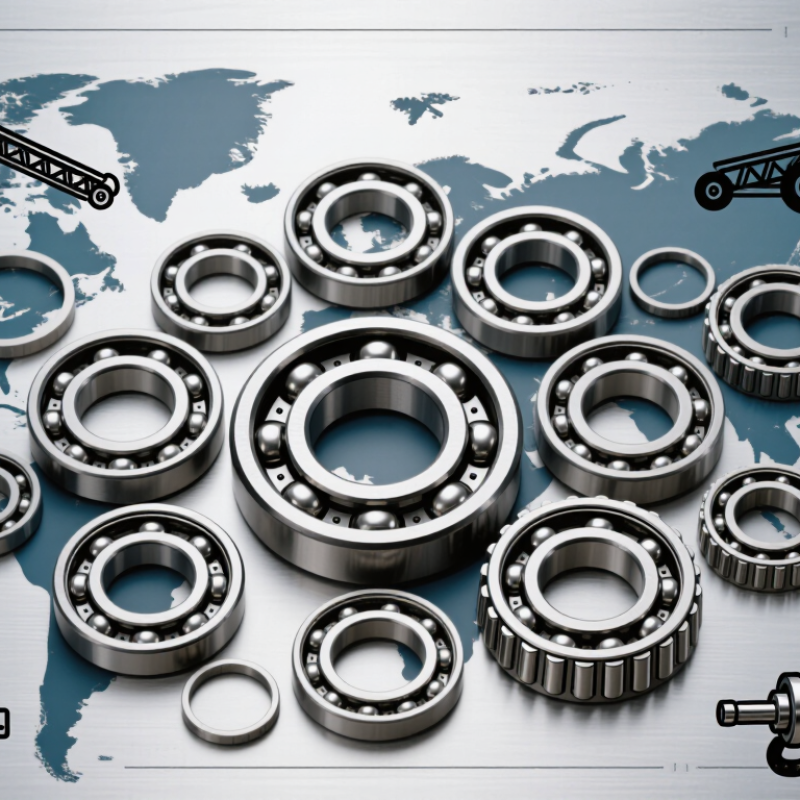
Top 10 Pressed Steel Bearing Suppliers Worldwide

What Are Pressed Steel Bearings and How Do They Work?

Pressed steel bearings are compact rolling elements made from thin, formed steel shells. Unlike machined housings, their races are drawn and shaped around the rolling path. A typical unit includes an outer shell, needle or ball rollers, a cage, and lubricant. The steel shell supports the load while the rollers reduce sliding friction. Simple in appearance. This design saves space and material.

During operation, a shaft turns inside the bearing, or the bearing rotates around a fixed shaft. The rollers travel between hardened surfaces, distributing force across several contact points. A cage keeps roller spacing stable and limits rubbing between adjacent elements. When alignment is accurate, the bearing runs smoothly with modest torque and low radial clearance. In workshops, technicians often check shaft hardness, housing fit, lubrication, and contamination before installation. These details matter more than appearance.

Pressed steel bearings suit compact mechanisms, conveyor components, small transmissions, and moderate-speed assemblies. They usually handle radial loads well, but thrust capacity depends on the design. Thin shells can deform when a housing is rough, oversized, or poorly supported. That weakness is easy to underestimate. Heat, water, dust, and shock loading can shorten service life quickly. I would not choose one by size alone; load direction, speed, clearance, and maintenance access need equal attention. Even reliable calculations can miss real assembly errors. A clean press fit and controlled lubrication often decide whether the bearing performs as expected.

Key Criteria for Evaluating Global Bearing Suppliers

Top 10 Pressed Steel Bearing Suppliers Worldwide

Key Criteria for Evaluating Global Bearing Suppliers

Selecting a global pressed steel bearing supplier requires more than comparing prices. Begin with material quality, forming accuracy, and surface protection. Ask for steel grades, hardness ranges, and coating thickness. These details influence wear resistance in humid factories and dusty warehouses. A reliable supplier should provide traceable batch records and current inspection reports. Small gaps in documentation can create serious maintenance problems later.

Check dimensional tolerances against your housing and shaft requirements. Request load ratings, speed limits, operating temperatures, and tested noise levels. Do not rely only on catalogue figures. Test conditions may differ from your real equipment. A practical evaluation includes sample bearings, visual checks, rotation testing, and measurements with calibrated tools. Look for smooth movement, consistent clearance, and clean stamped surfaces. Tiny burrs matter.

Production capacity and delivery stability also deserve close attention. Review monthly output, quality-control staffing, backup processes, and typical lead times. Confirm whether engineering support can solve fitment issues quickly. Certifications may support credibility, but they cannot replace factory evidence. Total cost includes rejects, downtime, packaging, freight, and replacement labor. The cheapest quotation may become expensive. I have found that supplier comparisons are rarely perfect; forecasts change, and even strong factories can miss a shipment. A written corrective-action process makes that weakness manageable.

How the Top 10 Suppliers Are Selected and Compared

Selecting the top 10 pressed steel bearing suppliers requires more than counting factory listings or website claims. We examine manufacturing experience, product range, export history, and evidence of quality control. Auditors look for traceable steel sources, controlled heat treatment, clean assembly areas, and documented inspection procedures. A polished catalog is not enough.

Each supplier is compared using practical criteria: dimensional accuracy, load ratings, sealing options, corrosion resistance, order flexibility, and delivery performance. Sample bearings are checked for surface finish, cage alignment, noise, and rotation smoothness. Technical teams also review ISO certifications, testing records, warranty terms, and response times. A supplier with strong capacity but weak communication may score lower than a smaller, more responsive manufacturer.

Cost is measured carefully. The lowest quotation can hide tooling charges, packaging changes, or inconsistent batch quality. We use a weighted scorecard, with quality and reliability carrying more influence than price. Production scale and regional logistics also affect the ranking. However, the comparison is not perfect. Public data may be outdated, and factory visits cannot reveal every future risk. Seasonal delays, raw material changes, and uneven samples still require attention. Supplier performance should be rechecked before a major contract.

Top 10 Pressed Steel Bearing Suppliers Worldwide

Top 10 Pressed Steel Bearing Suppliers Worldwide

A credible review of the top 10 pressed steel bearing suppliers worldwide should examine more than production volume. Buyers need suppliers with stable forming equipment, controlled heat treatment, and consistent surface finishing. In factory audits, small details often matter. A clean assembly area can reveal more than a polished brochure.

The strongest suppliers usually support common radial, thrust, and flanged bearing designs. They should provide steel grade records, dimensional reports, load data, and traceable batch numbers. A reliable supplier also explains cage design, seal options, lubrication limits, and expected service life. Samples deserve practical testing. Measure bore accuracy, rotate the bearing by hand, and inspect noise under load. It is simple, but often revealing.

Global supply adds another layer. Export experience, protective packaging, inspection capacity, and responsive engineering teams reduce costly delays. Some suppliers offer impressive catalogs but weak customization support. Others communicate well yet lack dependable capacity during demand spikes. No ranking is flawless. A buyer may value price too heavily and overlook replacement availability. That mistake can stop a production line.

The top 10 pressed steel bearing suppliers worldwide should therefore be compared through evidence, not claims. Factory visits, reference checks, sample testing, and documented quality controls create a more dependable judgment. Performance can change between batches, too. Continuous monitoring remains necessary.

Top 10 Pressed Steel Bearing Suppliers Worldwide

Regional distribution of ten leading pressed steel bearing suppliers identified through publicly available manufacturing and supplier information. The figures show the number of suppliers represented in each region, not revenue or market share.

Asia-Pacific has the strongest supplier concentration, followed by Europe and North America. This reflects the established automotive, industrial machinery, and metal-forming manufacturing bases in these regions.

Applications, Standards, and Purchasing Considerations

Pressed steel bearings serve conveyors, agricultural equipment, fans, small motors, and warehouse rollers. Their light cages reduce mass and often support high-speed operation. In dusty workshops, sealed versions keep grease inside and particles outside. They are not universal. Shock loads, washdown, and misalignment can shorten service life quickly. A practical selection starts with shaft diameter, radial load, speed, temperature, and mounting space. Measure the actual shaft, not only the drawing.

Purchasers should compare ISO 15 boundary dimensions, ISO 492 accuracy classes, and ISO 281 rating-life calculations. These references make supplier data easier to check. Still, compliance statements need evidence. Request material specifications, heat-treatment records, hardness ranges, seal details, clearance values, and batch traceability. For corrosion-prone areas, confirm plating or stainless options and test methods. “Corrosion resistant” is too vague. Ask for operating limits.

A reliable supplier should provide samples, inspection reports, packaging details, and a clear warranty process. Check whether dimensions remain stable after pressing and assembly. A cheap unit may pass a bench spin test yet fail under contamination or vibration. I would also compare noise, grease fill, starting torque, and replacement lead time. This step is often missed. Supplier audits are useful, but they do not replace incoming inspection. One imperfect assumption remains common: a higher load rating does not guarantee longer service when alignment or lubrication is poor.

FAQS

How are the leading pressed steel bearing suppliers compared?

They are compared through manufacturing experience, product range, export history, and documented quality controls. A polished catalog is insufficient. Factory audits examine steel traceability, heat treatment, assembly cleanliness, and inspection records.

Which bearing details should buyers inspect during sample testing?

Check bore accuracy, surface finish, cage alignment, noise, and smooth hand rotation. Measure the actual shaft. Testing under load can reveal problems hidden by a simple bench spin.

What product information should a supplier provide?

Request steel grades, dimensional reports, load data, seal options, lubrication limits, and batch numbers. Traceability matters. The supplier should also explain expected service life and clearance values.

Which equipment commonly uses pressed steel bearings?

Common applications include conveyors, agricultural machines, fans, small motors, and warehouse rollers. Their light cages can support high-speed operation. However, shock loads, contamination, and misalignment may shorten service life.

Which standards help buyers compare bearing specifications?

ISO 15 helps compare boundary dimensions, while ISO 492 addresses accuracy classes. ISO 281 supports rating-life calculations. Compliance claims still need test records and supporting documents.

How should buyers evaluate corrosion resistance?

Ask whether plating or stainless options are available for corrosive environments. Request test methods, coating details, and operating limits. “Corrosion resistant” alone is too vague.

Why is the lowest quotation not always the best choice?

A low price may exclude tooling, packaging changes, or stable batch quality. Replacement lead time also affects total cost. Cheap today, costly later.

Can a factory audit guarantee future supplier performance?

No audit can reveal every future risk. Seasonal delays, material changes, and uneven samples may still occur. Performance should be rechecked before major contracts and monitored through incoming inspection.

Conclusion

This article provides a practical overview of the global Pressed Steel Bearing market, beginning with an explanation of how these bearings are formed, assembled, and operated in machinery. It examines their lightweight construction, cost efficiency, durability, load capacity, and suitability for applications where reliable rotation and moderate operating conditions are required. The discussion also introduces the key factors used to evaluate international suppliers, including manufacturing capability, material quality, dimensional consistency, quality control, customization options, delivery performance, and technical support.

The article then explains how ten leading suppliers are selected and compared through objective criteria rather than brand promotion. It highlights common applications across industrial equipment, automotive systems, agricultural machinery, conveyors, and other mechanical products. In addition, it outlines relevant standards, testing expectations, lubrication requirements, environmental considerations, and purchasing issues such as service life, compatibility, total cost, and supply continuity. The goal is to help buyers make informed, responsible decisions when sourcing pressed steel bearings for different operating environments.


Charlotte

Charlotte

Charlotte is a seasoned marketing professional with a deep understanding of the company's portfolio and a passion for elevating its presence in the market. With a keen eye for detail and a commitment to excellence, she ensures that our professional blog is regularly updated with insightful articles......