Casting remains one of the most adaptable methods for producing strong, detailed metal components. From engine housings to pump bodies, each Casting Part begins with a practical question: how should molten metal become a reliable shape?
This guide examines the top ten casting part types used across automotive, machinery, energy, construction, and industrial equipment. It considers their structures, common alloys, production methods, and typical performance requirements. Sand castings support large, complex forms with flexible tooling. Die castings deliver repeatable dimensions for high-volume production. Investment castings capture fine features where surface quality and accuracy matter. Other types serve different demands, including pressure resistance, wear protection, and heat management.
The details matter.
Real manufacturing decisions rarely depend on shape alone. Engineers also review wall thickness, shrinkage risk, porosity, machining allowance, tolerance, and inspection requirements. A beautiful prototype may still fail if its alloy cannot withstand vibration or repeated thermal cycles. Practical experience shows that the cheapest casting option is not always the most reliable choice. Tooling cost, batch size, surface finishing, and long-term maintenance can change the final value.
No classification is perfect. Some parts overlap several casting categories, especially when modern hybrid processes are involved. That uncertainty deserves attention, not dismissal. By comparing each type against its actual application, readers can make clearer sourcing and design decisions. The discussion follows established engineering practice and encourages verification through material certificates, dimensional reports, and suitable quality standards. Reliability begins before the furnace is heated.
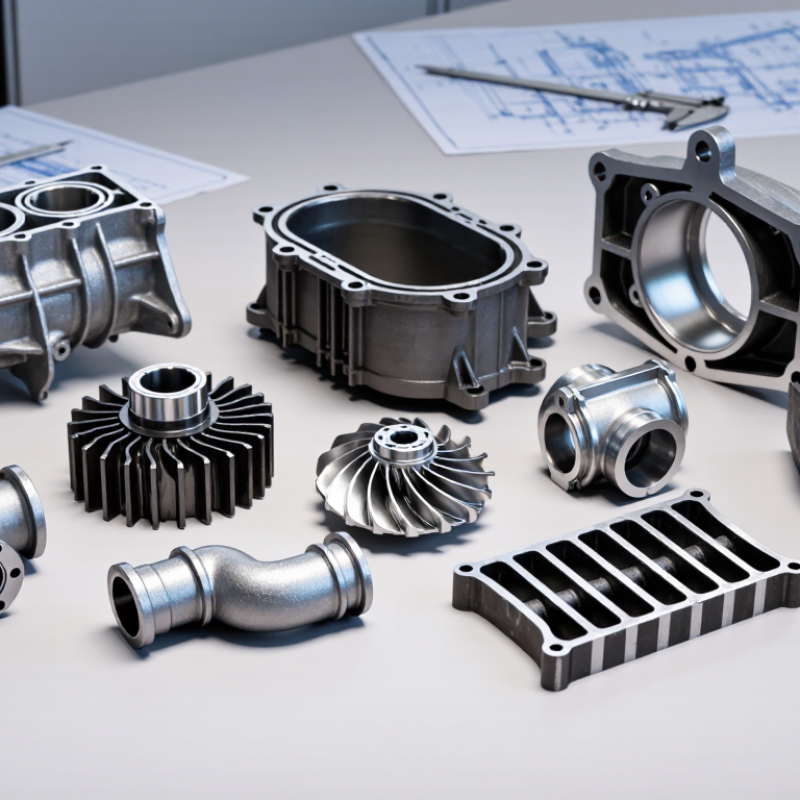
A casting part type is more than a shape on a drawing. It describes how molten material becomes a usable component. The definition usually combines casting process, alloy family, geometry, size, and service duty.
These labels can overlap. That is important.
A credible top-ten ranking needs clear criteria. I would score each type by industrial use, production volume, design flexibility, surface quality, cost, and inspection demands. Evidence should come from technical standards, production records, and experienced foundry reviews, not popularity alone.
A practical list may include sand, die, investment, permanent-mold, centrifugal, lost-foam, plaster, shell, squeeze, and continuous castings. Yet this list is not universal. A pump housing and a wheel hub may need different winners.
One ranking can mislead. Material availability and local equipment often change the order. I would report the scoring method beside the ranking. Readers can test the result against real parts, drawings, and failure history.
Tips: Define the part before ranking the process. Check wall thickness, draft angles, tolerances, and machining allowance. Ask whether the casting must resist impact, heat, pressure, or corrosion. Photographing a failed section can reveal porosity or shrinkage. Keep assumptions visible. I might revise the order after reviewing actual inspection data.
Structural castings rarely look dramatic, yet they carry the load.
Frames support alignment, housings protect gears and bearings, brackets transfer force, and covers shield moving assemblies. Bases, end plates, manifolds, flanges, pulleys, impellers, and valve bodies complete the ten most common casting part types.
The World Foundry Organization’s 2023 World Census reported more than 109 million tonnes of castings produced globally in 2022. That scale reflects casting’s role in industrial equipment, transportation, energy, and construction.
For a frame, engineers usually prioritize stiffness and flatness.
A housing needs controlled wall thickness, clean bores, and reliable sealing faces.
Brackets need strong fillets around mounting holes.
Covers often need low distortion, because a small gap can create leakage or vibration.
Design reviews should include draft angles, machining allowance, cooling behavior, and inspection access. ISO 8062-3 provides guidance for casting tolerances, but tolerance alone cannot rescue weak geometry.
In practice, a thicker wall is not always stronger. It may shrink unevenly and create internal defects. That assumption is often wrong.
I have seen a visually robust bracket fail near a sharp corner, while a lighter design survived after adding a generous radius. Radiography, dimensional checks, and process records support more reliable decisions, though no report replaces testing on the finished part.
Gears, pulleys, wheels, and impellers remain core mechanical casting parts. They transfer motion, manage loads, and move fluids. Other common types include housings, brackets, manifolds, valves, and counterweights. The World Foundry Organization reported about 109.4 million tonnes of castings produced globally in 2022. That volume reflects casting’s continuing role in transport, energy, construction, and industrial machinery.
Gears require accurate tooth profiles and stable heat treatment. Small dimensional errors can increase noise, vibration, and wear. Pulleys need balanced rims and clean grooves for reliable belt contact.
Wheels demand uniform sections, especially around hubs and spokes. Impellers are more sensitive. Their blades must maintain consistent thickness and smooth passages. Poor surfaces can reduce flow efficiency and create turbulence.
Grand View Research has estimated sustained growth in the global metal casting market, supported by machinery and infrastructure demand. Yet market growth does not remove basic foundry risks. Porosity, shrinkage, and uneven cooling still appear in production. They are not minor details. Engineers should review gating design, alloy selection, machining allowance, and inspection records together. A casting may look sound outside, but internal defects can remain hidden. That is why radiographic or ultrasonic testing is useful for critical gears, wheels, and impellers. The best design is not always the lightest one. Sometimes, a slightly thicker section performs better in real service.
What Are the Top 10 Casting Part Types?
Fluid and Thermal Casting Parts: Valves, Pumps, Pipes, and Heat Sinks
Valves are among the most practical casting parts for fluid control. Their bodies need strong walls, smooth passages, and accurate sealing surfaces. Cast pump housings and impellers manage pressure, flow, and repeated rotation. A small internal defect can become serious under continuous service. That risk deserves attention.
Cast pipes, elbows, and manifolds guide water, oil, air, or other approved fluids through equipment. Their shapes often include bends, branches, and reinforced joints that are difficult to produce efficiently from solid material. Engineers usually review wall thickness, shrinkage, corrosion exposure, and machining allowances before production. I have found that simple-looking pipe fittings often require the most careful inspection.
Heat sinks use cast aluminum or other thermally suitable materials to move heat away from electronic or mechanical components. Fins increase surface area, while the base must remain flat and well connected. Porosity may reduce both strength and thermal performance. Pressure testing, dimensional checks, and visual inspection provide useful evidence, but none is perfect alone. A better process combines several checks and records the results clearly. In practice, one overlooked transition can weaken airflow or create a leak path. No design is perfect. Reflection after testing is still necessary.
What Are the Top 10 Casting Part Types?
Part selection begins with function, not appearance. The ten common types include housings, brackets, manifolds, impellers, gears, pulleys, valve bodies, pump bodies, engine blocks, and heat sinks. Each shape favors a different material and process. Housings often use aluminum alloys for low weight and corrosion resistance. Valve bodies commonly require ductile iron or steel for pressure loading. Heat sinks need high-conductivity aluminum and thin, controlled fins.
Shape controls production method. Sand casting handles large pump bodies and complex engine blocks economically. Investment casting suits smaller impellers, gears, and detailed brackets. Die casting supports high-volume housings with thin walls and repeatable dimensions. According to Grand View Research’s 2023 metal casting report, the global market exceeded 150 billion dollars, with automotive and industrial equipment representing major demand sectors. That scale makes process selection commercially important. But market data varies. Other 2023 industry reports place the global value noticeably higher.
Material choice also changes design risk. Aluminum reduces mass, yet thin sections can cool unevenly and distort. Ductile iron improves strength, but increases machining effort. Steel tolerates severe loads, though tooling and energy costs may rise. In design reviews, I check wall thickness, draft angles, shrinkage, porosity, and machining allowance together. Not separately. A casting that looks efficient may fail during filling or inspection. The American Foundry Society’s industry studies continue to highlight energy use, workforce skills, and process control as major competitiveness factors. Engineers should treat those findings as practical constraints, not background statistics.
How materials, shapes, and production methods guide part selection
The chart compares representative room-temperature material densities for ten widely used casting part types. Lower-density alloys such as aluminum are often selected when weight reduction matters, while iron-, steel-, and copper-based alloys are preferred when higher stiffness, wear resistance, heat resistance, or pressure capability is required. Final process selection depends on geometry, wall thickness, dimensional requirements, production volume, and surface-finish needs.
A casting part type combines process, alloy family, shape, size, and service duty. A drawing alone is not enough. Use these details together.
Rank them by industrial use, production volume, design flexibility, cost, surface quality, and inspection needs. Evidence should include production records and technical reviews. Popularity can mislead.
Sand casting usually suits broad and heavy forms. It handles complex geometry and many alloy families. Surface finish may need machining. That trade-off matters.
Investment casting can reproduce small features and complex shapes. It may reduce machining around intricate sections. However, cost and production volume can change the decision.
Common examples include frames, housings, brackets, covers, bases, flanges, and valve bodies. Frames support alignment. Housings protect gears and bearings. Brackets need generous fillets near mounting holes.
Extra thickness may cool unevenly and create shrinkage defects. A sharp corner can also concentrate stress. A lighter bracket with rounded transitions may survive better. Thicker is not always stronger.
Inspect valves, pumps, pipes, elbows, manifolds, and impellers for wall thickness and sealing surfaces. Review pressure, corrosion exposure, shrinkage, and machining allowance. Simple fittings can hide difficult inspection areas. Look inside.
Check fin geometry, base flatness, porosity, airflow paths, and thermal contact. Fins increase surface area. The base must connect evenly with the supported component. One overlooked transition may reduce cooling performance.
This article explains the top 10 casting part types by examining how each category supports industrial design, assembly, and performance. It begins by defining a Casting Part as a component formed by pouring liquid material into a mold and allowing it to solidify into a required shape. The ranking considers practical factors such as structural importance, frequency of use, functional complexity, and suitability for efficient production. Common structural parts include frames, housings, brackets, and covers, which provide support, protection, and alignment.
The article also introduces core mechanical parts such as gears, pulleys, wheels, and impellers, along with fluid and thermal components including valves, pumps, pipes, and heat sinks. Each type is selected according to its shape, load requirements, operating environment, and material properties. Manufacturing methods, mold complexity, dimensional accuracy, surface quality, and production volume all influence the final choice, helping engineers balance strength, durability, cost, and production efficiency.

Hanhai