China Top 10 Crawler Crusher Manufacturers 2026?

Time:2026-10-13 Author:Aria
0%

China’s crawler crusher industry is entering 2026 with stronger demand for mobile, flexible, and fuel-efficient crushing equipment. Contractors increasingly choose tracked machines for quarry roads, demolition sites, recycling yards, and remote infrastructure projects. A Crawler Crusher can move across uneven ground without frequent transport arrangements. That practical advantage often reduces setup time.

This guide examines China’s top 10 crawler crusher manufacturers for 2026. The selection considers manufacturing experience, engineering capability, product range, export performance, service coverage, and equipment reliability. It also reviews important details, including jaw or impact configurations, engine standards, crushing capacity, feed size, fuel use, control systems, and maintenance access. Real purchasing decisions rarely depend on brochure figures alone. Field support matters.

Details matter.

Information should be checked against current factory data, technical certificates, and verified customer feedback. Company rankings can change as technologies, production quality, and after-sales networks develop. A manufacturer with strong equipment may still be unsuitable for a small contractor or a project requiring local spare parts. This article therefore avoids treating any list as permanent truth. Instead, it provides a practical comparison framework for buyers, engineers, dealers, and project managers. Readers should request recent test results, warranty terms, delivery schedules, and detailed quotations before making a final decision. Some specifications may vary by configuration, and that limitation deserves attention. Reliable evaluation requires both technical evidence and cautious judgment.
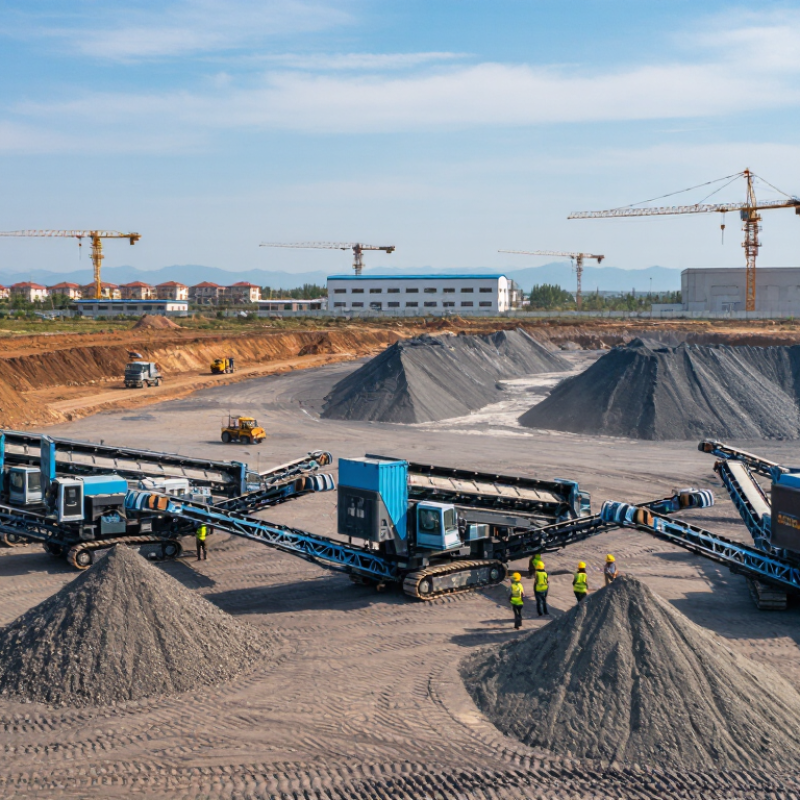
China Top 10 Crawler Crusher Manufacturers 2026?

What Is a Crawler Crusher and How Does It Work?

A crawler crusher is a mobile crushing machine mounted on continuous tracks. Unlike a stationary plant, it can move across rough ground without a separate trailer. This mobility helps contractors process stone close to roads, foundations, and quarry faces. The machine usually includes a feeder, crushing chamber, discharge conveyor, and hydraulic track system.

Its operation begins when an excavator loads blasted rock into the feeder. Grizzly bars remove fine material before larger pieces enter the crusher. A jaw crusher compresses rock between a fixed plate and a moving plate. An impact crusher breaks material with fast-moving blow bars. A cone crusher uses a rotating mantle inside a concave liner. Each design suits different rock types and product sizes.

The engine powers hydraulic pumps, which drive the tracks, feeder, crusher, and conveyors. Operators adjust the feed rate and discharge gap to control output. Sensors can warn about overloads, high temperatures, and blocked material. Practical inspection still matters.

Dust builds quickly. Wet clay can stick to the feeder and reduce production. The process is simple in theory. Field conditions rarely cooperate. Experienced operators check liner wear, belt alignment, and oil levels before each shift. A level working area also improves stability and reduces unnecessary track strain. Even with automation, poor feed control can create uneven products and excessive fuel use.

Key Features and Applications of Crawler Crushers

Crawler crushers combine crushing power with tracked mobility, making them practical for changing job sites. Their tracked undercarriage moves across uneven ground without requiring immediate road transport. Hydraulic controls support faster setup and easier relocation. A jaw configuration suits hard rock, while impact systems handle softer materials.

In quarrying, crawler crushers reduce blasted stone near the extraction area. Road projects use them beside temporary access routes and bridge construction zones.

Demolition teams can process concrete close to buildings, reducing truck movements and dust exposure. Recycling operations benefit from adjustable discharge sizes and magnetic separation options.

However, output depends heavily on feed consistency, operator skill, and maintenance discipline. A powerful machine may still perform poorly with wet, sticky material.

Tips: Inspect tracks, belts, liners, and hydraulic hoses before each shift. Keep the feed opening clear. Match the crusher to the rock hardness, required particle size, and site width. Check noise and dust controls before operation. Record fuel use and unplanned stops; these details reveal hidden operating costs. Do not trust catalog capacity alone. Field conditions often tell a different story.

China’s Top 10 Crawler Crusher Manufacturers in 2026

China’s Top 10 Crawler Crusher Manufacturers in 2026 are judged by more than production volume. Buyers now examine engineering depth, factory control, and after-sales reliability. A credible manufacturer should provide clear test records, component specifications, and service response times. Field inspections reveal useful details: clean hydraulic lines, protected wiring, reinforced access steps, and realistic maintenance spaces. Small details matter. Not every brochure matches the yard.

The strongest manufacturers typically offer tracked crushers for demolition, quarrying, recycling, and difficult construction sites. They should explain jaw or cone configuration, feed opening, discharge control, and expected output under different materials. Practical testing should include hard rock, wet feed, and uneven ground. Operators also need simple controls, emergency stops, dust suppression, and safe access around the machine. Remote monitoring can help, but weak network coverage may reduce its value in remote areas.

Price comparisons require caution. A lower quotation may exclude spare parts, commissioning, or operator training. Buyers should check steel quality, motor availability, warranty terms, and local service capacity before signing. I would also question output figures measured only under ideal conditions. No ranking is flawless. Production data can change during the year, and some smaller factories may improve quickly. That uncertainty deserves honest attention when evaluating China’s top ten crawler crusher manufacturers for 2026.

How to Compare Chinese Crawler Crusher Manufacturers

Comparing Chinese crawler crusher manufacturers in 2026 requires more than checking machine price or advertised capacity. Start with the actual application. Measure your largest feed material, target output, working slope, and daily operating hours. A crusher designed for recycled concrete may not perform well in abrasive granite. Ask for test data from similar materials, not only laboratory figures.

Inspect the machine details closely. Compare jaw or impact chamber dimensions, track width, hydraulic controls, engine efficiency, and dust suppression design. Request records showing output, fuel use, liner life, and unplanned downtime. Small details matter. A poorly positioned service panel can add hours to routine maintenance. Also check whether replacement parts are stocked near your region, and confirm response times in writing. Attractive specifications are not enough.

A reliable manufacturer should provide clear drawings, operating manuals, safety documentation, and traceable quality inspections. Visit a production site if possible. Look at weld consistency, electrical protection, hose routing, and final testing procedures. Speak with operators using similar equipment, not only sales representatives. One weakness in this comparison is that factory demonstrations often use clean, uniform feed. Real sites include wet clay, oversized rocks, and sudden blockages. Allow room for those conditions. The lowest quotation may become expensive when training, transport, parts, and downtime are included. Some buyers also overlook operator comfort, although fatigue can affect productivity and safety.

China Top 10 Crawler Crusher Manufacturers 2026: How to Compare Them

The chart compares ten typical nominal capacity bands commonly listed for Chinese crawler crusher configurations. Capacity is shown in metric tonnes per hour (t/h), a practical starting point for comparing manufacturer product ranges without using company or brand names.

Comparison note: Published capacity depends on crusher type, feed size, material hardness, CSS, moisture, and screening arrangement. Buyers should also verify engine power, maximum feed size, operating weight, transport dimensions, wear-part availability, warranty terms, and after-sales support.

Buying Considerations for Crawler Crushers in 2026

Buying Considerations for Crawler Crushers in 2026

Choosing a crawler crusher in 2026 requires more than comparing advertised capacity. Measure the site. Record rock size, moisture, abrasiveness, and daily production targets. A machine rated for 300 tonnes per hour may deliver less with wet clay or irregular feeding. Ask for test results under similar conditions, not only laboratory figures. Check the feeder, crushing chamber, discharge conveyor, and dust-control system as one working unit.

Mobility also affects real operating cost. Review track width, ground pressure, turning radius, and loading clearance before delivery. A compact unit may reach a narrow quarry bench, but a larger model could reduce crushing stages. Confirm fuel use, hydraulic efficiency, remote controls, and cold-start performance. Small details matter. A blocked radiator can stop production during a dusty afternoon.

Inspect the service plan with practical skepticism. Request spare-parts lead times, technician response procedures, warranty limits, and maintenance intervals in writing. Examine wear-part access from ground level where possible. Safety guards, emergency stops, inspection platforms, and operator visibility should be demonstrated on the actual machine. The lowest purchase price is not always economical. It may hide expensive downtime, rapid liner wear, or difficult transport permits. One buying mistake is trusting a brochure more than site evidence. Independent inspection and a controlled acceptance test can reveal uncomfortable gaps before payment.

FAQS

What should buyers inspect before choosing a crawler crusher?

Check hydraulic lines, protected wiring, reinforced steps, and practical maintenance space. Small details matter. A clean yard does not prove reliable production.

Which materials should be included in machine testing?

Request tests with hard rock, wet feed, and uneven ground. Compare results with your actual site conditions. Ideal figures can mislead.

How can buyers judge realistic crushing capacity?

Record rock size, moisture, abrasiveness, and daily production targets. A machine rated at 300 tonnes per hour may produce less with wet clay. Ask for comparable test records.

What mobility details affect operating costs?

Review track width, ground pressure, turning radius, and loading clearance. A compact machine may fit a narrow quarry bench. A larger unit may reduce crushing stages.

Which safety features should be demonstrated?

Ask to see emergency stops, guards, inspection platforms, and operator visibility. Confirm safe access around the feeder and discharge conveyor. Do not rely on photographs alone.

What service terms should appear in writing?

Request spare-parts lead times, technician response procedures, warranty limits, and maintenance intervals. Also confirm local service capacity. Promises can become vague later.

Why can a low purchase price become expensive?

The quotation may exclude commissioning, training, spare parts, or transport costs. Rapid liner wear and downtime may create larger expenses. The cheapest option is not always economical.

Is remote monitoring always useful on a crawler crusher?

Remote monitoring can show operating data and maintenance warnings. Weak network coverage may limit its value in remote areas. Sometimes, simple controls work better.

Conclusion

This guide explains what a Crawler Crusher is and how its tracked undercarriage, feeding system, crushing chamber, and discharge conveyor work together to process rocks, concrete, and other construction materials. It highlights the machine’s mobility, compact transport design, strong crushing performance, and suitability for quarrying, demolition, road construction, recycling, and remote projects. Readers will also learn why tracked operation can improve access and reduce the need for fixed processing infrastructure.

The article presents a practical overview of China’s top 10 Crawler Crusher manufacturers in 2026 without focusing on specific brand names. It compares manufacturers through product quality, engineering capability, customization, production capacity, service support, spare-part availability, certifications, and delivery reliability. The final section outlines key buying considerations, including output requirements, material hardness, feed size, fuel or power efficiency, operating environment, total ownership cost, warranty terms, and after-sales assistance, helping buyers make a balanced and informed equipment decision.


Aria

Aria

Aria is a dedicated marketing professional with a deep passion for innovative strategies and a keen understanding of our company's product offerings. With a wealth of experience in the industry, Aria excels at crafting engaging content that highlights the unique features and benefits of our......