What Is a Jaw Crusher and How Does It Work?

Time:2026-10-25 Author:Aria
0%

What Is a Jaw Crusher and How Does It Work?

A Jaw Crusher is a primary crushing machine used in quarries, mines, and recycling plants. It reduces large rocks into smaller, manageable pieces. The machine uses two plates, called jaws. One jaw remains fixed. The other moves back and forth. This motion creates pressure, breaks the material, and pushes it downward.

Dr. Barry A. Wills, a respected mineral-processing authority, once explained, “Comminution begins with understanding the material, not merely choosing a machine.” That principle remains important. Hard granite, wet limestone, and recycled concrete behave differently inside a crusher. Operators must consider feed size, moisture, hardness, and the required product shape. A poor setting can increase dust, energy use, and wear.

The process looks simple.

It is not always simple.

As the moving jaw closes, rock fractures along natural weaknesses. When the jaw opens, crushed material falls through the discharge gap. Adjusting this gap controls the final size. A wider setting produces larger pieces. A narrower setting creates finer output, but it may increase stress on the machine.

In practice, reliable crushing depends on more than mechanical force. Regular inspections matter. Worn jaw plates can reduce capacity and create uneven product. An overloaded chamber may cause blockages or costly downtime. Even experienced operators can misjudge changing feed conditions. That is why safe procedures, measured adjustments, and practical observation should guide every Jaw Crusher operation.
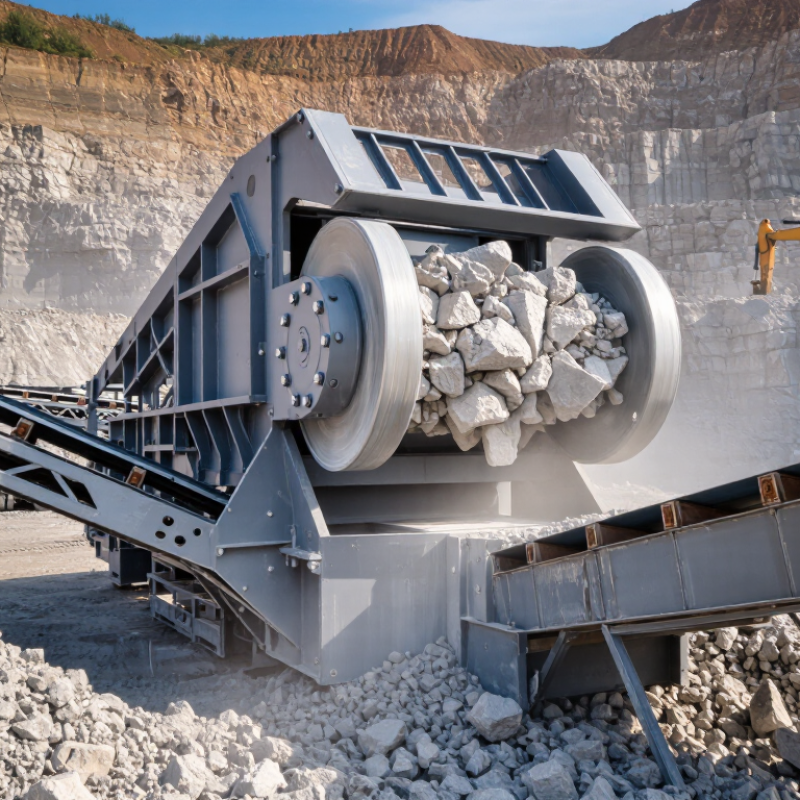
What Is a Jaw Crusher and How Does It Work?

Jaw Crusher Structure: Fixed Jaw, Swing Jaw, Pitman, and Toggle Plate

What Is a Jaw Crusher and How Does It Work?

A jaw crusher reduces rock between two opposing surfaces. Its structure controls both force and product size. The fixed jaw remains stationary inside the crushing chamber. The swing jaw moves toward and away from it. This repeated motion creates compression, not cutting. The USGS Mineral Commodity Summaries 2024 reported about 960 million metric tons of construction sand and gravel produced in the United States during 2023. That scale explains why dependable primary crushing remains important.

The pitman connects the swing jaw to the eccentric shaft. As the shaft rotates, the pitman drives the swing jaw through each crushing cycle. At the bottom, the toggle plate transfers force and helps maintain the jaw’s movement. It also acts as a mechanical safety link during severe overloads. A worn toggle can change the discharge setting. That small change may create uneven product sizes, higher vibration, or unexpected noise. The diagram looks simple. Field conditions are less tidy.

Tips: Check the jaw faces, toggle plate, and pitman connections before production begins. Measure the closed-side setting, rather than trusting the adjustment scale. Keep oversized steel away from the chamber. A blocked crusher can damage components quickly. The U.S. Mine Safety and Health Administration repeatedly emphasizes guarding, energy isolation, and safe maintenance practices. Operators should record unusual vibration and wear patterns. This habit is useful, although it is not perfect; material hardness and moisture can still distort performance.

Feeding and Crushing: How 18°–27° Nip Angles Grip Rock

A jaw crusher reduces rock between two heavy plates: one fixed and one moving. The moving jaw advances, compresses the feed, and then retreats. Gravity carries the smaller fragments toward the discharge opening.

The nip angle controls how firmly the jaws grip each piece. In many jaw crushers, this angle ranges from about 18° to 27°. A smaller angle usually improves the bite, especially when the feed contains rounded stones or smooth, hard surfaces. The jaws pull the rock downward instead of allowing it to slide upward. That sounds simple. It is not always.

If the angle becomes too wide, the feed may slip and bounce near the top of the chamber. This reduces capacity and increases uneven wear. If it becomes too narrow, the crusher may grip well but process less material per hour. Liner shape, surface wear, moisture, and feed size also change the real result. A worn liner can quietly alter the working angle. That detail is easy to miss.

From field checks, a stable feed pattern matters as much as the nominal angle. Oversized rocks should enter gradually, not in sudden surges. Operators should inspect the discharge, listen for repeated slippage, and compare product size with the closed-side setting. The 18°–27° range is useful guidance, not a magic number. Actual performance still needs measurement.

What Is a Jaw Crusher and How Does It Work? - Feeding and Crushing: How 18°–27° Nip Angles Grip Rock

Operating dimension Typical value or range How it affects feeding and crushing
Primary crushing role Reduction of blasted rock, ore, and recycled mineral material A jaw crusher is commonly used as the first crushing stage, producing a coarser product for screening or secondary crushing.
Nip angle Approximately 18°–27° in many jaw-crusher designs The angle between the fixed and moving jaw faces helps the crusher grip the feed. If the angle is too large, particles are more likely to slip upward instead of being drawn into the chamber.
Main crushing mechanism Compression between a fixed jaw and a moving jaw Rock is compressed until its internal stresses exceed its strength, causing the particle to fracture.
Jaw movement A repeated forward-and-back or elliptical motion at the crushing zone The moving jaw closes the gap to apply crushing force and then opens to allow the broken material to move downward.
Feed direction Material enters through the top of the crushing chamber Gravity assists the downward movement of rock while the jaw faces repeatedly grip and compress the material.
Closed-side setting (CSS) Adjustable; commonly from about 40 mm to more than 200 mm, depending on crusher size The CSS is the smallest distance between the jaw plates. A smaller setting generally produces a finer product, while a larger setting permits a coarser product and higher passage size.
Reduction ratio Typically about 4:1 to 8:1 for primary jaw crushing The ratio compares the maximum feed size with the product size and varies with rock properties, jaw setting, chamber design, and operating conditions.
Feed-size requirement Must remain within the crusher's rated maximum feed opening Oversized rocks can bridge the chamber, reduce throughput, increase stress, and prevent consistent nip and compression.
Material moisture Low to moderate moisture is generally preferred Excessive wet, sticky fines may cause packing or bridging in the feed area and can reduce flow through the chamber.
Jaw-plate wear Progressive wear changes the tooth profile and effective crushing geometry Worn plates can reduce grip, increase slippage, alter product gradation, and lower crushing efficiency.
Throughput influences Crusher size, CSS, stroke, speed, feed gradation, rock hardness, and moisture Capacity is not determined by nip angle alone; stable, well-distributed feed and correct settings are essential for reliable output.
Discharge process Material exits through the bottom when it is small enough to pass the CSS Repeated compression, release, and downward movement progressively reduce the rock until the required product size is reached.

Note: Values are general engineering ranges. Actual performance depends on the crusher design, feed characteristics, operating settings, and site conditions.

The Crushing Cycle: Compression, Discharge, and Product Flow

What Is a Jaw Crusher and How Does It Work?

A jaw crusher turns large rock into manageable fragments through a repeating crushing cycle. Material enters above a fixed jaw and a movable jaw. An eccentric shaft drives the movable jaw forward, compressing the feed against the fixed surface. Pressure rises quickly at the contact points. Then the jaw retracts, creating space for crushed material to fall.

The discharge opening is called the closed-side setting, or CSS. A smaller CSS usually produces finer material, but it can reduce capacity and increase wear. Technical references commonly report jaw-crusher reduction ratios between 3:1 and 6:1. Real plants are less tidy. Wet feed may stick. Oversized stones can interrupt flow. A steady feed rate helps maintain a consistent crushing rhythm.

Product flow depends on gravity, chamber geometry, and the next conveyor’s capacity. If the discharge path becomes restricted, material can pack beneath the jaw. That increases power demand and may distort the final size distribution. The U.S. Geological Survey reported about 1.5 billion metric tons of U.S. crushed stone production in its Mineral Commodity Summaries 2024, showing the scale of aggregate processing. Operators should verify the result through sampling and sieve analysis, consistent with ASTM C136/C136M. One setting rarely suits every feed. That assumption deserves review.

Performance Data: 4:1–8:1 Reduction Ratios and 1–1,500 t/h Capacity

A jaw crusher reduces rock by compressing it between a fixed jaw and a moving jaw. The moving jaw advances, grips the feed, and releases smaller fragments during each cycle. This simple action handles hard stone, recycled concrete, and many mineral ores.

Its typical reduction ratio ranges from 4:1 to 8:1. For example, a 400 mm feed may produce material near 50–100 mm, depending on the setting. The ratio is not a promise. Rock shape, moisture, fracture patterns, and feed grading can change the result. A tight closed-side setting usually creates finer output, but it may reduce throughput and increase wear.

Capacity can range from about 1 to 1,500 tonnes per hour. Small units suit laboratory work or compact sites. Large systems process quarry feed continuously, often with controlled feeding and downstream screening.

Actual capacity depends on the crusher opening, motor power, material hardness, and operator adjustments. Keep the feed steady. Sudden surges can cause bridging, while excessive fines may limit flow.

In field checks, measuring the feed and discharge is more reliable than trusting a catalogue figure. The numbers look precise, but operating conditions rarely are. A practical design should leave room for variation, because real stone does not behave perfectly.

Setting Jaw Crusher Output: CSS, Feed Size, and Product Gradation

A jaw crusher reduces rock between a fixed jaw and a moving jaw. The moving jaw compresses the feed, releases it, and repeats the cycle. In practice, output quality depends on three settings: CSS, feed size, and chamber loading. CSS means closed-side setting, measured at the narrowest point. A smaller CSS usually produces finer material, but it can reduce capacity and increase wear. Do not chase a perfect number.

Set CSS according to the target product, then verify it with a sample gradation test. A crusher set at 75 mm may not deliver a uniform 75 mm product. Rock shape, moisture, hardness, and feed distribution change the result. Oversized feed can bridge the opening or create uneven crushing. Feed should remain controlled and reasonably consistent. For example, a 600 mm rock entering a small opening may cause shock loading and poor production. Operators should check discharge samples, amperage, vibration, and bearing temperature during adjustments. One rushed change can hide a problem upstream.

Tips: Measure CSS regularly, not only after maintenance. Keep fines from overwhelming the chamber. Change one variable at a time. Record feed moisture and screen results. These notes often explain gradation drift better than memory. When the product looks inconsistent, inspect the feed before blaming the crusher. Some problems are less obvious than they seem.

Jaw Crusher Output: CSS, Feed Size, and Product Gradation

A smaller closed-side setting (CSS) generally produces a finer product. The values below show a practical operating example using nominal CSS settings, maximum feed size, and representative product P80 values. Actual results depend on material hardness, moisture, chamber geometry, and operating rate.

CSS is the minimum jaw opening at the discharge point. P80 is the screen size through which approximately 80% of the crushed product passes.

FAQS

What is the basic structure of a jaw crusher?

It has a fixed jaw, swing jaw, pitman, eccentric shaft, and toggle plate. The fixed jaw stays still. The swing jaw moves repeatedly.

How does a jaw crusher break rock?

The moving jaw presses feed against the fixed jaw. This action uses compression, not cutting. The jaw then retracts, allowing fragments to fall.

What does the pitman do?

The pitman connects the swing jaw with the eccentric shaft. As the shaft rotates, it drives the swing jaw through each crushing cycle. Its movement must remain aligned.

What is the purpose of the toggle plate?

The toggle plate transfers force at the bottom of the jaw mechanism. It also provides a mechanical safety link during severe overloads. A worn toggle may cause noise, vibration, or uneven product sizes.

What does the closed-side setting control?

The closed-side setting, or CSS, controls the discharge opening. A smaller setting usually creates finer material, but it can reduce capacity and increase wear. Measure it directly when possible.

What reduction ratio can a jaw crusher achieve?

Typical reduction ratios range from about 3:1 to 8:1. A 400-millimeter feed may produce fragments near 50 to 100 millimeters. Rock shape and moisture can change this result.

What production capacity is possible?

Capacity may range from about 1 to 1,500 tonnes per hour. Actual output depends on the opening, motor power, rock hardness, feed grading, and operator adjustments. Catalogue figures are not guarantees.

How can operators maintain steady product flow?

Keep the feed rate consistent and prevent oversized steel from entering the chamber. Wet material may stick. Excessive fines can restrict flow and increase power demand.

What should operators inspect before production?

Check the jaw faces, toggle plate, pitman connections, discharge path, and measured CSS. Record unusual vibration, wear, or noise. Small changes matter.

What safety concerns matter during maintenance?

Use guarding and isolate stored energy before entering or servicing the crusher. A blocked chamber can damage components quickly. Safe procedures may feel slow, but rushing is a poor trade.

Conclusion

A Jaw Crusher is a primary crushing machine designed to reduce large rocks into smaller, more manageable pieces through compressive force. Its main components include a fixed jaw, a swing jaw, a pitman, and a toggle plate. During operation, the swing jaw moves toward and away from the fixed jaw, creating a repeated crushing cycle. An 18°–27° nip angle helps the jaws grip incoming rock securely, while compression breaks the material before it moves downward toward the discharge area.

Jaw Crusher performance depends on the feed material, machine setting, and operating conditions. Typical reduction ratios range from 4:1 to 8:1, while processing capacities may vary from approximately 1 to 1,500 tonnes per hour. The closed-side setting (CSS) controls the discharge opening and strongly influences product size and gradation. Properly matching CSS with the feed size and required output helps maintain efficient crushing, consistent production, and stable material flow.


Aria

Aria

Aria is a dedicated marketing professional with a deep passion for innovative strategies and a keen understanding of our company's product offerings. With a wealth of experience in the industry, Aria excels at crafting engaging content that highlights the unique features and benefits of our......