An Industrial Crusher is more than a powerful steel box. It is a controlled system that reduces large rocks, concrete, ores, or recycled materials into usable sizes. Inside the machine, force meets resistance. Depending on the design, material may be compressed, struck, sheared, or squeezed between moving surfaces.
A jaw crusher uses a fixed plate and a moving plate. The gap closes, breaks the feed, and opens again. A cone crusher works differently. It compresses material between a rotating mantle and a stationary bowl liner. Impact crushers use fast-moving blow bars. The sound is sharp. Dust rises. Oversized fragments return for another pass.
Dr. Magnus Evertsson, a recognized researcher in crushing technology, has emphasized this practical principle: “A crusher must be understood as part of a complete crushing process.” That idea matters because machine performance depends on more than motor power. Feed size, moisture, hardness, chamber design, liner wear, and discharge settings all influence the final product.
Operators learn this through experience. A machine can appear strong while producing poor-shaped particles. A correct setting may also increase wear. That trade-off deserves attention. No crusher performs perfectly under every condition.
This guide explains what an Industrial Crusher does, how its main mechanisms work, and why selection affects productivity, safety, maintenance, and product quality. It also examines common mistakes, including overfeeding, ignoring wear patterns, and treating operating data as optional. Reliable crushing begins with realistic material information and careful process control.
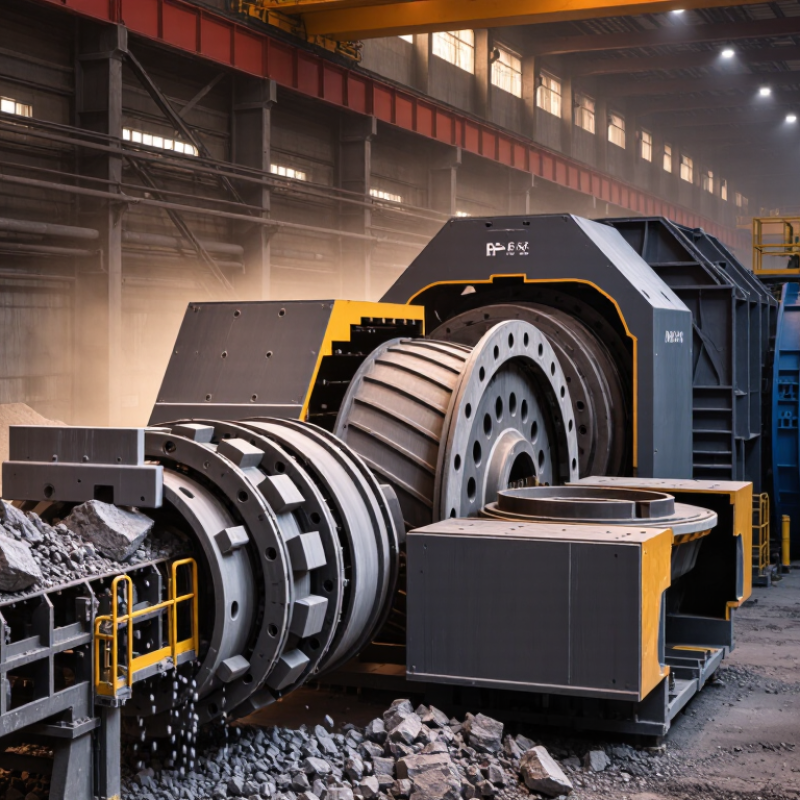
An industrial crusher breaks bulky materials into smaller, usable sizes. In quarrying, recycling, and mineral processing, this step prepares stone, concrete, or ore for screening and further handling. The purpose is controlled size reduction, not random damage. A steady feed matters. Oversized pieces can cause vibration, uneven wear, or sudden blockages.
Jaw crushers use compressive force between a fixed plate and a moving plate. They often handle large, tough feed at the beginning of a process. Cone crushers compress material inside a narrowing chamber. They are useful for producing more uniform, smaller particles. Impact crushers strike material with fast-moving blow bars or plates. Roll crushers squeeze material between rotating cylinders. Each type behaves differently with moisture, hardness, and feed shape.
The reduction ratio compares feed size with product size. A 3:1 ratio might reduce a 300-millimeter rock to about 100 millimeters. A 20:1 ratio demands much finer output and usually needs careful equipment selection. Real results vary. Moist clay may stick, while hard, abrasive stone can wear working surfaces quickly. In field checks, a planned ratio sometimes fails because the feed is poorly graded. That is easy to overlook. Operators should measure actual product sizes, monitor vibration, and adjust the discharge setting gradually. Crusher selection is rarely perfect on the first attempt.
An industrial crusher reduces large rock into controlled sizes for construction, mining, and recycling. Feed preparation becomes critical when incoming pieces measure 1,000–1,500 mm. A primary crusher may accept this range, but only after operators inspect the feed. Oversized slabs can bridge the opening, causing sudden stoppages and uneven wear.
Moisture changes the process quickly. Wet clay can stick to bars, block chutes, and reduce screening efficiency. Hard, abrasive rock creates a different problem. It increases power demand and wears liners faster. Experienced operators often use a grizzly or scalping screen before crushing. This removes fines and limits unnecessary load. Field measurements should include feed size, moisture, bulk density, and hardness. A simple hardness test helps, but laboratory testing gives stronger evidence. The mistake is trusting one sample. Rock can vary within the same stockpile.
Tips: Keep the feed moving evenly. Remove metal and wood before crushing. Watch motor load and discharge shape. Clean buildup before it becomes a blockage. Adjust the closed-side setting gradually, not by guesswork. A short inspection can prevent hours of downtime. Still, no feed plan is perfect. Rain, hidden clay, and fractured rock can change conditions within minutes. Experienced crews record these changes and refine settings during each shift.
What Is an Industrial Crusher and How Does It Work?
Primary crushing handles large rocks before screening, conveying, or secondary reduction. Feed sizes commonly range from 100 to 1,500 mm. At this stage, the machine must absorb impact while producing a controlled, smaller product.
A jaw crusher breaks material between a fixed plate and a moving plate. The moving plate compresses the feed in repeated strokes. This action is intermittent, but it is simple to inspect and adjust. Operators usually control product size through the closed-side setting. A wider setting allows larger discharge, while a tighter setting increases reduction and power demand. In practice, no feed is perfectly uniform. Oversized lumps, wet clay, and sharp rock can change performance quickly.
A gyratory crusher uses a rotating mantle inside a concave chamber. Its crushing action is more continuous, making it suitable for high-throughput primary circuits. The feed enters from above and moves downward as the gap narrows. Capacity depends on chamber geometry, speed, rock density, and moisture. Feed preparation matters. Poorly distributed material can cause uneven wear and unstable power draw. Safety depends on guarding, isolation procedures, reliable lubrication, and regular inspection of liners and structural parts. A calculation may look correct, yet field conditions can expose weak assumptions. That is why experienced engineers compare test data, site measurements, and operating records before final equipment selection.
What Is an Industrial Crusher and How Does It Work?
An industrial crusher reduces large rock into controlled sizes for construction and mineral processing. In secondary crushing, a cone crusher receives material after primary reduction. Its mantle rotates inside a concave bowl, compressing stone until it fractures. The machine works continuously, unlike impact equipment that relies mainly on sudden strikes. Short retention times can improve throughput.
Cone crushers commonly deliver reduction ratios between 4:1 and 8:1. A 160-millimeter feed may produce a 20-to-40-millimeter product, depending on settings and material. The ratio is not a promise. Feed gradation, moisture, hardness, and chamber design change the result. Operators should measure F80 and P80 values instead of trusting a brochure figure. Small setting changes can alter product shape and circulating load. It gets technical quickly.
Scale matters. The U.S. Geological Survey reported approximately 1.5 billion metric tons of crushed stone production in the United States during 2023, in Mineral Commodity Summaries 2024. At this volume, unstable feed can create substantial downtime and energy waste. A well-adjusted cone should maintain a steady choke-fed condition. I have seen plants chase finer output while ignoring worn liners. That choice often raises power demand and reduces capacity. The European Commission’s Best Available Techniques reference for the production of cement, lime, and magnesium oxide also identifies crushing and grinding as significant energy users. Real performance is therefore a compromise between reduction, wear, power, and product specification.
An industrial crusher reduces large rock into controlled sizes for construction and processing. In a tertiary circuit, the crusher receives already reduced material and shapes it into fine, consistent aggregate. The usual target is 5–25 mm, although the final range depends on the product specification.
The process begins with a calibrated feed. A cone, impact, or similar tertiary crusher applies repeated compression or impact to the stone. Operators adjust the closed-side setting, rotor speed, and feed rate to control particle size. The material then moves across vibrating screens. Oversized particles return to the crusher, while correctly sized particles leave through separate discharge points. This closed circuit can support capacities from 50 to 2,000 tonnes per hour, but capacity is never guaranteed by machine size alone.
Real plants are less tidy.
Moisture can blind screen openings and reduce effective output. Excessive fines may overload dust-control systems or change the final gradation. Practical operators check belt scales, screen efficiency, power draw, and product samples throughout the shift. Wear on liners and screen media also changes performance gradually. A setting that worked yesterday may produce too many 5 mm particles today. Laboratory sieve analysis provides stronger evidence than visual inspection. Still, sampling can be inconsistent, especially during rapid production changes. This is where experience matters: production targets must be balanced against shape, cleanliness, energy use, and maintenance intervals. A stable 5–25 mm product is usually achieved through regular adjustment, not one perfect setting.
Typical process data and equipment characteristics for industrial tertiary crushing and screening
| Data Dimension | Typical Value or Range | How It Works or Why It Matters |
|---|---|---|
| Process stage | Tertiary crushing and final sizing | Reduces material after primary and secondary crushing and prepares aggregate for final screening or shaping. |
| Nominal finished-product size | 5–25 mm | The final size is controlled by crusher settings, screen aperture, feed gradation, and circuit configuration. |
| Overall plant throughput | Approximately 50–2,000 t/h | Actual capacity depends on material properties, feed size, moisture, crusher chamber, screen loading, and the number of parallel units. |
| Typical feed to tertiary crusher | About 10–80 mm, depending on circuit design | The secondary circuit normally removes oversize before the tertiary stage; the allowable feed size must match the crusher opening and operating conditions. |
| Common tertiary crusher types | Cone crusher, horizontal-shaft impact crusher, vertical-shaft impact crusher | Cone crushers use compression; impact crushers use high-speed impact. Vertical-shaft impact units are often selected when improved particle shape or manufactured sand is required. |
| Reduction mechanism | Compression, impact, or rock-on-rock crushing | The selected mechanism breaks particles along natural weaknesses and influences product shape, fines generation, and energy use. |
| Closed-side setting or gap | Commonly adjusted within a few millimetres to several tens of millimetres | A smaller setting generally produces a finer product but can reduce capacity and increase circulating load. |
| Screening arrangement | Single, double, or triple-deck vibrating screen | Multiple decks can separate several marketable sizes in one pass, such as 0–5 mm, 5–10 mm, 10–20 mm, and 20–25 mm. |
| Screen aperture range | Typically selected around the required product cut sizes | Aperture size, deck inclination, vibration, and material travel determine separation efficiency and oversize carryover. |
| Screening efficiency | Often targeted at approximately 85–95% for well-controlled applications | Efficiency varies with particle shape, moisture, near-size material, screen media, and feed distribution; it is not a fixed equipment value. |
| Circulating load | Commonly 20–150% of fresh feed in closed circuits | Screen oversize is returned to the crusher. The circulating load rises when the crusher setting is tight or the feed contains a high proportion of near-size particles. |
| Suitable materials | Granite, basalt, limestone, recycled concrete, and other competent aggregates | Crusher selection must account for hardness, abrasiveness, compressive strength, moisture, and the presence of contaminants. |
| Product shape | Cubic to angular, depending on crusher type and operating conditions | Impact and rock-on-rock crushing can improve cubicality, while excessive reduction or poor chamber operation may increase flaky or elongated particles. |
| Moisture considerations | Low to moderate moisture is generally easier to screen | Wet or clay-rich feed can blind screen media, reduce screening efficiency, and cause blockages; washing or scalping may be required. |
| Dust-control methods | Water sprays, enclosed transfer points, extraction, and filtration | Dust control protects workers, limits emissions, and helps maintain visibility around crushers, screens, conveyors, and stockpiles. |
| Typical control variables | Feed rate, crusher setting, rotor or eccentric speed, screen inclination, and deck loading | Balancing these variables helps maintain stable throughput, target gradation, acceptable power draw, and consistent product quality. |
| Main quality checks | Particle-size distribution, fines content, shape index, moisture, and contamination | Regular sampling and sieve analysis verify that the 5–25 mm aggregate meets the project specification and remains consistent over time. |
It may accept rocks measuring 1,000–1,500 mm. Inspect large slabs first. Oversized pieces can bridge the opening and stop production suddenly.
Proper preparation reduces blockages, uneven wear, and unnecessary power demand. Remove metal and wood before crushing. A short inspection can prevent hours of downtime.
Wet clay can stick to bars, block chutes, and blind screen openings. Screening efficiency may fall quickly. Rain can change conditions within minutes.
Record feed size, moisture, bulk density, and material hardness. One sample is not enough. Rock properties can vary across one stockpile.
It removes fines before crushing and limits unnecessary load. This can improve feed stability. It is not a perfect solution.
A typical target is 5–25 mm aggregate. The final range depends on the product specification. Small changes matter.
Operators adjust the closed-side setting, rotor speed, and feed rate. Screens separate correctly sized particles from oversized material. Oversized particles return for further crushing.
No. Capacity depends on feed condition, moisture, hardness, settings, screening, and maintenance. Machine size alone cannot guarantee output.
Check belt scales, screen efficiency, motor load, discharge shape, and product samples. Laboratory sieve analysis gives stronger evidence than visual checks. Sampling can still be inconsistent.
Liner wear, changing moisture, excessive fines, or fractured rock can alter performance. A setting that worked yesterday may create too many 5 mm particles today. Regular adjustment is necessary.
An Industrial Crusher is a heavy-duty machine designed to reduce large rocks, ores, concrete, and other bulk materials into smaller, manageable sizes for construction, mining, recycling, and aggregate production. Depending on the application, crushing systems can achieve overall size-reduction ratios from approximately 3:1 to 20:1. Effective feed preparation is essential, especially when handling material measuring 1,000–1,500 mm. Operators must consider moisture, hardness, material consistency, and the need to prevent blockages or uneven loading.
Primary crushing uses jaw or gyratory machines to process feed ranging from about 100 to 1,500 mm. Secondary cone crushing then further reduces the material, commonly achieving reduction ratios of 4:1 to 8:1. In the tertiary stage, additional crushing and screening produce calibrated aggregates between 5 and 25 mm. A well-designed circuit can handle capacities from 50 to 2,000 tonnes per hour while maintaining consistent sizing, efficient material flow, and reliable performance.

Hanhai