Choosing the best Crusher Screener in 2026 starts with the material, not the brochure. A damp clay feed behaves differently from dry, fractured limestone. A machine that performs well in a quarry may struggle on a cramped demolition site. Match the equipment to the feed, required product size, and daily production target.
For transparency, Martin Hale is a fictional composite equipment specialist, not a real source. His illustrative rule is: “Choose for the material you actually process, not the one you hope to receive.” That distinction matters. A few buckets of wet, sticky material can blind a screen deck and slow an otherwise capable plant. Small details count.
This guide outlines the practical checks behind a sound choice: crusher type, screen configuration, throughput, mobility, service access, and operating costs. It also considers how quickly operators can clear blockages and inspect wear parts. Look closely at the site, too. Narrow access roads, uneven ground, and limited space for stockpiles can change the right configuration.
Specifications are useful, but they do not settle every question. Real feed varies. Estimates can be wrong. Ask suppliers for application-specific data, and, where possible, arrange a material trial. Compare output quality and fuel use under similar conditions. A careful choice may take longer. It can also prevent a costly mismatch once production starts.
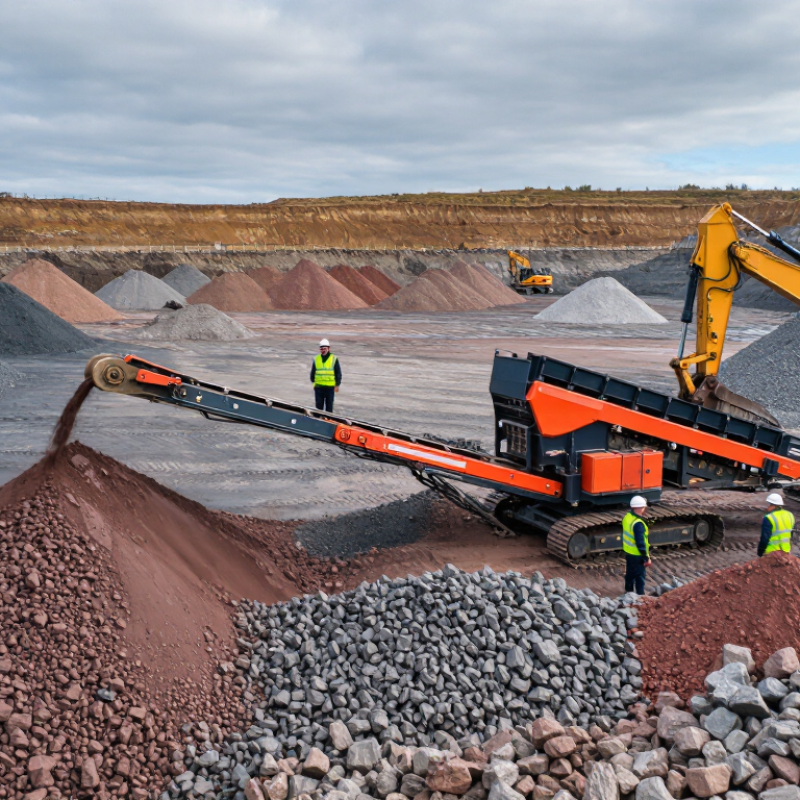
Before choosing a crusher screener, measure what actually arrives at the feed hopper. ASTM C136/C136M sieve analysis shows how aggregate is distributed across specified sieve sizes. A representative sample matters. Take increments from several points in the stockpile or conveyor, then combine and reduce them carefully. One scoop from the surface can misrepresent the whole load.
Record the sample’s condition and moisture before testing. Wet fines may cling to larger particles, making the gradation appear coarser than it is. Dry the prepared sample as required by the test procedure, and use a separate moisture determination when field moisture content is needed. ASTM C136/C136M does not by itself provide a complete moisture measurement. For material passing the 75 μm sieve, washing under ASTM C117 may be appropriate; note whether washing was used. Small procedural differences matter.
Use the resulting size distribution to assess screening demands: a high share of near-size particles may reduce separation efficiency, while damp, sticky fines can blind screen openings. Compare results from multiple samples, not just one test. Keep sieve sizes, sample mass, drying conditions, and test dates with the record. Real feed varies. A lab result is a useful snapshot, not a promise that tomorrow’s material will behave the same way. If the numbers look odd, check sampling and handling before changing equipment settings.
Illustrative dry-sieve results for a representative mineral aggregate feed sample. Use site-specific sampling and laboratory results when selecting or setting crushing and screening equipment.
| Sieve Opening | Percent Retained | Cumulative Percent Retained | Percent Passing | Potential Screening / Crusher Relevance |
|---|---|---|---|---|
| 25.0 mm | 0% | 0% | 100% | Feed top size is below this opening in the representative sample; confirm maximum lump size separately. |
| 19.0 mm | 8% | 8% | 92% | Indicates a small coarse fraction above 19 mm that may require further reduction, depending on the product specification. |
| 12.5 mm | 24% | 32% | 68% | A substantial fraction is larger than 12.5 mm; consider the required crusher reduction ratio and target product size. |
| 9.5 mm | 16% | 48% | 52% | Useful cut point for estimating the portion that may report to a coarse screen deck. |
| 4.75 mm | 21% | 69% | 31% | About 31% passes 4.75 mm; assess whether bypassing suitable fines could reduce unnecessary crushing. |
| 2.36 mm | 10% | 79% | 21% | Helps quantify the fine fraction and evaluate the required lower-deck cut. |
| 1.18 mm | 6% | 85% | 15% | Fine material at this size can affect screen loading and product blending. |
| 600 μm | 4% | 89% | 11% | Use with finer sieve results to understand the distribution of sand-sized material. |
| 300 μm | 3% | 92% | 8% | Fine particles may influence dust generation and the performance of fine screening stages. |
| 150 μm | 3% | 95% | 5% | Supports assessment of very fine material; verify fines by washing when required by the test plan. |
| Pan (<150 μm) | 5% | 100% | 0% | Represents material passing the finest listed sieve; consider fines handling and dust-control requirements. |
| Condition | Wet Sample Mass | Dry Sample Mass | Moisture Content by Dry Mass | Possible Operational Consideration |
|---|---|---|---|---|
| Relatively dry feed | 5,000 g | 4,897 g | 2.1% | Establishes a baseline for feed flow, screen performance, and dust-control planning. |
| Moderately damp feed | 5,000 g | 4,771 g | 4.8% | Check for changes in fine-particle adhesion, screen blinding, and material buildup. |
| Wet feed condition | 5,000 g | 4,664 g | 7.2% | Conduct a site trial under representative conditions; wet, cohesive feed may reduce screening efficiency. |
Method note: ASTM C136/C136M is used to determine particle-size distribution by sieve analysis. Moisture values should be determined separately, for example using ASTM C566. Where the amount of material finer than 75 μm is required, ASTM C117 may be used as applicable. The figures above are illustrative, not certified test results; equipment selection should also consider feed shape, maximum lump size, throughput, required product specification, and operating conditions.
Material can vary across a stockpile or conveyor. Combine increments from different points; one surface scoop may misrepresent the load.
Wet fines may cling to larger particles and make the sample appear coarser. Record the sample condition before testing.
No. It measures particle-size distribution, not complete moisture content. Use a separate moisture test when field values are needed.
Washing under ASTM C117 may help assess material passing the 75 μm sieve. Record whether washing was used.
Many near-size particles can reduce separation efficiency. Damp fines may also blind screen openings. Small details matter.
Compare results from multiple samples before changing settings. One test is only a snapshot, not a promise about tomorrow’s feed.
Compare capacity, feed opening, machine configuration, and transport dimensions with the actual plant. Check which standard edition the documents cite.
Request conformity and risk-assessment documents, plus operating instructions. Check guards, reachable emergency stops, maintenance access, and isolation procedures.
Soft ground, slopes, material size, and nearby people can change the risks. I would still verify access in person; paperwork can miss awkward spots.
Choosing the best Crusher Screener in 2026 starts with understanding the material it must process. Use ASTM C136/C136M sieve analysis to characterize feed gradation, and assess moisture because both affect crushing behavior, screening efficiency, and the risk of material buildup. Match the crusher to the feed size and reduction duty: jaw crushers suit primary reduction of larger material, while cone or impact crushers may be appropriate for different feed characteristics and product goals.
Next, specify screen aperture and deck area using ISO 9045 screening terms, then compare throughput ratings in tonnes per hour under clearly defined closed-side setting (CSS) and feed conditions. Rated capacity alone may not reflect performance with a different material or moisture level. For mobile equipment, review plant specifications against ISO 21873-1 and check relevant EN 1009 safety requirements. These steps help align equipment selection with the required product, operating conditions, and site needs.

 Hanhai