When it comes to crushing rocks and minerals, the Cone Crusher is a fundamental piece of equipment in the mining and construction industries. An industry expert, Dr. Robert Jordan, once stated, "Understanding the mechanics of a Cone Crusher can lead to better efficiency in processing." This highlights the importance of grasping how this machine operates.
The Cone Crusher functions by compressing materials between a fixed bowl and a moving cone. As these rocks enter the chamber, they are crushed into smaller pieces. This operation is essential for producing various aggregate sizes. However, mismanagement of settings can lead to inefficiency. If the machine is set incorrectly, it can cause unnecessary wear and tear. This makes it crucial for operators to understand the specifics of their machines.
Beyond just knowing how the equipment operates, it's vital to reflect on its maintenance and operational challenges. Regular checks can minimize downtime and maximize output. The growing demand for crushed material makes it important to improve knowledge. A well-maintained Cone Crusher can significantly enhance productivity in any operation.
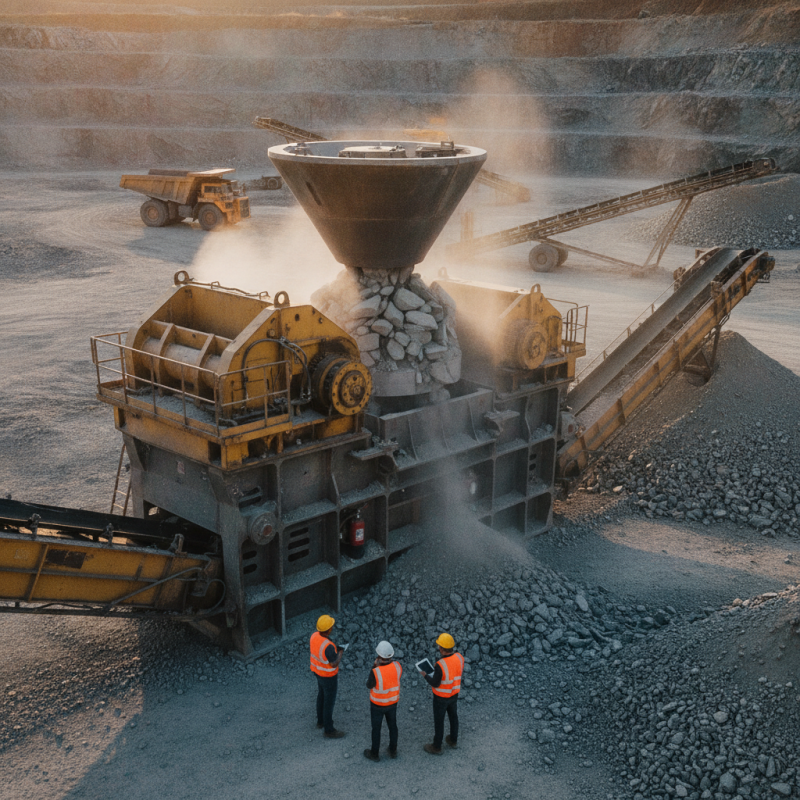
A cone crusher is a powerful machine used for crushing stones and minerals. Its design allows for efficient size reduction and high production capacity. The crusher features a conical structure that enables it to crush materials by squeezing them between a fixed cone and a moving cone. This process generates a fine output, making it suitable for many applications in construction and mining.
Understanding how a cone crusher functions is crucial for many industry professionals. The cone moves in a circular motion, breaking down materials into smaller pieces. This motion creates a consistent product size while ensuring minimal waste. Operators appreciate this efficiency as it leads to cost savings and better material quality.
Tip: Regular maintenance is essential. A well-maintained cone crusher operates more efficiently and prolongs its lifespan. Check the wear parts frequently to avoid unexpected failures.
Another important aspect to consider is the material being processed. Different materials require different settings for optimal performance. Monitoring these settings helps prevent damage to the machine. Adjustments may be needed based on the feed size and hardness of the material being crushed.
Tip: Train your operators. Proper training enhances productivity and safety. Ensure they understand the machine’s features and best operating practices.
The history of cone crushers dates back to the early 20th century. The first design emerged in 1927 and introduced a revolutionary method for crushing rocks. This design laid the foundation for the modern cone crusher we see today. Early models were relatively simple yet effective for their time. However, advancements in technology have led to significant improvements.
Throughout the years, cone crushers have undergone various modifications. Engineers focused on enhancing efficiency and durability. This evolution included the incorporation of hydraulic systems, which allow for better control. The introduction of automation in the late 20th century marked a pivotal moment. Operators can now manage the machines with greater precision, reducing human error.
Despite these advancements, challenges remain. Some older designs still struggle with material buildup, impacting productivity. Moreover, the complexity of modern machines can sometimes lead to maintenance difficulties. Balancing high performance with ease of use requires ongoing innovation. The journey of cone crusher development reflects a blend of necessity and creativity in engineering.
A cone crusher is an essential piece of equipment in the mining and aggregate industries. Its primary function is to crush various materials into smaller, manageable sizes. Understanding the key components of a cone crusher is vital for optimizing its performance.
The main components include the mantle, concave, and the bowl. The mantle is a moving piece that crushes the material against the concave. These two parts create a crushing cavity, wherein the size and shape of the crushed material can be controlled. According to a recent industry report, the global market for cone crushers is projected to grow at a CAGR of 4.5% between 2021 and 2026. This growth highlights the increasing demand for efficient aggregate processing.
Another essential component is the hydraulic system. It controls the movement of the mantle, allowing for adjustments based on material size and type. However, depending on the material and feed size, the hydraulic system can face challenges. Sometimes, it can lead to inefficient crushing if not calibrated correctly. Frequent maintenance is critical to avoid performance issues. Moreover, operators should continuously assess wear and tear on the components to ensure productivity remains high.
Cone crushers play a vital role in the mining and construction industries. They deliver high efficiency in breaking down rocks and minerals. The basic operating principle involves a rotating mantle that crushes material against a stationary bowl liner. As the material enters the cone, it is compressed. This compression reduces the size of the material into larger pieces.
The force applied during the crushing process is significant. According to industry reports, a well-optimized cone crusher can achieve a reduction ratio of up to 6:1. However, achieving such efficiency requires consistent monitoring of operational parameters. Monitoring aspects like power consumption and throughput is essential. The ideal operational frequency should be maintained to prevent overloading the crusher.
Understanding the adjustment mechanisms is also critical. Cone crushers come with an adjustment ring that allows operators to change the size of the output material. This flexibility is essential, but adjustments can lead to unexpected operational complications. Regular maintenance is required to identify potential issues. Research indicates that lack of regular checks might lower productivity by nearly 30%. Recognizing these nuances can significantly enhance the performance of cone crushers in practical applications.
Cone crushers play a vital role in the mining and construction industries. These machines are designed to reduce large rocks into smaller, more manageable sizes. They accomplish this through a process of compression and crushing. The result is a product that can be used for various applications, including road building and aggregate production.
One of the primary uses of cone crushers is in the production of construction aggregates. These aggregates serve as foundational materials for roads, bridges, and buildings. They ensure stability and strength in infrastructure projects. Another significant application is in the mining sector, where cone crushers help process minerals and ores. They enable the efficient extraction of valuable materials.
However, the performance of cone crushers can vary based on several factors. The type of material being crushed, the size of the feed, and the specific design of the crusher all play crucial roles. Maintenance and operational practices can also impact efficiency and output. It's essential to regularly assess these factors to maximize productivity and reliability. Attention to detail and a deep understanding of the equipment can make a significant difference in achieving optimal results.
: Cone crushers originated in the early 20th century. The first design appeared in 1927. It changed how rocks are crushed.
Main components include mantle, concave, and bowl. The hydraulic system adjusts the mantle’s movement. They work together to crush materials.
They crush materials through compression. The mantle moves against the concave, creating a crushing cavity. This controls the size of the output.
They're primarily used in construction aggregates. They help reduce large rocks for roads and buildings. In mining, they process minerals and ores efficiently.
Older designs often struggle with material buildup. Modern machines have complex systems that may lead to maintenance difficulties. Performance can vary widely.
Regular maintenance is crucial. Operators should frequently assess wear and tear on components. Calibration of the hydraulic system is also essential.
A Cone Crusher is a vital piece of equipment in the mining and aggregate industries, designed to crush hard and medium-hard materials efficiently. This machine operates on the principles of compression, utilizing a rotating mantle that crushes the material against a fixed bowl liner. The design of cone crushers has evolved significantly over the years, with advancements in technology enhancing their performance and reliability.
The key components of a Cone Crusher include the frame, crushing chamber, and hydraulic system, which work in unison to deliver optimal crushing action. These crushers are widely used in various applications, including stone quarrying, mining, and recycling, due to their versatility and ability to produce high-quality aggregate. Understanding how a Cone Crusher operates and its applications is essential for maximizing efficiency and ensuring productive output in various industrial processes.

Hanhai