How to Choose the Best Rock Hammer Mill?

Time:2026-10-03 Author:Sienna
0%

Choosing the best Rock Hammer Mill begins with the material, not the machine’s advertised capacity. Granite, limestone, basalt, and recycled concrete behave differently under impact. A dusty test sample may hide moisture, abrasiveness, or uneven feed sizes. These details directly affect output, wear, energy use, and maintenance intervals.

Mineral-processing authority Dr. Tim Napier-Munn states, “Comminution is the most energy-intensive operation in mineral processing.” That principle deserves attention when comparing hammer speed, rotor design, screen openings, and motor power. A powerful Rock Hammer Mill is not automatically the best choice. The wrong configuration can create excessive fines, uneven particles, or rapid hammer replacement. Sometimes, less power produces better control.

Look closely at the feed opening. Can it accept your largest rock safely? Check the target particle size, hourly throughput, moisture content, and expected abrasion. Ask for test results using material similar to yours. A supplier’s laboratory sample may not represent real quarry conditions. That matters.

Consider service access, spare-part availability, noise control, dust collection, and operator safety. These practical features often determine long-term value. Purchase price is only one part of ownership cost.

There is no universal winner. A mill suited to soft limestone may struggle with hard basalt. Even reliable calculations can miss changing feed conditions. Recheck your assumptions before selecting equipment. The strongest decision combines measured data, experienced inspection, and a realistic maintenance plan.
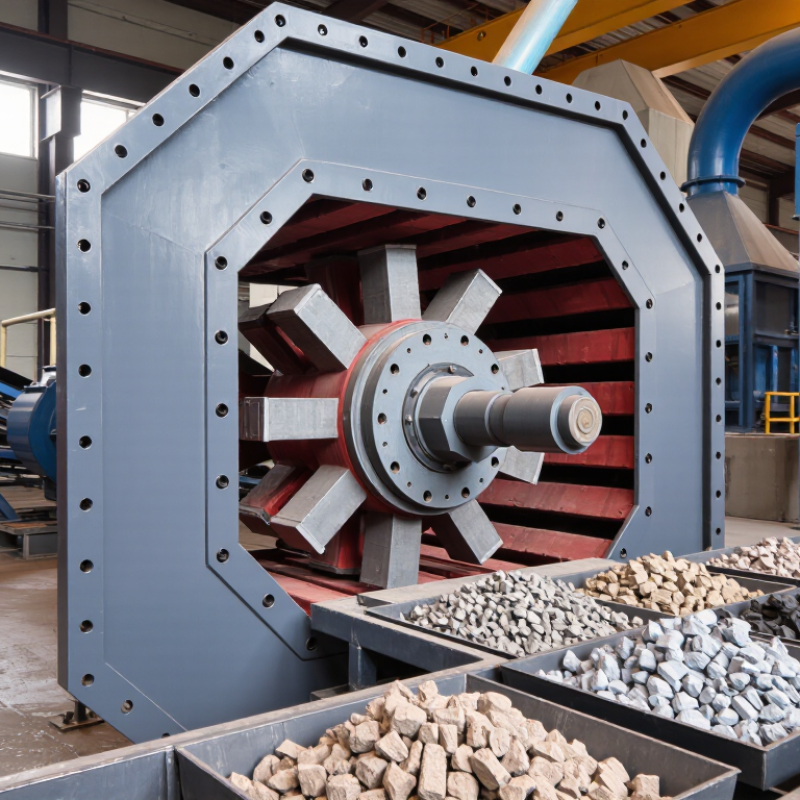
How to Choose the Best Rock Hammer Mill?

What Is a Rock Hammer Mill and How Does It Work?

How to Choose the Best Rock Hammer Mill?

A rock hammer mill is an impact crusher that breaks stone with repeated hammer blows. A motor turns a rotor inside a strong crushing chamber. As the rotor spins, hammers strike the incoming rock against breaker plates. The fragments then pass through a screen when they reach the required size. Smaller openings create finer material, but they can reduce capacity and increase wear. Not magic.

The USGS Mineral Commodity Summaries 2024 reported about 1.5 billion metric tons of crushed stone production in the United States during 2023. This scale shows why stable size control and dependable uptime matter. The Coalition for Eco Efficient Comminution has also highlighted comminution as a major energy user in mining. Hard, abrasive rock can quickly damage hammers, liners, and screens. Material testing deserves attention.

When choosing a mill, match the machine to rock hardness, feed size, moisture, and target output. A quarry processing dry limestone may need different settings than a site handling wet, abrasive granite. Check rated capacity, motor power, access for maintenance, and replacement-part availability. Experienced operators often inspect the feed before trusting catalog figures. A neat calculation can still fail.

I would also request test results using representative rock, not laboratory material alone. Measure output distribution, noise, dust, and hammer wear during the trial. The best choice is rarely the machine with the highest advertised capacity. It is the one that maintains useful output without excessive downtime. That judgment remains partly practical, and imperfect.

Key Factors for Choosing a Rock Hammer Mill

How to Choose the Best Rock Hammer Mill?

Key Factors for Choosing a Rock Hammer Mill

Start with the rock. Identify its compressive strength, abrasiveness, moisture, and feed size. A hammer mill can process soft to medium-hard stone efficiently. It may struggle with highly abrasive granite or quartz-rich material.

The USGS Mineral Commodity Summaries 2024 estimated U.S. crushed-stone production at about 1.5 billion metric tons in 2023. That scale highlights why stable capacity and predictable wear costs matter.

Check the required output before comparing machines. A smaller discharge size usually demands more rotor energy and better screening. Confirm the mill’s rated capacity under your actual feed conditions, not ideal laboratory material.

Moisture matters. Wet clay can clog the grate and reduce throughput.

Wear tells the truth. Ask for test results showing hammer life, liner life, and product gradation. These details often reveal more than a catalogue number.

Dust control also deserves serious attention. U.S. EPA AP-42 Section 11.19.2 identifies crushing, screening, and material transfer as significant particulate-emission sources. Enclosed transfer points, suitable extraction, and housekeeping should be part of the design.

OSHA’s respirable crystalline silica limit is 50 micrograms per cubic meter as an eight-hour time-weighted average. Local requirements may differ. Do not treat compliance as an accessory.

A low purchase price can become expensive after repeated stoppages, replacement parts, and cleaning.

I would also question any capacity claim without material-specific testing. Real rock is inconsistent. That is where selection becomes difficult.

How to Match Mill Design with Rock Material

How to Choose the Best Rock Hammer Mill?

Rock material should determine the mill design, not the other way around. Start with hardness, abrasiveness, moisture, feed size, and the required product size. The U.S. Geological Survey reported about 1.9 billion metric tons of crushed stone production in the United States during 2023. That scale makes small design errors expensive.

A hammer mill suits softer, brittle rocks that break under impact. Limestone, gypsum, and some weathered stones can respond well. Very hard quartz-rich rock may accelerate hammer and liner wear. Bond Work Index testing, described in the SME Mineral Processing and Extractive Metallurgy Handbook, helps estimate grinding resistance. CEEC International publications also report that comminution can consume 25–50% of a mine’s total energy. Therefore, a higher rotor speed is not automatically better. Choose the lowest effective speed, suitable grate openings, and replaceable wear parts. Moist clay can clog the chamber, even when the rock itself is not hard. That detail is easy to overlook.

Tips: Test a representative sample before purchasing. Measure moisture after storage, not only at the quarry face. Record feed size, product size, power draw, and wear rate during trials. A staged setup may perform better than one aggressive pass. Perfect matching is rare. Material changes seasonally, and laboratory results can disappoint in production. Allow adjustment space in the design.

Cite: USGS Mineral Commodity Summaries 2024; SME Mineral Processing and Extractive Metallurgy Handbook; CEEC International comminution energy publications.

Evaluating Capacity, Power Use, and Product Size

Choosing a rock hammer mill starts with the material, not the machine’s advertised capacity. According to the U.S. Geological Survey’s Mineral Commodity Summaries 2024, U.S. crushed-stone output reached about 1.5 billion metric tons in 2023. That scale shows why small capacity errors become expensive. Measure feed size, rock hardness, moisture, and bulk density before comparing models. A mill rated at 20 tonnes per hour may deliver less with wet, abrasive stone.

Power use deserves equal attention. The U.S. Department of Energy reports that motor-driven systems consume more than half of industrial electricity in many facilities. Ask for specific energy data in kilowatt-hours per tonne, measured at the motor input. Do not rely on horsepower alone. Higher power can improve throughput, but it may also create excessive fines and faster wear. I have seen operating estimates change after operators included blocked screens, idling time, and uneven feeding.

Product size is the practical test. Define the required top size and the percentage passing the target screen, then request test results using similar rock. A narrow discharge range may require more screening or a second crushing stage. Keep the feed steady. It matters. Bond’s comminution principles also remind engineers that harder rock demands more energy, although real hammer-mill results rarely match a laboratory estimate perfectly. That gap deserves a field trial, and perhaps a less confident spreadsheet.

How to Choose the Best Rock Hammer Mill? - Evaluating Capacity, Power Use, and Product Size
Mill Size Class Typical Feed Opening Recommended Feed Size Typical Capacity Installed Motor Power Typical Product Size Approximate Specific Energy Use Suitable Application
Compact 150 × 200 mm Up to 100 mm 1–5 t/h 15–30 kW 0–5 mm 3–8 kWh/t
Small Production 250 × 300 mm Up to 150 mm 5–15 t/h 30–55 kW 0–8 mm 3–7 kWh/t
Medium Production 400 × 500 mm Up to 200 mm 15–35 t/h 75–132 kW 0–10 mm 2.5–6 kWh/t
Heavy Production 600 × 800 mm Up to 300 mm 35–80 t/h 160–250 kW 0–12 mm 2.5–5.5 kWh/t
Large Industrial 800 × 1000 mm Up to 400 mm 80–150 t/h 315–500 kW 0–15 mm 2–5 kWh/t
Values are representative engineering ranges for conventional rock hammer mills operating with properly sized, moderately abrasive feed. Actual capacity and energy consumption vary with rock hardness, moisture, feed gradation, rotor speed, grate configuration, product-size requirement, and material recirculation. Hard, highly abrasive rock may require a different crusher design and more frequent wear-part replacement.

Safety, Maintenance, and Operating Cost Considerations

Choosing a rock hammer mill begins with the safety envelope, not the advertised crushing rate. Guards should cover the rotor, inspection doors should interlock, and emergency stops must remain reachable. OSHA’s FY2023 Top 10 violations listed 2,554 lockout/tagout violations, showing how often isolation controls fail in practice. Dust extraction matters too. Fine rock dust can settle on motors, walkways, and bearings.

Maintenance access directly affects production cost. Look for replaceable hammers, reversible wear plates, clear inspection points, and simple bearing lubrication routes. A practical inspection should check vibration, bearing temperature, rotor balance, and unusual metal noise. These small signals often appear before a costly failure. Keep a written service log. It exposes patterns, although operators sometimes record too little.

Operating cost is more than purchase price. The IEA’s Energy Efficiency 2023 report states that industry consumes about 37% of global final energy, so motor efficiency deserves close attention. Compare specific energy consumption, measured in kilowatt-hours per tonne, under similar feed conditions. Also estimate downtime, spare parts, labor, dust control, and screen replacement. The cheapest mill can look persuasive. It may become expensive when a worn hammer requires a long shutdown. I would still challenge any promised capacity figure without testing moisture, hardness, feed size, and product specification. Real rock is rarely as cooperative as a brochure.

FAQS

Which rocks are generally suitable for a hammer mill?

Softer, brittle rocks often respond well to impact crushing. Limestone, gypsum, and weathered stone may be suitable. Very hard, quartz-rich rock can quickly wear hammers and liners.

What material properties should be tested before choosing a mill?

Test hardness, abrasiveness, moisture, feed size, and target product size. A representative sample gives more useful results. Quarry-face moisture may differ after storage.

Is a higher rotor speed always better?

No. Higher speed can increase energy use and wear. Choose the lowest effective speed for the material. Test it carefully.

How can moisture affect hammer mill performance?

Moist clay can clog the grinding chamber. This may happen even when the rock itself is not very hard. Measure moisture after storage, not only at extraction.

What information should a trial test record?

Record feed size, product size, power draw, moisture, and wear rate. Note vibration and unusual noise too. One aggressive pass may not be best.

What safety features should a rock hammer mill include?

Guards should cover the rotor and moving parts. Inspection doors should interlock. Emergency stops must remain easy to reach. Dust extraction should protect motors, bearings, and walkways.

Which maintenance details can reduce downtime?

Choose replaceable hammers, reversible wear plates, and clear inspection points. Simple bearing lubrication routes also help. Keep a written service log, though operators sometimes record too little.

How should operating cost be compared between mills?

Compare energy use in kilowatt-hours per tonne under similar feed conditions. Include labor, spare parts, dust control, screens, and downtime. A low purchase price may hide expensive shutdowns.

Can laboratory test results guarantee production performance?

No test can guarantee a perfect result. Rock properties may change by season or storage condition. Leave adjustment space in the design. Real material is less cooperative than expected.

Conclusion

Choosing the best Rock Hammer Mill requires more than comparing basic specifications. A Rock Hammer Mill uses rotating hammers to break rock into smaller particles, so its performance depends on the material’s hardness, moisture, abrasiveness, and desired output size. Buyers should evaluate the mill’s crushing chamber, rotor design, screen system, feed opening, and adjustment options to ensure the equipment matches the specific rock type and processing goals.

Capacity, power consumption, and product consistency are also essential considerations. A suitable model should provide the required throughput without excessive energy use or unnecessary oversize material. Safety features, convenient access for inspection, durable wear parts, and simple maintenance can reduce downtime and long-term operating costs. By balancing material compatibility, production requirements, safety, maintenance needs, and overall efficiency, users can select a Rock Hammer Mill that delivers reliable performance and stable results over time.


Sienna

Sienna

Sienna is a skilled marketing professional with a deep expertise in our company’s core products and services. With a passion for innovation and detail, she plays a pivotal role in crafting insightful blog posts that not only highlight the unique features of our offerings but also provide valuable......