Choosing the right Plain Bearing Housing in 2026 requires more than comparing dimensions and prices. Global buyers must examine load direction, shaft speed, mounting space, temperature, moisture, and maintenance access. A pillow block housing may suit a straight conveyor shaft. A flanged housing can fit compact machinery. Take-up and cartridge designs solve different alignment problems.
Dr. Michael M. Khonsari, a respected tribology professor, states, “The purpose of lubrication is to reduce friction and wear.” That principle remains practical. Even a robust housing can fail when lubrication paths are blocked, seals are poorly fitted, or the shaft is misaligned.
Real-world selection is rarely perfect. Catalog ratings may not reflect dust, vibration, or frequent washdown. Buyers should verify material grades, bushing compatibility, tolerance classes, sealing options, and replacement availability. Cast iron offers strength and value. Stainless steel supports corrosive environments. Polymer housings may reduce weight, but they can require stricter temperature control.
This guide compares the leading Plain Bearing Housing types for international applications. It considers engineering performance, installation experience, sourcing reliability, and long-term service costs. Standards matter. So does supplier communication.
Small details decide outcomes.
A housing that fits on paper may still create noise, heat, or premature wear. The most reliable choice balances design data with field evidence. That balance is sometimes overlooked.
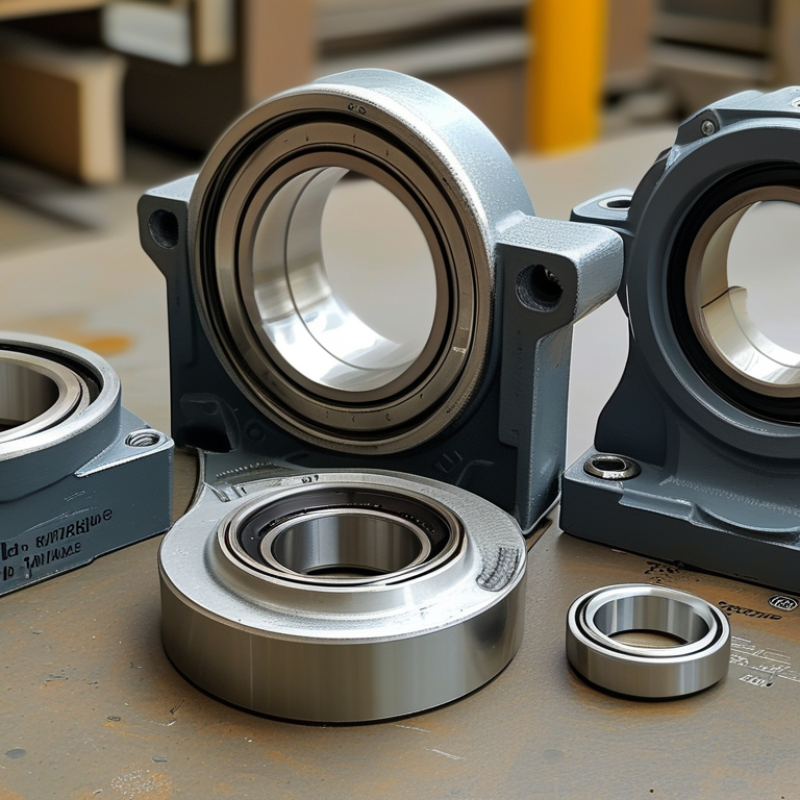
A plain bearing housing is the fixed body that supports a sliding bearing, shaft, and lubricant. Unlike rolling bearings, plain bearings use controlled surface contact instead of balls or rollers. The housing keeps the bearing aligned and transfers radial loads into the machine frame. Common 2026 choices include pillow-block, flanged, split, and take-up housings. Each shape fits a different installation problem. A pillow-block unit suits conveyor shafts. A flanged housing fits compact, wall-mounted equipment. A split housing helps technicians inspect large shafts without removing nearby components.
Inside the housing, the bearing surface supports the shaft through a thin lubricant film or a self-lubricating material. During startup, contact may be higher. Once speed increases, the film can separate the surfaces and reduce wear. Fortune Business Insights estimated the global bearing market at approximately USD 132 billion in 2023. However, that figure covers rolling and plain bearings, not housings alone. Buyers should not treat it as a housing-market value. That distinction is easy to miss. Industry specifications, including ISO 4379, also show why clearance, material, and load direction matter during selection.
Tips: Measure shaft diameter, housing width, mounting holes, and operating temperature first. Check lubricant compatibility before ordering. A slightly loose fit may create vibration, while excessive preload can raise heat. In field inspections, look for scoring, darkened lubricant, and uneven wear. These signs often reveal alignment problems, not poor housing quality. Reported service life remains conditional; dust, shock loads, and maintenance habits can change the result sharply.
A plain bearing housing supports and locates a plain bearing while helping manage radial loads, alignment, mounting, and shaft movement. The chart compares common housing configurations by their typical design features rather than by brand, company, or market-share data.
2026 Top Plain Bearing Housing Types for Global Buyers?
How Are Plain Bearing Housing Types Classified?
Plain bearing housings are classified by mounting method, body construction, and maintenance access. The common groups include pillow-block, flanged, cartridge, take-up, and split housings. Pillow-block designs sit on horizontal surfaces, while flanged housings attach to vertical panels. Take-up housings allow shaft adjustment, which helps maintain belt tension in conveyor systems.
Construction creates another useful division. Solid housings offer stiffness and simple alignment. Split housings open around the shaft, making replacement easier when dismantling equipment is impractical. Cartridge housings fit inside prepared bores and often support compact machine layouts. ISO 4378-1 separates plain-bearing terminology by bearing structure, load direction, and lubrication arrangement. Housing selection should follow these functional differences, not appearance alone.
Recent industrial bearing reports show strong demand from automation, material handling, and energy equipment. Grand View Research reported continued expansion in the industrial bearings market through 2030, with maintenance efficiency identified as a major purchasing factor. That finding matches field experience: a split housing can reduce service time around a guarded conveyor, but its joint requires careful inspection. It is not automatically better. Buyers should check load direction, shaft diameter, contamination, temperature, lubrication method, and mounting space. A small mismatch can produce noise, heat, and premature wear. Market reports offer useful direction, but site conditions still decide the correct housing type.
Plain bearing housing selection depends on load direction, alignment, access, and operating conditions. A pillow-block housing suits steady radial loads on horizontal shafts. Its broad base helps distribute vibration into the machine frame. Flanged housings work better when axial positioning matters, especially on vertical shafts. Split housings reduce replacement time, but their joint faces need careful inspection. Small errors can create uneven pressure across the bearing surface.
Self-aligning housings tolerate limited shaft or frame misalignment. They are useful in conveyors, agricultural equipment, and equipment with flexible structures. Thrust housings handle axial loads, although many applications need separate radial support. A 2024 Future Market Insights assessment valued the plain bearings market at about USD 11 billion, with industrial machinery and transport among major demand sectors. This demand does not make one housing design universally suitable.
Load calculations should include pressure, speed, temperature, shock, and contamination. ISO 4378 terminology supports consistent evaluation of bearing geometry and operating conditions. Market research from Grand View Research also identifies machinery reliability and maintenance reduction as important bearing-market drivers. Yet catalog load figures can mislead when dirt, poor lubrication, or edge loading appears. A housing that looks oversized may still fail quickly. In practice, I would verify shaft deflection and mounting flatness before choosing the cheapest design.
Practical comparison of common plain-bearing housing designs, load behavior, installation requirements, sealing options, and application suitability.
| Housing Type | Typical Bearing Arrangement | Best Load Conditions | Alignment Capability | Common Materials | Sealing and Lubrication | Typical Applications | Main Selection Considerations |
|---|---|---|---|---|---|---|---|
| Pillow Block Housing | Self-contained radial plain bearing mounted on a horizontal base. | Moderate radial load Steady rotation Suitable for relatively simple shaft support. |
Low to moderate Requires a reasonably aligned shaft and mounting surface. |
Cast iron, ductile iron, steel, aluminum, or engineering polymer housing with a bronze, sintered-metal, or polymer bearing. | Grease grooves, oil holes, shields, felt seals, or elastomeric seals may be specified depending on the design. | Conveyors, fans, packaging machinery, agricultural equipment, and general industrial drives. | Check base rigidity, bolt pattern, shaft diameter, operating speed, contamination level, and access for relubrication. |
| Flange Housing | Bearing housing fixed to a vertical or side mounting surface through a flange. | Radial load Axial locating support Useful where the shaft passes through a machine wall or frame. |
Low Accurate flange mounting and shaft alignment are important. |
Cast iron, steel, aluminum, stainless steel, or reinforced polymer. | Sealing can be provided by contact seals, labyrinth seals, or external shaft seals. Grease or oil lubrication is common. | Gearboxes, pumps, textile machines, packaging lines, and wall-mounted rotary equipment. | Select two-bolt, three-bolt, four-bolt, or oval-flange geometry according to available installation space and reaction loads. |
| Take-Up Housing | Bearing housing mounted in a sliding frame for shaft-position adjustment. | Radial load Variable center distance Suitable for tensioned systems. |
Moderate Sliding adjustment helps compensate for installation and belt-length variation, but does not replace angular alignment. |
Cast iron, ductile iron, fabricated steel, or heavy-duty polymer components. | Grease lubrication is common; seals should be selected for dust, moisture, and washdown exposure. | Belt conveyors, chain drives, agricultural machinery, bucket elevators, and material-handling systems. | Evaluate adjustment travel, frame stiffness, locking method, belt or chain tension, and contamination protection. |
| Hanger Housing | Suspended housing supporting an intermediate shaft or conveyor screw from above. | Radial load Space-constrained support Usually applied at intermediate shaft locations. |
Moderate Housing position and shaft straightness must be controlled across the supported span. |
Cast iron, fabricated steel, bronze, composite, or self-lubricating polymer bearing materials. | Grease, oil, or dry-running materials may be used. Protective covers are useful in dusty conveying environments. | Screw conveyors, mixers, long-shaft drives, bulk-material handling, and process equipment. | Consider shaft deflection, product contamination, access for maintenance, temperature, and the distance between supports. |
| Split Housing | Two-piece housing that can be opened without removing adjacent shafts or major drive components. | High radial load Maintenance-critical duty Appropriate for large shafts and continuous operation. |
Moderate The housing can accommodate robust bearing arrangements, but installation alignment remains essential. |
Cast iron, ductile iron, steel, or specialized corrosion-resistant alloys. | Grease lubrication is widespread; oil-bath or circulating-oil arrangements may be used at higher speeds or temperatures. | Steel mills, paper machinery, mining equipment, large conveyors, fans, and heavy process machinery. | Compare maintenance access, cap-bolt design, sealing arrangement, shaft fits, load direction, and replacement-bearing availability. |
| Cartridge Housing | Replaceable bearing cartridge fitted into a prepared bore or housing body. | Radial load Controlled installation Useful when repeatable replacement is required. |
Low to moderate Performance depends strongly on bore accuracy and the supporting structure. |
Steel, stainless steel, cast iron, aluminum, bronze, and engineered polymer combinations. | Pre-lubricated, grease-lubricated, oil-lubricated, or dry-running configurations are available depending on the bearing material. | Printing equipment, medical and laboratory machinery, packaging machines, automation systems, and compact drives. | Confirm cartridge dimensions, retention method, replacement procedure, thermal expansion allowance, and contamination control. |
| Spherical or Self-Aligning Housing | Housing with a spherical outer seat or self-aligning bearing insert. | Radial load Shaft misalignment Suitable for moderate structural deflection. |
High Accommodates limited angular misalignment between the shaft and housing. |
Cast iron, ductile iron, steel, stainless steel, or reinforced polymer housing with bronze or composite bearing surfaces. | Grease ports, dust shields, contact seals, and self-lubricating liners may be used. | Agricultural machinery, conveyors, outdoor equipment, linkage systems, and structures with flexible frames. | Verify permitted angular movement, edge loading risk, retaining method, shaft surface finish, and seal compatibility. |
| Thrust Housing | Housing designed around an axial or thrust plain-bearing surface. | Axial load Low-to-moderate speed Used where axial positioning is a primary requirement. |
Low The thrust faces must remain parallel to prevent uneven contact pressure. |
Bronze, sintered bronze, steel-backed composite, PTFE-based composite, polymer, or specialized thrust-washer materials. | Oil or grease is common; dry-running materials can be used when permitted by load, speed, temperature, and environmental conditions. | Screw mechanisms, turntables, cranes, valves, actuators, indexing equipment, and vertical shafts. | Calculate axial load, sliding speed, PV value, start-stop frequency, friction, heat dissipation, and wear allowance. |
| Guide or Linear Housing | Housing supporting a plain bushing for reciprocating or oscillating shaft movement. | Reciprocating load Oscillating motion Better suited to movement that is not continuously rotary. |
Moderate Good guide alignment is required to avoid binding and uneven wear. |
Aluminum, steel, stainless steel, cast iron, polymer, bronze, or composite bearing liners. | Dry-running liners are common; grease or oil may be used when compatible with the bushing material and environment. | Automation slides, cylinders, agricultural linkages, machine-tool guides, lifting systems, and linear actuators. | Evaluate stroke length, frequency, side load, clearance, surface hardness, shaft straightness, and debris exclusion. |
| Water- or Corrosion-Resistant Housing | Housing and plain bearing arrangement configured for moisture, chemicals, or frequent washdown. | Radial load Wet or corrosive service Suitable for hygienic or outdoor environments when properly specified. |
Low to moderate Alignment capability depends on the selected housing geometry. |
Stainless steel, coated ductile iron, engineered polymer, bronze, ceramic-filled composite, or corrosion-resistant steel combinations. | Sealed-for-life, water-resistant grease, labyrinth seals, lip seals, or solid-lubricant bearing materials may be selected. | Food-processing equipment, water-treatment systems, marine machinery, outdoor conveyors, and chemical-handling equipment. | Check chemical compatibility, IP or equivalent enclosure needs, washdown pressure, temperature, hygiene requirements, and drainage. |
| Buyer checklist: Confirm load direction and magnitude, shaft diameter and surface hardness, speed or oscillation frequency, temperature, lubrication method, allowable misalignment, sealing level, corrosion exposure, mounting dimensions, maintenance access, and applicable dimensional standards before final selection. | |||||||
Plain bearing housings protect the bearing, control alignment, and manage loads around a rotating shaft. Common designs include pillow blocks, flanged housings, take-up units, and split housings for easier maintenance. The right type depends on shaft direction, mounting space, load movement, and access for inspection.
Material strongly affects service life. Cast iron offers good stiffness and cost control in dry, moderate environments. Ductile iron handles impact and vibration better. Stainless steel suits washdown areas, salt exposure, and corrosive processing spaces. Polymer housings resist chemicals and reduce weight, but they may deform under heat or heavy loads. Aluminum is light, yet its lower rigidity can affect alignment. Material selection should consider temperature, moisture, shock, and galvanic contact with the shaft.
Sealing details often decide real-world performance. Double-lip seals help retain lubricant and exclude dust, while labyrinth seals work well at higher speeds with low friction. Grease ports should remain reachable after installation. Drain paths can prevent water from sitting inside the housing. Correct bore tolerance and mounting flatness matter just as much. A strong housing can still fail when the base is distorted.
Field checks should include noise, temperature rise, bolt security, and visible grease leakage. That assumption deserves doubt. A stainless housing is not automatically the best choice; its sealing design may be poor for fine abrasive dust. One practical mistake is choosing by load rating alone. Thermal expansion, shaft misalignment, and cleaning chemicals can change the result. Regular inspection records make these weaknesses easier to detect.
Global buyers should compare plain bearing housing types by duty, not appearance. A pillow-block housing suits simple shaft support and easy floor mounting. Flange housings fit vertical or side-mounted shafts where space is limited. Take-up housings help adjust belt tension. Split housings reduce replacement time around fixed shafts. Cartridge housings offer compact alignment, but installation tolerances matter greatly.
A 2024 Fortune Business Insights report estimated the global bearings market at about USD 132 billion in 2023. That scale makes small specification errors expensive. Buyers should record radial load, axial load, shaft diameter, speed, temperature, moisture, and contamination.
ISO 281 defines L10 life as the point where 90% of identical bearings are expected to survive. However, plain bearings often depend more on lubrication, clearance, and material compatibility. This is where catalog comparisons can become misleading.
Check the housing’s static capacity and shaft alignment first. Then compare sealing, mounting access, corrosion resistance, and replacement space. For outdoor conveyors, a sealed flange housing may outperform an exposed pillow block. For vibrating equipment, split construction may save labor, but it can introduce joint alignment risks. I have seen buyers overvalue load ratings and overlook thermal expansion. That mistake is common. Specify tolerances clearly, including shaft fit, housing bore, lubrication method, and allowable operating temperature. ISO 4378 terminology can improve communication across suppliers, though it does not replace application testing. A trial installation remains wise when dust, shock, or irregular lubrication is expected.
It is a fixed body supporting a sliding bearing, shaft, and lubricant. It keeps the shaft aligned. It also transfers radial loads into the machine frame. Unlike rolling bearings, plain bearings use controlled surface contact.
The shaft rests against a bearing surface inside the housing. A thin lubricant film can separate the surfaces as speed increases. Startup contact may be higher. Wear can still occur.
A pillow-block housing usually suits steady radial loads on horizontal shafts. Its wide base spreads vibration into the frame. Check the mounting surface carefully. A crooked base can create uneven pressure.
A flanged housing helps when space is limited or axial positioning matters. It often fits wall-mounted or vertical-shaft equipment. Measure the mounting holes before ordering. Small errors matter.
A split housing allows inspection and replacement around larger shafts. Technicians may avoid removing nearby components. The joint faces need close inspection. Even slight gaps can create uneven bearing pressure.
Cast iron offers stiffness and reasonable cost in moderate conditions. Ductile iron handles stronger impacts and vibration. Stainless steel suits moisture, salt, and washdown areas. Polymer reduces weight but may deform under heat. Aluminum is light, though less rigid.
Measure shaft diameter, housing width, mounting holes, and operating temperature. Also check load direction, speed, shock, and contamination. Verify shaft deflection and mounting flatness. Do not rely only on catalog load ratings.
Double-lip seals retain lubricant and block dust. Labyrinth seals reduce friction at higher speeds. Accessible grease ports simplify maintenance. Drain paths prevent water from collecting inside. Good sealing is not guaranteed.
Watch for scoring, dark lubricant, noise, heat, loose bolts, and uneven wear. Grease leakage may reveal a damaged seal. Uneven wear often indicates misalignment. The housing may not be the true cause.
A Plain Bearing Housing is a structural component that supports, protects, and positions a plain bearing while helping transfer loads between moving and stationary parts. Its performance depends on how the housing accommodates sliding motion, manages alignment, dissipates heat, and resists contamination. Common classifications include split and solid housings, flanged and pillow-block designs, as well as compact or heavy-duty configurations. Each type is suited to different installation conditions, load directions, maintenance requirements, and available space.
When selecting a housing, global buyers should consider radial and axial loads, operating speed, temperature, lubrication method, environmental exposure, and expected service life. Material choices such as cast metals, steel, engineered polymers, and corrosion-resistant alloys influence strength, weight, wear resistance, and maintenance needs. Buyers should also compare sealing, mounting accuracy, interchangeability, inspection access, and compliance with applicable technical requirements. A clear specification that matches the housing design to the application can improve reliability, simplify procurement, and reduce long-term operating costs.

Hanhai